
Aloo Peas Gravy has been in my kitchen longer than most things I cook. I first made it properly during a trip to my college friend Meena’s place years ago.
Her mother made it one afternoon without a recipe card or measuring spoon in sight, and what stuck with me was not just the taste but a specific thing she did: she fried the onions and tomatoes together before grinding them, and she was very particular that the paste had to cook until the oil separated from the sides of the pan. That detail changed how I understood the dish.
I had made something similar before but always wondered why the flavour felt a little flat. Now I know why. That deep frying of the ground paste is what gives this gravy its colour and its seriousness. I have been doing it her way ever since.
About the Recipe
Every ingredient in this recipe lives in most Indian kitchens already. Potatoes, peas, onions, tomatoes, and a handful of spices are all you need. The method has two stages: grinding a cooked onion-tomato paste and building the curry from that base. It takes roughly 35 to 40 minutes from start to finish, including the time to boil the potatoes.
I make this most often on weeknights when I want something with gravy to go with chapathi but do not want to spend an hour at the stove. It is the kind of recipe where the process is straightforward but the result has enough flavour to feel intentional.
Why you will love this recipe
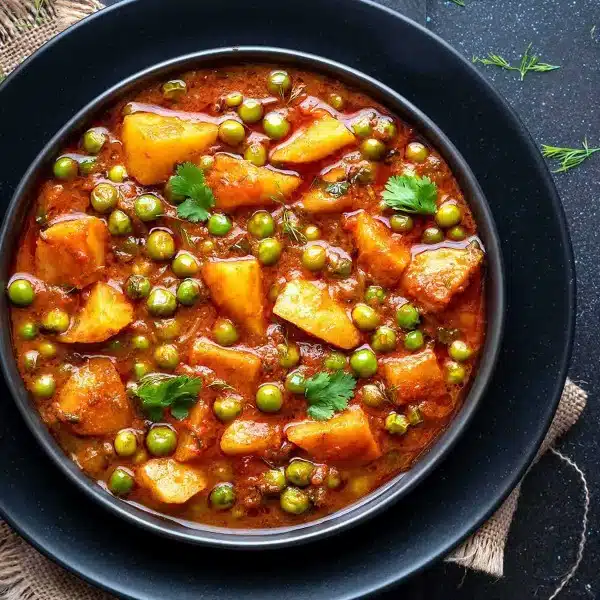
The ground paste is what sets this apart from the more common method of throwing chopped onions and tomatoes directly into the pan. Because you fry the onions, tomatoes, and ginger garlic together first and then grind them smooth, the gravy has a thicker, more even texture without any separate chunks.
When that paste hits the hot oil, you can hear it sizzle and settle, and the smell shifts noticeably as the raw onion aroma cooks off. The spice level is also easy to dial in. With 1.5 teaspoons of red chilli powder, this lands at a medium heat that most people in a mixed household are comfortable with. The garam masala goes in at the end of the spice stage, so its warmth stays present rather than cooking away.
Fresh coriander stirred in at the end adds a brightness that cuts through the richness of the gravy. This is the kind of curry that makes plain roti feel like a full meal.
Cooking Tips
The most common beginner mistake here is not frying the ground paste long enough. The paste needs to cook on medium heat until the oil visibly separates from it and the raw onion smell is completely gone. Rushing this step leaves the gravy tasting sharp and unfinished. I always fry it for at least 8 to 10 minutes, stirring regularly so the bottom does not catch.
Also, boil the potatoes just until tender and not beyond that. Overcooked aloo will break apart when you stir the gravy and turn the curry muddy.
Top Tips
- Boil the potatoes ahead of time and let them cool before cutting. They hold their shape better when they are not too hot.
- Fry the onion-tomato mixture on medium heat before grinding. High heat will brown them unevenly and make the paste bitter.
- When the ground paste goes into the pan, give it a good 8 to 10 minutes on medium heat before adding the spices. The raw smell needs to cook off completely first.
- Add water in small amounts rather than pouring in both cups at once. The gravy thickens as it cooks, so you can adjust the consistency at the end.
- Mustard seeds need oil that is properly hot before they go in. If the oil is lukewarm, the seeds will just sit there and not pop.
- Fresh or frozen peas both work here. If you are using frozen, there is no need to thaw them first.
Serving and Storing Suggestions
Serves 3 to 4 people. Prep and cook time combined is around 40 minutes. Serve hot with roti, chapathi, or naan. It also goes well with plain rice if you prefer.
Leftover gravy keeps in the refrigerator for up to 2 days in a closed container. The potatoes absorb more of the gravy as it sits, so add a small splash of water when reheating and stir gently to bring it back to the right consistency.
Similar Recipes
Nutrient Benefits
Potatoes and peas together cover more ground than most people expect. Peas bring in plant-based protein and dietary fibre, which helps the meal feel filling. Potatoes provide potassium and a reasonable amount of Vitamin C, particularly when not overcooked. Ginger and garlic, both used in a generous 2 tablespoon measure here, have long been used in Indian cooking for their digestive and anti-inflammatory properties. This is not a low-calorie dish, but it is a genuinely balanced one built from whole, minimally processed ingredients.

Aloo Peas Gravy
Ingredients
- 1 cup Peas
- 2 Aloo
- 2 Onions
- 2 Tomato
- 1 tbsp Garam Masala
- 1 1/2 tsp Red chilli powder
- 2 tbsp Coriander leaves
- Salt (to taste)
- 2 cups Water
- 2 tbsp Ginger garlic
- 1 tbsp Mustard seeds
- 1 tbsp Curry leaves
- 2 Green chillies
Instructions
- Heat oil in a pan. add onions and tomatoes, garlic and fry for few minutes. Leave it aside for few minutes
- Later grind them into a fine paste. Keep it aside.
- To another pan, add oil mustard seeds, curry leaves, Green chillies and fry till it pop up.
- Add the ground paste to the above and fry till raw smell disappears. this paste has to be fried deeply till onion smell disappears.
- Later add turmeric powder, chilli powder, garam masala,salt and mix well.
- Lastly add the boiled peas, aloo and mix together. add little water and close with a lid.
- When the gravy turns thick add coriander leaves and stir well.
- Serve hot with roti, naan or chapathi.
Sign up for our newsletter
Add Awesome Cuisine as a Preferred Source

Frequently Asked Questions
My gravy tastes raw and sharp even after adding all the spices. What went wrong?
The ground paste was not fried long enough. This is the step that most beginners underestimate. The paste needs a full 8 to 10 minutes on medium heat with regular stirring until the oil separates from it and the raw onion smell is completely gone. If the smell is still there, keep frying before you add anything else.
Can I skip the grinding step and just chop the onions and tomatoes finely instead?
You can, but the texture of the gravy will be different. Grinding the fried onions and tomatoes gives the curry a smoother, thicker base that coats the potatoes and peas evenly. With chopped onions and tomatoes, the gravy tends to be thinner and less cohesive. If you are short on time, use a hand blender directly in the pan once the onions and tomatoes are soft.
The potatoes broke apart and the gravy looks muddy. How do I avoid this next time?
Overcooked potatoes are the usual cause. Boil them only until a knife goes through without resistance, then stop. Let them cool before cutting into pieces. When you add them to the gravy, stir gently and only once or twice rather than mixing repeatedly. The less you disturb them, the better they hold.
Can I use canned peas instead of fresh or frozen?
Yes, canned peas work fine here. Drain and rinse them well before adding, and put them in at the same stage as the boiled potatoes. Because canned peas are already very soft, they need only a couple of minutes in the gravy rather than the longer time raw or frozen peas would need.
How do I make this curry thicker if it turns out too watery?
Leave the lid off and let it simmer on low to medium heat for a few extra minutes. The gravy will reduce and thicken naturally as the water evaporates. Avoid adding flour or cornstarch. The onion-tomato paste already has enough body to thicken the curry if you give it enough time on the heat.
taste good