
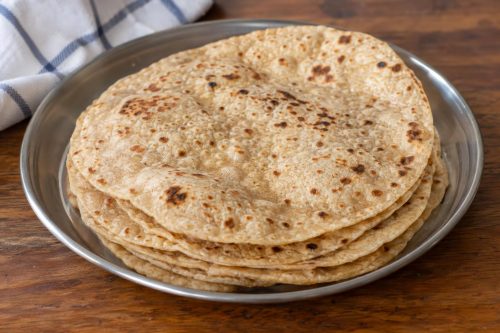
Plain roti is one of the most everyday breads in Indian cooking, made with just four ingredients: whole wheat flour, salt, oil and water. There are no special techniques involved, but a few things matter quite a bit, such as how long the dough rests, how evenly you roll each round and how you press the roti on the tawa. This simple roti recipe is a good starting point whether you are making roti for the first time or looking to get more consistent results. The method here produces soft, pliable rotis that stay flexible even after a few minutes off the heat.
About the Recipe
This recipe uses one cup of whole wheat flour and makes ten rotis, each rolled to about five inches in diameter. A tablespoon of oil goes into the dough itself, which helps keep the rotis soft after cooking. A second light smear of oil is added to each roti before it goes on the tawa.
The dough needs at least two hours of resting time before you roll it out. That rest makes the dough noticeably easier to handle and gives a softer result. If you are curious about other options, this guide to healthy flours for Indian rotis covers the most commonly used choices.
Why You Will Love This Recipe
With only four ingredients and a clear sequence of steps, there is very little that can go wrong once you understand the resting time and the tawa technique. The rotis turn out soft and flexible, which comes down to the oil in the dough and the resting period.
The recipe also scales easily. One cup of flour gives you ten rotis, enough for a family meal. If you need fewer, the unused dough can be kept covered in the refrigerator.
Cooking Tips
The most common beginner mistake is skipping or shortening the dough rest. Dough that has not rested enough resists rolling and springs back, making it difficult to get an even round.
Roll each portion on a lightly floured surface and keep the pressure even so the roti is the same thickness throughout. On the tawa, wait for small bubbles to appear before turning. When you press down on the second turn, use a folded cloth and apply steady pressure across the whole surface rather than just the centre.
Top Tips
- Rest the dough for the full two hours. This is the single most important step for soft, easy-to-roll rotis.
- Add water gradually rather than all at once. The dough should be soft and pliable but not sticky.
- Keep the tawa at moderate heat throughout. Too high and the roti browns on the outside before the inside cooks; too low and it dries out.
- Smear the oil evenly over the rolled roti before placing it on the tawa. An uneven smear can cause the roti to cook unevenly.
- Press down firmly and evenly on the final turn so the base cooks through and the roti puffs where it should.
- Dust the rolling board lightly. Too much flour on the surface can dry out the roti as it cooks.
Serving and Storing Suggestions
Serve rotis straight off the tawa while they are still hot. They pair well with dal, sabzi, chutney or any curry-based side dish. If you need to stack them, place each roti in a covered container lined with a clean cloth to hold the steam and keep them soft.
Leftover rotis can be stored at room temperature for a few hours or refrigerated for up to a day and reheated briefly on a dry tawa. For a variation that works with the same side dishes, Ragi Roti follows a similar method and is worth trying.
Similar Recipes
Nutrient Benefits
Whole wheat flour retains the bran and germ of the grain, so each roti contains dietary fibre, B vitamins and minerals such as iron and magnesium. This recipe uses a small amount of oil rather than butter or ghee, so the fat per roti stays modest. At ten rotis per cup of flour, each one is a reasonably portioned source of carbohydrates alongside whatever side dish you serve.
Plain Roti
Ingredients
- 1 cup Whole Wheat Flour
- 1/2 tsp Salt
- 1 tblsp Oil
- 1/2 cup Water
Instructions
- Sift the flour with the salt into a large plate.
- Make a well in the centre of the flour and add 1 tblsp of oil. Mix well.
- Add the water, little at a time, mixing the flour and water.
- Knead to make a soft, pliable dough.
- Cover the dough and set aside to rest for 2 hours or until ready to roll out the rotis.
- Divide the dough into 10 portions and make each into a smooth, round ball.
- Sprinkle some flour on a rolling board and roll it into a 5 inch round roti.
- Smear 1/2 tsp of oil evenly over the roti.
- Heat a tawa over moderate heat and place a roti on it.
- When small bubbles appear on the surface, turn it over and cook the other side.
- Turn it once more and press down so that the heat is distributed evenly and the base gets cooked.
- Cook each roti in the same same way.
- Serve hot with side dish of choice.
Sign up for our newsletter
Add Awesome Cuisine as a Preferred Source

Frequently Asked Questions
Can I make roti with plain flour instead of whole wheat flour?
You can use plain flour, also called maida, but the result will be different. Rotis made with plain flour tend to be softer and slightly chewier, but they lack the texture and colour you get from whole wheat flour. Plain flour dough can also become sticky more easily, so add water carefully. This recipe is written for whole wheat flour, and that is what gives the best result here.
Why does the dough need to rest for two hours?
Resting allows the flour to fully absorb the water, which makes the dough softer and easier to roll. Without enough rest, the dough tends to be tight and springs back when you try to roll it out, making it hard to get an even five-inch round. Two hours is the minimum; you can leave the dough covered for longer if needed without any problem.
How do I know when to turn the roti on the tawa?
Watch the surface of the roti. When small bubbles begin to appear, the underside has cooked and it is time to turn. If you turn too early, the roti can stick or tear. After the second turn, press down firmly with a folded cloth so that the heat reaches all parts of the roti evenly.
My rotis are coming out stiff and dry. What am I doing wrong?
There are a few likely causes. The dough may not have rested long enough, or the tawa may be too hot, which dries the roti out quickly. Too much flour on the rolling board can also dry the surface before cooking. Make sure the dough is soft and pliable before you start rolling, and keep the tawa at moderate rather than high heat throughout.
Can I prepare the dough in advance?
Yes. Once the dough has been kneaded, cover it well and refrigerate it. It will keep for up to a day. Take it out about twenty to thirty minutes before you plan to roll and cook, so it comes back to room temperature and is easier to handle. The two-hour rest can also happen in the refrigerator overnight if that is more convenient.





how can this be converted to amicro wave recipe