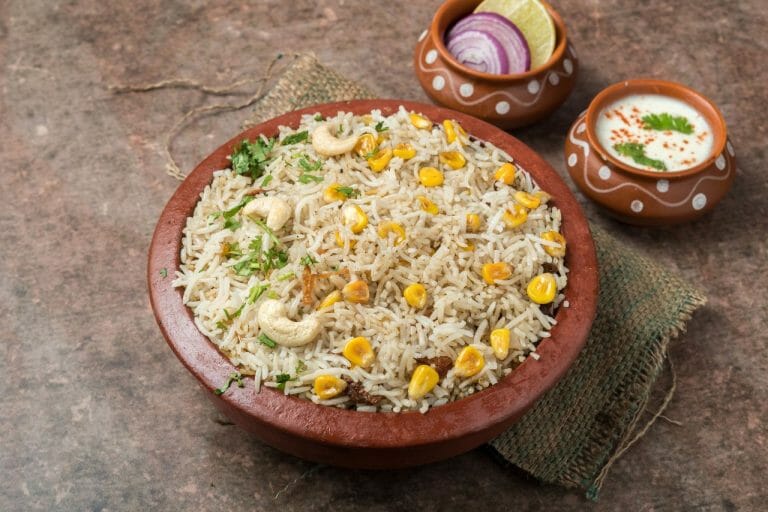

Corn and Cashew Nut Curry was not something I grew up eating — it came to me sideways, through a Thai-influenced cookbook I picked up at a sale years ago. My mother thought the whole idea was odd. She could not understand why anyone would put cashew nuts into a curry with potatoes and corn rather than just making a simple aloo sabzi.
I tried explaining the lemon grass and kaffir lime leaves, and she looked deeply unconvinced. We have argued about it mildly ever since, usually around the time I am already halfway through making it. What keeps me making this particular version is the smell when the curry paste hits the hot oil — that brief, sharp sizzle before the shallots go back in. It smells like something worth paying attention to, which, in my experience, it always is.
About the Recipe
Most of the ingredients here are available at a good supermarket or any Indian grocery store. Thai red curry paste keeps well in the fridge once opened, and kaffir lime leaves can be found fresh or frozen at most Asian stores. From start to finish, this takes about 35 to 40 minutes.
I reach for this recipe on evenings when I want something that feels like real cooking but does not require me to chop and prep for an hour before the pan even goes on the heat. One pot, one batch of rice on the side, and dinner is done.
Why you will love this recipe
Cashew nuts in a curry might sound unusual, but once they have been stir-fried until golden, they hold their shape through the simmer and give each spoonful a satisfying bite that contrasts with the soft potato chunks. The combination of lemon grass, kaffir lime leaves, and Thai red curry paste builds a base that tastes far more complex than a teaspoon of paste has any right to produce.
The corn keeps things sweet and light, so the overall bowl never feels heavy despite the cashews. For a vegetarian curry that genuinely holds its own on a weeknight table, this one earns its place.

Cooking Tips
The most common beginner mistake with this recipe is skipping the step where the cashews are stir-fried until golden. If you add them raw and let them simmer directly in the liquid, they turn soft and slightly gummy. Give them two to three minutes in the hot oil over a medium-high heat — you want a light, toasty colour on them before anything else goes in.
Also watch the potatoes: cut them into evenly sized chunks, roughly 2 to 3 centimetres, so they cook at the same rate. Uneven pieces mean some turn mushy while others are still firm in the centre.
Top Tips
- Slice the kaffir lime leaves into thin strips rather than leaving them whole — the flavour releases better into the broth, and you will not end up with large tough pieces in your bowl.
- Use waxy potatoes rather than floury ones. They hold their shape during the 15 to 20 minute simmer and do not break down into the sauce.
- If you cannot find palm sugar, light brown sugar works as a substitute. Use the same quantity, one teaspoon.
- I always add the celery and corn only in the last 5 minutes. Any longer and the celery loses its slight crunch and the corn turns a little flat.
- Thai red curry paste varies quite a bit by brand. Start with one teaspoon as directed, taste before serving, and add a little more only if the base tastes flat rather than just mild.
- Fresh basil added right at the end, off the heat, gives the best aroma. Adding it earlier dulls it noticeably.
Serving and Storing Suggestions
This recipe serves 4 people as a main course alongside steamed jasmine rice or plain basmati. Prep time is about 15 minutes, with a total cook time of roughly 25 minutes. Leftovers keep well in an airtight container in the fridge for up to 2 days. Reheat gently on the stovetop over a low flame with a splash of water to loosen the sauce. The potatoes absorb a lot of liquid as the curry sits, so do not skip that extra water when reheating.
Similar Recipes
- Thai Green Vegetable Curry
- Coconut Milk Potato and Spinach Curry
- Corn and Paneer Masala
- Lemon Grass and Tofu Broth
- Cashew Nut and Pea Pulao
Nutrient Benefits
Cashew nuts contribute healthy unsaturated fats and a decent amount of plant-based protein, which makes this a more filling vegetarian main than a simple vegetable curry. Corn adds dietary fibre and natural sweetness without spiking the overall calorie count considerably. Celery is low in calories but adds potassium, and the tomatoes bring in vitamin C. For a one-pot vegetarian dish, this gives you a reasonably balanced plate without needing anything on the side beyond rice.

Corn and Cashew Nut Curry
Ingredients
- 2 Kaffir Lime Leaves
- 2 tbsp Vegetable Oil
- 4 Shallots (chopped)
- 1 cup Cashew Nuts
- 1 tsp Thai Red Curry Paste
- 400 gms Potatoes (peeled and cut into chunks)
- 1 Lemon Grass Stalk (finely chopped)
- 200 gms Tomatoes (chopped)
- 2 1/2 cups Boiling Water
- 1 cup Whole Kernel Corn
- 4 Celery Sticks (sliced)
- 1 tbsp Tomato Ketchup
- 1 tbsp Light Soy Sauce
- 1 tsp Palm Sugar
- Combination of 2 parts Soy Sauce and 1 part Lime Juice (or use Thai Fish Sauce- 1 tsp)
- 4 Spring Onions (thinly sliced)
- Fresh Basil (small bunch, chopped)
Instructions
- Remove the central rib from the kaffir lime leaves. Roll the leaves into tight cylinders and using a sharp knife, slice through the cylinders to give thin strips.
- Heat the oil in a large, heavy pan. Add the shallots and stir-fry over a medium heat for 2-3 minutes, until softened. Add the cashew nuts and stir-fry for a few minutes until golden.
- Stir in the red curry paste. Stir-fry for 1 minute then add the potatoes, lemon grass, tomatoes and boiling water.
- Bring back to the boil, then reduce the heat to low, cover and simmer gently for 15-20 minutes or until the potatoes are tender.
- Stir the corn, celery, lime leaves, tomato ketchup, soy sauce, sugar and soy sauce-lime juice combination into the pan. Simmer for a further 5 minutes until heated through, then spoon into warmed serving bowls. Sprinkle with the sliced spring onions and chopped basil and serve.
Sign up for our newsletter
Add Awesome Cuisine as a Preferred Source