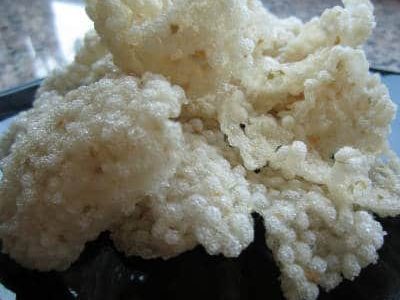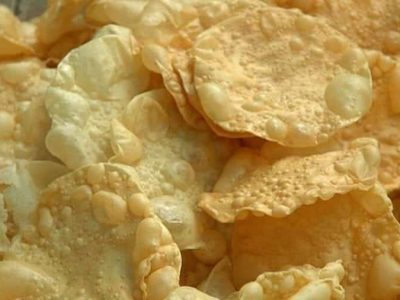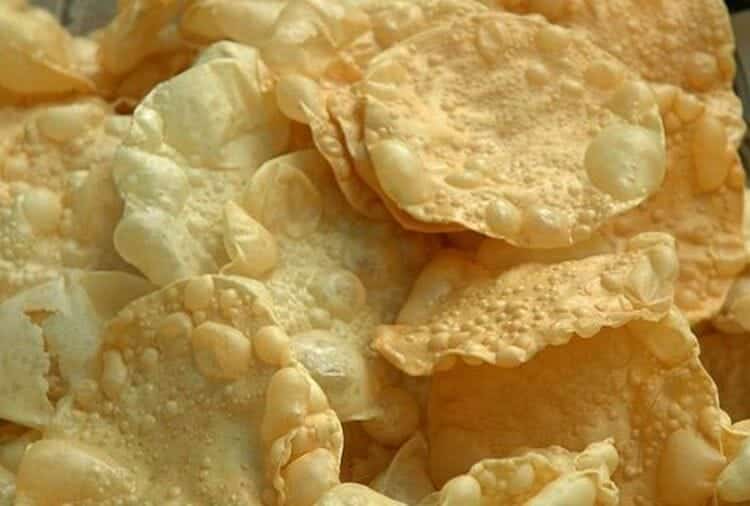
Koozh Vadam had been on my list for two summers before I finally made it. I kept thinking about the sound they make when you deep fry them — that immediate, dramatic puff as they hit the hot oil — and that craving eventually pushed me into the kitchen. There is something quietly satisfying about this recipe. It uses only four ingredients, all of which I almost always have at home.
The part that pulled me back each time was the cloth-drying step: watching small pale circles go from wet and soft to paper-thin and brittle over a couple of sunny days feels oddly rewarding. I make a big batch every May when the heat in Chennai is intense enough to dry them within two days, and then I have a jar of vadams sitting on the shelf for months.
About the Recipe
All four ingredients — sago, rice, water, and salt — are standard pantry staples in most South Indian homes, so there is no special shopping involved. The batter itself takes about 30 to 40 minutes of active cooking, but you do need to factor in 2 hours for soaking the rice and at least 2 sunny days for drying the vadams outdoors. I would plan this for a dry, hot week rather than a cloudy one. When I know guests are coming over in a few weeks, this is one of the first things I put up, because having a ready stock of vadams in a tin means I always have something to fry and serve quickly.
Why you will love this recipe
A jar of home-made Koozh Vadam on the shelf changes how you snack. When you need something quick to fry up alongside rice and rasam, or want something crunchy on the table in under five minutes, having a stock of these vadams means you are never scrambling.
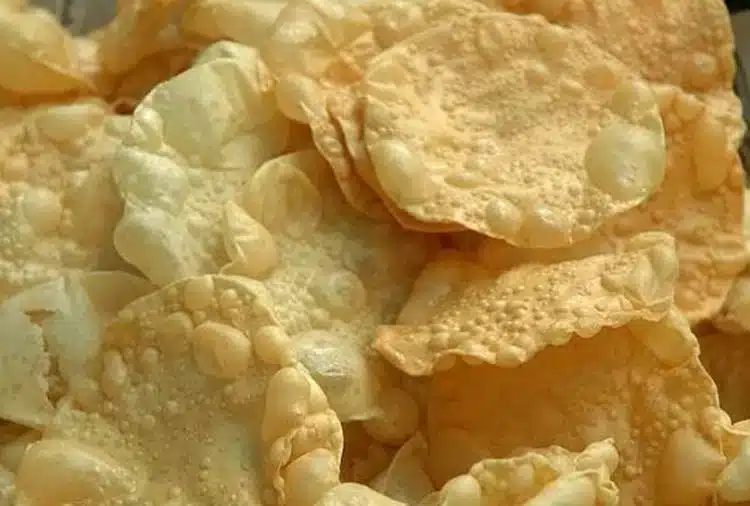
The flavour is clean and subtly starchy, without any spice added, which means they pair with almost anything — a sharp mango pickle, a tangy kuzhambu, or just plain sambar. Because the batter uses both rice and sago, the dried wafers have a particular lightness after frying. They puff up quickly in oil without soaking too much of it, and the texture stays crisp even after they cool down on the plate.
Cooking Tips
The most common mistake beginners make is getting the batter consistency wrong. If it is too thin, the vadams will not hold their shape on the cloth and will spread into flat puddles. If it is too thick, they crack while drying and fry up unevenly. Aim for a pourable porridge that holds a gentle ribbon when you lift the ladle. Also, do not skip stirring continuously while cooking the batter — even one minute of unattended cooking on a medium flame can cause lumps to form at the bottom.
Top Tips
- Soak the sago in hot water, not cold. Cold water leaves the sago hard at the centre, which means it will not grind smoothly into the batter.
- Use a heavy-bottomed vessel or a wide kadai for cooking the batter. A thin-bottomed pot will scorch the batter quickly, especially as it thickens.
- Pour the vadams onto a white cloth spread over a flat surface in direct sunlight. A terrace or a clean drying rack in full sun works well. Avoid shade — the vadams will take too long to dry and may develop a sour smell.
- Keep the reserved 1.5 litres of hot water nearby while cooking the batter. Add it in small amounts, about half a cup at a time, to control the consistency carefully.
- Once the vadams are fully dry and brittle, store them in an airtight tin or glass jar immediately. Even a few hours of humidity can make them soft again.
Serving and Storing Suggestions
Prep time for the batter is roughly 2 hours 45 minutes including soaking, plus 2 to 3 sunny days for drying. This quantity of batter yields around 50 to 60 small vadams, depending on how large you pour each circle. Fry them in small batches in hot oil — they puff and are ready in under a minute. Serve them as a side with rice and sambar, or just as a snack with tea. Store the dried unfried vadams in an airtight container away from moisture; they keep well for 2 to 3 months.
Similar Recipes
- Sago Vadam (plain javvarisi vadam without rice)
- Thattai
- Rice Pappad
- Mor Milagai (sun-dried buttermilk chillies)
- Masala Vadam

Koozh Vadam
Ingredients
- 1/2 cup Sago (Javvarisi)
- 2 cups Rice
- 4.5 litres Water
- 2 tsp Salt
Instructions
- Wash the sago and add 1 cup of hot water and let it sit for 10 minutes.
- Wash and soak rice for 2 hours.
- Drain water from rice and grind it to a smooth paste.
- Add soaked sago and grind it to a smooth paste.
- Boil the water.
- When the water starts to boil, take out 1.5 litres of water separately.
- Add 2 tsp of salt.
- Lower the flame.
- Add the rice sago batter and stir well.
- Keep stirring till it becomes like a porridge consistency.
- Allow the koozh to boil.
- Add the reserved hot water in regular intervals till we get porridge consistency.
- Koozh Vadam batter is ready.
- It should be in porridge consistency.
- Place a clean white cloth in sunny place.
- Using a small ladle pour the batter in small circles.
- When the vadam gets completely dried up, take out each vadam.
- Store it in an air tight container.
Sign up for our newsletter
Add Awesome Cuisine as a Preferred Source

Frequently Asked Questions
My batter turned lumpy while cooking. What went wrong?
This usually happens when the flame is too high or when you stop stirring even briefly. Once the batter goes into the boiling water, you need to keep stirring constantly on a low flame. If small lumps have already formed, you can press them against the side of the vessel with the back of a ladle to break them up before pouring.
The vadams are not drying evenly — some edges are dry but the centres are still soft. What should I do?
This happens when the circles are poured too thick in the middle. Use a small ladle and pour with a light circular wrist motion so the batter spreads into a thin, even layer. Also check that the cloth is lying completely flat on the surface with no folds or dips underneath.
Can I dry the vadams indoors if the weather is cloudy?
Ideally, no. Koozh Vadam needs direct sunlight and good airflow to dry properly. Indoors or in shade, they take too long and can develop a slightly sour or musty smell before they fully dry. Wait for a stretch of hot, sunny days to make this recipe.
How do I know when the vadam is ready to be taken off the cloth?
The vadam will lift off the cloth cleanly on its own when it is ready. If it is still sticking at the edges or feels rubbery in the centre, give it more time in the sun. A fully dried vadam is rigid, slightly translucent, and makes a faint tapping sound when you tap it with your fingernail.
Can I add chilli or cumin to the batter for more flavour?
Yes, many households do this. You can add red chilli powder or cumin seeds to the batter just before pouring. I would suggest starting with half a teaspoon of chilli powder for this quantity of batter and adjusting from there once you have the base recipe down.