
The wok is smoking, the Manchurian sauce is bubbling, and a bowl of pale golden baby corn sits at the edge of the counter. One cousin calls it a vitamin pill in disguise, another swears it lowers cholesterol, and your aunt is sure it helps with weight loss because it weighs almost nothing on the fork.
Most of those claims were borrowed from its bigger relative, sweet corn, and a few came from nowhere at all. Baby corn does have real things going for it, including a very low calorie count and a pleasant crunch. This guide separates the claims that have data behind them from the ones that do not, and finishes with a poriyal for a weeknight.
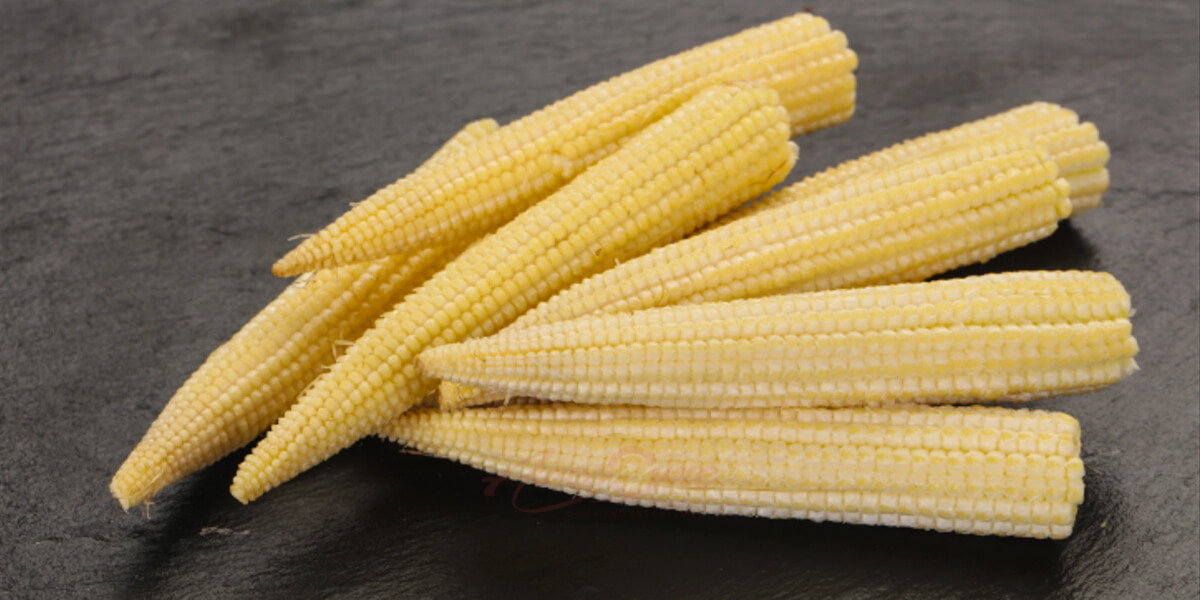
Table of Contents
Key Takeaways
- Baby corn is low in calories for its volume because most of it is water.
- Its nutrition is modest, with a little fibre, a little protein and small amounts of several vitamins and minerals.
- Popular claims about antioxidants, eyesight and heart health come from research on sweet corn or mature yellow corn and have not been tested on baby corn.
- No glycaemic index value for baby corn turned up in the published tables we checked, so promises about blood sugar rest on reasoning.
- Canned baby corn carries added salt that a good rinse reduces, while fresh baby corn needs only about five minutes of steam.
- Baby corn can sit on a pregnancy plate as one vegetable among many, while health organisations recommend folic acid supplements alongside a healthy diet for neural tube protection.
Search results for baby corn are crowded with benefit lists that tend to quote one another. Knowing which claims hold up lets you spend your attention on cooking it well.
What is baby corn, and where does it come from?
Baby corn is the immature, unfertilised ear of a maize plant, harvested before the kernels develop and eaten whole, cob included. Hybrids such as HM-4 are grown specifically for it in Indian villages.
Baby corn is the unfertilised, immature ear of the maize plant (Zea mays), picked before the kernels form and eaten whole. Source: Indian Journal of Agronomy, 2012, which describes it as a speciality corn (IARI field study).
Baby corn is the same plant as sweet corn, picked before the kernels form, which is why the two should not share a nutrition label.
Most home cooks first meet baby corn in a restaurant Manchurian, so it can feel imported. The Indian side of the story is recent and specific. ICAR-Indian Institute of Maize Research describes a farmer in Aterna village, in Sonipat district of Haryana, who learned about the HM 4 hybrid, took seed home and sold the harvest at Azadpur Mandi in Delhi. Demand rose because buyers liked the colour, size and taste, and the institute notes that every farmer in the village now cultivates baby corn (ICAR-IIMR).
ICAR-CCARI adds that baby corn is gaining popularity in the Indian market (ICAR-CCARI). Hooda and Kawatra analysed the HM-4 variety in a 2013 paper in Nutrition & Food Science, and their numbers need careful reading, as the next section shows.
How much nutrition does 100 g of baby corn provide?
A 100 g serving of canned baby corn provides roughly 19 to 26 kcal, 2 to 3 g of protein and about 2 g of fibre, according to two food composition tables. Yellow sweet corn, eaten raw, provides 86 kcal in the same weight because it carries far more starch and sugar.
| Nutrient per 100 g | Baby corn (canned entries) | Sweet corn, yellow, raw |
| Energy | 19 to 26 kcal | 86 kcal |
| Protein | 2.0 to 2.9 g | 3.3 g |
| Fibre | 2.0 g | 2.0 g |
| Carbohydrate | 2.0 to 3.1 g | 18.7 g |
Sources: USDA FoodData Central entry 383320 (branded canned baby corn) and entry 169998 (sweet corn, yellow, raw); Matvaretabellen, the Norwegian food composition table, canned baby corn entry. The ranges span the two baby corn entries.
The roughly 16 g carbohydrate gap between the two columns accounts for most of the calorie gap. Carbohydrate supplies about 4 kcal per gram, so 16 g is about 64 kcal, against a real difference of 60 to 67 kcal. That arithmetic is our own, applied to the table values.
HM-4 baby corn was about 90 percent water in a laboratory analysis by Hooda and Kawatra (Nutrition & Food Science, 2013). In the authors’ words: “Baby corn contained 90.03, 17.96, 2.13, 5.30 and 5.89 percent moisture, protein, fat, ash and crude fibre, respectively.” (Source: Emerald Publishing)
That sentence hides a trap. Add 90.03, 17.96, 2.13, 5.30 and 5.89 and the total is 121.31, which no whole food can reach, because its parts cannot exceed 100 percent. The sum suggests that the protein, fat, ash and fibre figures are percentages of dry matter, meaning the solids left after the water is removed. About 10 g of every 100 g of fresh HM-4 baby corn is solid, so 17.96 percent protein in that dry matter works out to about 1.8 g per 100 g of the fresh vegetable, close to the 2.0 g in the food tables. That conversion is our calculation and the paper does not state it. Taken at face value, “17.96 percent protein” makes baby corn look protein-rich.
Percentages of dry matter make baby corn look protein-rich, while a 100 g portion supplies about 2 g.
If protein is the goal, an egg and baby corn masala does more for the plate than baby corn alone.
Which vitamins and minerals does baby corn provide?
Baby corn provides small amounts of nutrients such as folate, potassium, vitamin B6, riboflavin and vitamin C, and published figures differ between sources. Hooda and Kawatra reported 5.43 mg of ascorbic acid per 100 g, for example, while the brochure below implies a higher figure.
A 4 ounce serving of baby corn provides about 31 percent of the folate RDA, according to Washington State University Extension (1999).
The brochure states: “four ounces provides 31% of the RDA”, along with 13 percent of the potassium, 14 percent of the B-6, 10 percent of the riboflavin, 17 percent of the vitamin C and 11 percent of the fiber adults need each day. Its authors calculated these figures from the Japanese Standard Tables of Food Composition, 4th edition. (Source: Miles, Zenz and Alleman, WSU Extension)
Treat those percentages as estimates, since they come from Japanese food tables and not from a measurement of Indian-grown baby corn, and the two vitamin C figures sit far apart.
Eyesight claims need the same care. The WSU brochure says yellow corn is abundant in the carotenoids lutein and zeaxanthin, and then adds: “Baby corn, being pale, would carry lesser amounts of these carotenoids than mature corn.” A pale vegetable is a weak candidate for an eye-health claim, and no source we found measured lutein in baby corn.
Which popular baby corn health claims have evidence behind them?
Very few popular claims have been tested on baby corn itself. Our web search of PubMed and ClinicalTrials.gov records in October 2026 turned up no human trial of baby corn on blood glucose, cholesterol or body weight.
Heating sweet corn at 115 degrees C for 25 minutes raised its ferulic acid content by 550 percent, according to Dewanto, Wu and Liu (Journal of Agricultural and Food Chemistry, 2002).
The abstract states: “thermal processing at 115 degrees C for 25 min significantly elevated the total antioxidant activity of sweet corn by 44% and increased phytochemical content such as ferulic acid by 550%”. (Source: PubMed)
Ferulic acid is a phenolic compound that contributes to the antioxidant activity of corn, and the 2002 study measured it in sweet corn. We found no matching measurement for baby corn. What the evidence shows is that heat-processed sweet corn gains measurable antioxidant compounds, while the same gain in baby corn, and any change in anyone’s health, has not been demonstrated.
Two other claims travel widely, that baby corn protects against Alzheimer’s disease and that it lowers cholesterol. We found no study supporting either for baby corn. Fibre is the only mechanism on offer for cholesterol, and the WSU brochure estimates just 11 percent of daily fibre in a 4 ounce serving.
Most of what a baby corn benefit list promises was measured in sweet corn.
Is baby corn good for diabetes and weight loss?
Baby corn is a low-calorie vegetable that suits most weight-conscious meals, although we found no published glycaemic index for it. Sweet corn is listed at 52 ± 5 in the 2008 international tables, which cover more than 2,480 individual food items (Atkinson and colleagues, Diabetes Care, 2008).
A tempting chain of reasoning says baby corn has little carbohydrate, so it raises blood sugar slowly, so it helps with diabetes and weight control. Each link has a gap. Low carbohydrate per 100 g does not fix the glycaemic response, which depends on how the carbohydrate is digested, and Hooda and Kawatra measured in vitro starch digestibility without reporting a glycaemic index. A plate of baby corn Manchurian is battered, fried and sauced, so its energy and carbohydrate differ greatly from a bowl of steamed cobs. A steamed portion is a reasonable swap for a starchier side, and whether it changes blood sugar in people remains untested.
Baby corn Manchurian and baby corn cutlets taste wonderful, but frying adds energy the corn never carried, so they suit an occasional plate for anyone watching weight or sugar.
Is baby corn good to eat during pregnancy?
Baby corn can sit on a pregnancy plate as one vegetable among many, and it does not replace the folic acid that health organisations recommend. A 2015 review in Public Health Nutrition of recommendations from thirty-six countries and WHO reported that “most countries and WHO focus on a healthy diet and folic acid supplementation of 400 µg/d periconceptionally” (PubMed record).
The WSU folate estimate rests on Japanese food tables, while a supplement delivers a known amount. Your doctor or midwife decides the dose that applies to you. Baby corn pairs well with leafy greens, as in this baby corn with spinach, and more meal ideas sit in our pregnancy and postnatal section.
Is fresh or canned baby corn better for you?
Fresh baby corn is the better everyday choice because it carries no added salt and keeps its snap, although no study we found measured the nutrients in fresh and canned baby corn side by side.
| Feature | Fresh baby corn | Canned baby corn |
| Texture | Crisp, with a sweet snap | Softer, with less snap |
| Sodium | None added | One branded product lists 280 mg per 130 g |
| Storage | Up to one week unhusked in the refrigerator | Shelf-stable until the tin is opened |
| Preparation | Husk, wash, steam for about 5 minutes | Drain, rinse and heat through |
| Nutrient evidence | WSU calls it more nutritious, with no data given | No direct comparison with fresh found |
One branded canned baby corn product in USDA FoodData Central lists 280 mg of sodium per 130 g serving (FoodData Central). Multiplying sodium by 2.5 converts it to salt, so that serving holds about 0.7 g of salt, close to 14 percent of the 5 g daily maximum the World Health Organization recommends for adults (WHO Europe, 2022). Rinsing under running water helps.
Canning does not automatically mean poorer nutrition. Dewanto and colleagues found that heat-processed sweet corn gained antioxidant activity despite a 25 percent vitamin C loss, and they conclude: “These findings do not support the notion that processed fruits and vegetables have lower nutritional value than fresh produce.” That result applies to sweet corn, and it leaves the WSU line that fresh baby corn is “more nutritious than the canned variety” looking like an assumption, since the brochure gives no data.
How do you buy, store, and cook baby corn at home?
Buy fresh baby corn in the husk, refrigerate it straight away, and steam it for about 5 minutes before eating. Washington State University Extension advises that unhusked baby corn keeps for up to one week in the refrigerator without losing quality.
Look for green, slightly damp husks with pale, soft silk. Peeling is half the pleasure: pull the husk away layer by layer, brush off the fine silk, and you are left with a pale, ridged cob. To freeze it, blanch the husked ears in boiling water or steam for 30 to 45 seconds, cool them, then freeze, as WSU recommends. Freezing costs some nutrients, since Hooda and Kawatra found that ascorbic acid and beta-carotene fell by 11.60 and 10.75 percent over 90 days (Nutrition & Food Science, 2012).
Baby corn needs about 5 minutes of steam, and the whole cob is edible raw or cooked.
Drop baby corn into a hot pan with a little oil and it hisses softly, and the pale cobs pick up golden freckles within a couple of minutes. The most common mistake is cooking it until it turns grey and rubbery, usually because it was boiled for ten minutes alongside the curry. Add it near the end of cooking, as WSU suggests for soups and stews, so the snap survives.
Steamed baby corn poriyal with coconut
A poriyal is a South Indian dry stir-fry, usually a vegetable cooked briefly and finished with grated coconut. This version serves two as a side dish.
Key Ingredients
- 250 g fresh baby corn, husked and washed
- 1 tsp coconut oil or a neutral oil
- 1/2 tsp mustard seeds
- 1 sprig curry leaves, about 10 leaves
- 1 green chilli, slit lengthwise
- 2 tbsp freshly grated coconut
- Salt, to taste
- Juice of 1/2 lemon
Method
- Steam the baby corn whole for about 5 minutes, until a knife slides in easily. Cut each cob into 2 cm pieces and drain well.
- Heat the oil in a wide pan over medium heat. Add the mustard seeds and wait for them to pop, which takes about 30 seconds.
- Add the curry leaves and green chilli. They crackle and spit, so keep your face back from the pan.
- Tip in the baby corn with a pinch of salt. Toss over medium-high heat for 2 minutes so the edges pick up some colour.
- Turn off the heat, stir in the coconut and lemon juice, and serve at once with rice and dal.
Next time you pass a stall with baby corn still in the husk, buy a bag. Peel it at the counter, taste one cob raw while the pan heats, and notice how sweet and watery it is before any sauce gets near it. Steam the rest for five minutes, make the poriyal, and keep the Manchurian for the weekend.
Frequently Asked Questions
How many calories are in baby corn?
A 100 g serving of canned baby corn contains about 19 to 26 kcal, based on USDA FoodData Central and the Norwegian food composition table. The roughly 90 percent moisture that Hooda and Kawatra measured in fresh HM-4 suggests fresh baby corn falls in a similar range. Yellow sweet corn is far denser at 86 kcal per 100 g.
Is baby corn good for diabetes?
Baby corn has no published glycaemic index value that we could find, so its effect on blood sugar has not been measured. Sweet corn is listed at 52 ± 5 in the 2008 international tables. Anyone managing diabetes should confirm portions with a doctor or dietitian.
Can you eat baby corn during pregnancy?
Baby corn can be part of a pregnancy diet as one vegetable among many when it is washed and cooked until tender. A 2015 review of recommendations from thirty-six countries and WHO found that most pair a healthy diet with a 400 µg daily folic acid supplement around conception.
Is canned baby corn as healthy as fresh?
No study we found compares the nutrients in fresh and canned baby corn directly, so neither can be declared healthier on nutrient data. The clearest difference is salt, because one branded canned product lists 280 mg of sodium per 130 g in USDA FoodData Central.
Can you eat baby corn raw?
Yes, you can eat baby corn raw once the husk is removed and the cob is washed. Washington State University Extension notes in its consumer brochure that the entire ear is edible. Slice it into salads for crunch.
Sources & Further Reading
- Atkinson FS, Foster-Powell K, Brand-Miller JC. International Tables of Glycemic Index and Glycemic Load Values: 2008. Diabetes Care, 2008.
- Dewanto V, Wu X, Liu RH. Processed sweet corn has higher antioxidant activity. Journal of Agricultural and Food Chemistry, 2002.
- Hooda S, Kawatra A. Effect of frozen storage on nutritional composition of baby corn. Nutrition & Food Science, 2012.
- Hooda S, Kawatra A. Nutritional evaluation of baby corn (Zea mays). Nutrition & Food Science, 2013.
- ICAR-Central Coastal Agricultural Research Institute. Baby corn. ICAR-CCARI website, accessed October 2026.
- ICAR-Indian Institute of Maize Research. HM 4 baby corn hybrid and the farmers of Aterna village. ICAR-IIMR website, accessed October 2026.
- Authors affiliated with the Indian Agricultural Research Institute, New Delhi. Plant population and nutrient requirement for baby corn hybrids (Zea mays). Indian Journal of Agronomy, September 2012.
- Miles C, Zenz L, Alleman G. Baby Corn (Food from the Field series consumer brochure). Washington State University Extension, 1999.
- Matvaretabellen, the Norwegian food composition table. Baby corn, canned. Matvaretabellen, accessed October 2026.
- Authors listed under PubMed ID 25877429. Folate and folic acid in the periconceptional period: recommendations from official health organizations in thirty-six countries worldwide and WHO. Public Health Nutrition, 2015.
- United States Department of Agriculture. FoodData Central, entries 383320 (baby corn, branded) and 169998 (sweet corn, yellow, raw). USDA, accessed October 2026.
- WHO Regional Office for Europe. 5 recommendations to reduce salt intake to live longer and healthier lives. World Health Organization, 14 March 2022.


A good explain of baby corn, may it help all people of food conscious. Its great help me for my weekly food chart. thanks