Walk into most Indian homes at dinnertime and you will find a small plate sitting quietly at the edge of the thali. A few rings of onion, a wedge of lemon, maybe a green chilli split down the middle. Nobody really plans around it. It is there because it has always been there, the way pickle is there, the way papad is there.
That little plate deserves better than being an afterthought. Done properly, with a bit more thought and a bit more volume, a salad can do real work at the table. It can slow down how fast you eat, take the edge off your hunger before the rice arrives, and quietly fill gaps in a diet that runs heavy on starch and light on raw vegetables. None of this requires kale or quinoa or anything you cannot find at your local subziwala. It just requires treating the salad as a dish, not decoration.
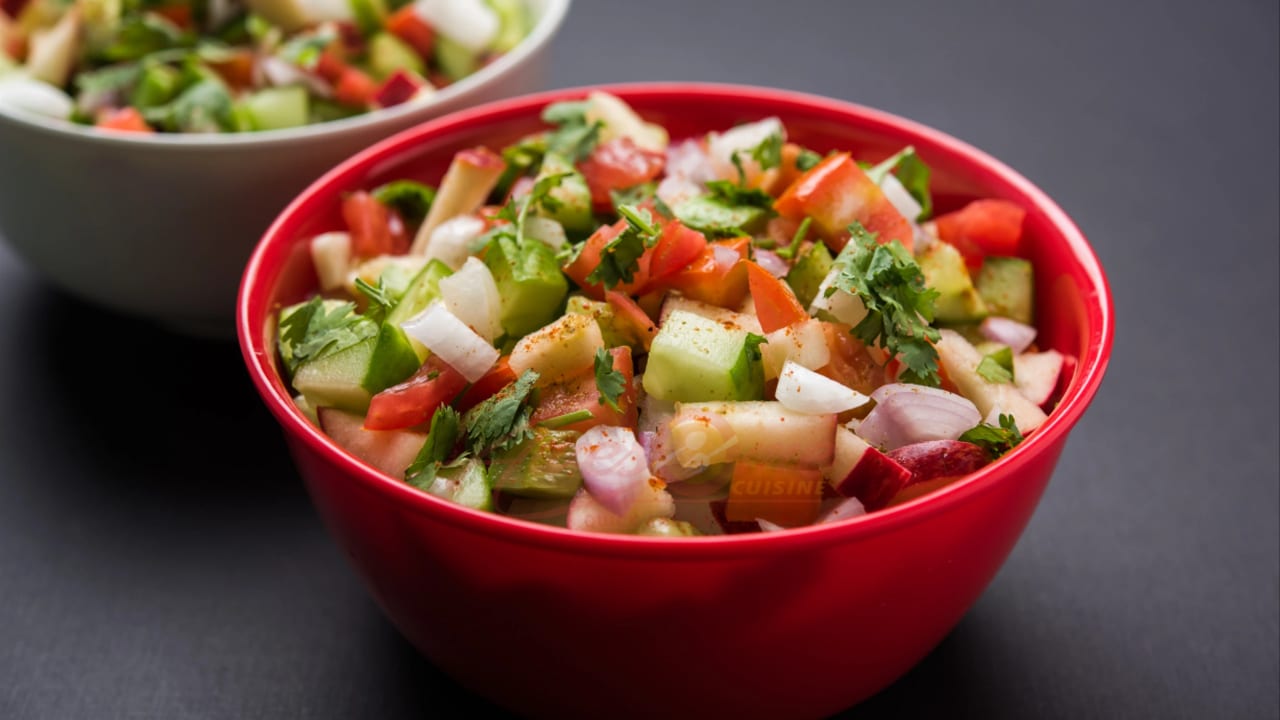
Table of Contents
Key Takeaways
- A salad eaten before the rest of the meal can reduce how much you eat overall, by roughly 7 to 12 percent according to research on meal timing.
- Most Indians eat far less vegetable and fruit than ICMR-NIN recommends, and a daily salad is one of the simplest ways to close that gap.
- Eating a vegetable salad before rice may help soften the after-meal rise in blood sugar, based on early clinical research.
- Raw salad is safe and beneficial when vegetables are washed properly, but a salad does not have to be entirely raw to count as healthy.
- A good Indian salad needs more than onion and lemon. Protein, fibre and a light dressing turn it from garnish into a real part of the meal.
This matters right now because Indian plates have quietly become heavier on refined carbohydrates and lighter on raw vegetables than they were a generation ago. A salad will not undo a poor diet on its own. But it is one of the easiest single changes you can make at a meal, and the research on what it actually does, for hunger, blood sugar and overall nutrient intake, is more specific than most people realise.
What Exactly Counts as a Salad in an Indian Kitchen?
A salad, in the Indian kitchen, is a mix of raw or lightly cooked vegetables, fruit or sprouts eaten as its own distinct part of the meal rather than simmered into a curry or gravy. It ranges from a simple onion-lemon-chilli plate to an elaborate Karnataka-style kosambari finished with grated coconut and a tempering of mustard seeds and curry leaves.
That last part, staying distinct and largely unsoftened by the stove, is what separates a salad from a sabzi. A kachumber of onion, tomato and cucumber is a salad. The same vegetables cooked down with mustard seeds and a pinch of hing become a side dish entirely. Walk across the country and the idea keeps stretching: Gujarat leans towards a finely cut, lightly sweetened kachumber, Karnataka has its kosambari built on soaked lentils, and Bengal often turns to a sharp, mustardy shukto-adjacent raw mix during the heavier months. If you want a wider tour of these regional versions before you settle on one, the Indian salad recipes collection on this site is a good place to start.
Does Eating Salad Before a Meal Actually Help You Eat Less?
Yes, eating a low-energy salad before the rest of your meal does reduce how much you eat overall, though the effect is modest rather than dramatic. The drop comes from volume and fibre filling part of your stomach before the denser, more calorie-rich food arrives, not from any single magic ingredient.
Eating a low-calorie salad before the main course cut meal-time calorie intake by 7 to 12 percent, depending on portion size, in a controlled study of women eating lunch over several weeks. Source: Rolls BJ, Roe LS, Meengs JS, Journal of the American Dietetic Association, 2004 (PubMed)
Translate that to a thali and the logic holds up. A proper bowl of salad eaten while the rest of the meal is still being served gives your body a head start on feeling full, so the rice and dal that follow get eaten a little more mindfully. It will not turn a heavy meal light on its own, but stacked across a week, a smaller dent in every meal adds up.
A side of onion and lemon is a garnish. A real salad is a dish that earns its place on the plate.
Can a Salad Eaten With Rice Help Control Blood Sugar?
Eating a vegetable salad before rice, rather than after or alongside it, appears to soften the rise in blood sugar that follows a starchy meal. The research behind this is genuinely promising for an Indian context where rice is often the main event, but it is still early and based on small studies, not a settled medical recommendation.
A 2023 crossover study found that eating a vegetable salad before rice blunted the after-meal rise in blood sugar, compared with eating rice first, in a small group of healthy men. Source: Bioscience, Biotechnology, and Biochemistry, 2023 (Oxford Academic)
The likely mechanism is straightforward. Fibre and plant compounds in the vegetables appear to slow how quickly the carbohydrate that follows gets digested and absorbed, which softens the spike rather than blocking it outright. If you are managing diabetes or prediabetes, this is worth raising with your doctor as a habit to test for yourself, not a substitute for your existing treatment.
How Much Vegetable Should Really Be on Your Plate?
ICMR-NIN’s current guidelines call for at least 400 grams of vegetables and 100 grams of fruit a day, which is roughly double to triple what most Indians actually eat. A daily salad is one of the few changes that can close a meaningful part of that gap without asking you to cook anything extra.
ICMR-NIN’s 2024 Dietary Guidelines for Indians recommend at least 400 grams of vegetables and 100 grams of fresh fruit every day, while national average intake of the two combined sits at only 100 to 200 grams. Source: ICMR-National Institute of Nutrition, Dietary Guidelines for Indians, 2024
Vegetable and Fruit Intake: Recommended vs Actual
| Group | ICMR-NIN Recommendation | Average Indian Intake |
| General adult | 400g vegetables + 100g fruit daily (500g combined) | Only 100 to 200g combined, nationally |
| Pregnant women | An additional 100g of leafy greens, on top of the above | Not separately tracked in available data |
Four hundred grams sounds like a lot until you break it down across a day. It is roughly two to three cups of chopped vegetables spread over breakfast, lunch and dinner, not one heroic plate at a single sitting. A generous bowl of salad at lunch or dinner can realistically cover 100 to 150 grams of that target without any extra cooking time, which makes it one of the lowest-effort changes on this entire list. If your usual dinner runs on the lighter side already, pairing it with one of these light Indian dinner ideas makes the maths easier still.
What Is Salad Actually Doing for Your Digestion and Skin?
Salad mainly supports digestion through fibre and water content, which add bulk to the gut and help keep bowel movements regular. The skin and immunity benefits people talk about are real, but they are gradual and supportive rather than dramatic, and no single bowl of salad is going to visibly change your skin overnight.
Raw cucumber, tomato and lettuce are mostly water, which is part of why a big bowl feels light rather than heavy in your stomach. The insoluble fibre in those same vegetables passes through the gut largely undigested, adding bulk that helps move things along, which is the simplest explanation for why regular salad eaters tend to report fewer digestive complaints. Vitamin C from tomato, capsicum or amla added on the side plays a genuine, if slow, role in collagen production, and the antioxidants in colourful vegetables help counter everyday cellular wear. None of this replaces sleep, water intake or a balanced diet as the real drivers of how your skin looks. Salad is a supporting actor here, not the lead.
Fibre does not announce itself with flavour, but your gut notices everything it does.
Raw or Cooked: Which Salad Suits the Indian Climate Better?
Neither raw nor lightly cooked salad is universally better. The right choice depends on the season, your own digestion, and how carefully the vegetables were washed before they reached your plate. Raw salads keep more vitamin C and a crisper bite. Lightly blanched or steamed versions are gentler on the gut and often safer in the months when stomach upsets spike.
Raw Salad vs Lightly Cooked Salad
| Aspect | Raw Salad | Lightly Cooked or Blanched Salad |
| Best for | Crunch and maximum vitamin C retention | Easier digestion, less bloating |
| Suits | Most healthy adults, cooler months | Weak digestion, monsoon, young children, elderly |
| Examples | Kachumber, kosambari, plain cucumber salad | Blanched bean or broccoli salad, boiled sprouts |
| Feel on the palate | Crisp and cooling | Soft and warmer |
Hygiene matters more than the raw-versus-cooked debate, in practice. FSSAI’s own home food safety guidance is unambiguous about washing fruit and vegetables thoroughly under clean running water before they are cut, since the cutting itself can push surface contamination into the flesh. The most common mistake at home is not the choice of vegetable but letting a cut salad sit out at room temperature for hours, particularly at a wedding buffet or a summer gathering, which is exactly when raw salads become a food safety risk rather than a health one. A few simple salad-making habits, like cutting vegetables close to serving time and keeping dressing separate until the last minute, solve most of this without any extra equipment.
The healthiest salad is the one you actually finish, not the one that looks best for a single photograph.
How Do You Build a Better Salad at Home?
Start with a base of raw or lightly blanched vegetables, then add something with protein so the bowl can hold its own as a course rather than a side. Sprouted moong, roasted chana, cubes of paneer or even leftover boiled egg all work, and a chickpea and paneer salad is a reliable place to begin if you are not sure where to start.
Skip the mayonnaise-heavy dressings that turn a light dish into a calorie-dense one. A squeeze of lemon, a teaspoon of oil, a pinch of roasted cumin or chaat masala does more for flavour than people expect, and it keeps the fat-soluble vitamins in the vegetables absorbable without burying them under cream. Finish with something crunchy, roasted peanuts, sunflower seeds or even a few sev if the occasion calls for it, so the texture stays interesting past the first few bites.
If salad still feels like an extra dish you do not have time for, it does not need its own slot. A good bowl works equally well folded into a quick lunch, and these lunch salad recipes are built around exactly that kind of speed.
Next time you sit down to a thali, look at that small plate of onion and lemon at the edge and ask whether it is really pulling its weight. It does not take much to turn it into something more, a proper bowl with a base, some protein and a dressing you actually enjoy. Make that one tonight, rather than filing it away for later.
Frequently Asked Questions
Is it safe to eat raw salad in India?
Raw salad is safe to eat in India when the vegetables are washed thoroughly in clean running water before they are cut. The bigger risk is usually not the vegetable itself but how long a cut salad has been sitting out, so freshly prepared salad eaten soon after cutting, with produce sourced from a reliable supplier, is the safest version of this habit.
What is the best time to eat salad, before a meal or with it?
Eating salad before the rest of your meal tends to reduce how much you eat overall, based on research from Pennsylvania State University showing a 7 to 12 percent drop in meal-time calorie intake. Serving the salad plate first, while the main dishes finish cooking, is a small change that puts this timing to use without any extra effort.
Does eating salad every day help with weight loss?
Salad on its own does not cause weight loss, but a low-calorie salad eaten before meals can meaningfully reduce how much you eat at that sitting. How much it helps in practice depends heavily on portion size and dressing, since a salad drowned in mayonnaise or a heavy peanut dressing can carry as many calories as the meal it is meant to lighten.
Does a salad have to be raw to be healthy?
No, a salad does not have to be entirely raw to be healthy. Lightly blanched or steamed vegetables keep most of their fibre and many of their vitamins while being easier on digestion, which makes a cooked-leaning salad a sensible choice during the monsoon or for anyone with a sensitive stomach.
What is the healthiest way to dress an Indian salad?
The healthiest Indian salad dressings usually combine lemon juice, a small amount of oil and spices like roasted cumin or chaat masala rather than mayonnaise or cream-based options. This keeps the calorie count low while still allowing your body to absorb the fat-soluble vitamins in the vegetables, since a little fat helps that absorption along.