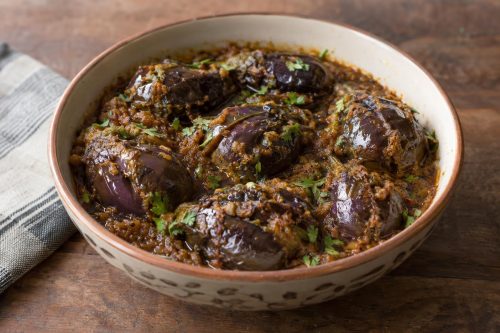
Dum Ke Baingan is a slow-cooked aubergine dish. The process starts by building a spice paste from dry-roasted whole spices, then letting the fried aubergines finish cooking in that paste under a covered pot. The name refers to the dum technique, which uses trapped steam over a low flame or in a slow oven to cook the dish through gently. The result is aubergines that hold their shape and carry the flavour of cumin, cardamom, cloves, cinnamon and red chillies all the way through. It is a recipe worth making when you want something that tastes considered without being complicated.
About the Recipe
The spice base is built from whole spices that are roasted in a small amount of oil, cooled, ground to a powder and then loosened with malt vinegar to form a paste. This paste goes into a cooked onion, ginger and garlic base along with turmeric and a little hot water.
The aubergines are fried in batches first so they are half cooked before they meet the sauce. The final dum stage, just 3 to 4 minutes covered on a low flame, brings everything together.
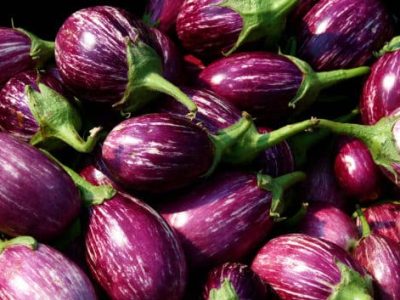
Using small, oval or round aubergines matters here. They stay whole and cook evenly, which is what makes the dish work.
Why You Will Love This Recipe
The spice paste is built from scratch using whole spices that you roast and grind yourself. It gives the dish a depth that ready-made masalas do not match.
Malt vinegar brings the ground spices together into a paste and cuts through the richness of the oil-based sauce without tasting sharp. The aubergines are fried before they go into the sauce, so they hold their shape during the dum stage rather than collapsing into it.
You get pieces that are fully cooked, well-spiced and still intact.
Cooking Tips
The most common beginner mistake is skipping the partial frying and putting raw aubergines straight into the sauce. They will not cook through evenly during the short dum stage. Fry them in batches so the oil temperature stays consistent.
When cooking the spice paste into the onion base, keep the heat at medium and stir regularly. The paste is ready when the oil visibly separates from the sauce. Do not rush this step.
During the dum stage, keep the flame as low as possible and do not lift the lid early.
Top Tips
- Use small, oval or round aubergines of a similar size so they cook at the same rate during frying and dum.
- Let the whole spices cool completely before grinding. Grinding warm spices can make the powder uneven and cause it to clump when the vinegar is added.
- Add the hot water gradually when making the sauce and wait for it to evaporate fully before checking whether the oil has separated.
- When arranging the fried aubergines in the sauce, stir very carefully so they do not break apart before the dum stage.
- If using a slow oven instead of the stovetop for dum, make sure the dish is tightly covered so no steam escapes.
Serving and Storing Suggestions
Dum Ke Baingan works well with plain steamed rice or with a simple flatbread like roti or paratha. Serve it immediately after garnishing with green coriander.
If you are storing leftovers, let the dish cool fully before refrigerating in a covered container. Reheat gently on a low flame with a splash of water to loosen the sauce. It keeps well for a day in the refrigerator, and the flavour often improves once the spices have had more time to settle into the aubergines.
Similar Recipes
- Oven Baked Meat Stuffed Brinjals
- Brinjals baked in Vegetable Sauce
- Baked Aubergines
- Hyderabadi Mirchi Ka Salan (Hyderabad Green Chilli Curry)
- Prawn Pulao with Brinjals
Nutrient Benefits
Aubergines provide a small amount of dietary fibre and potassium. The whole spices used here, including cumin, cardamom and cinnamon, contribute trace minerals. Garlic and ginger both contain small amounts of vitamins and minerals. The dish is vegetarian and provides a reasonable amount of plant-based fibre per serving.
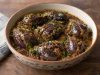
Dum Ke Baingan
Ingredients
- 800 gms, small, oval/round Aubergines (brinjals)
- 2/3 cup Oil
- 12 , whole Red Chillies
- 2 tsp Cumin Seeds
- 1 1/3 tsp Black Pepper
- 10 Green Cardamoms
- 5 Cinnamon sticks
- 1 Bayleaf
- 10 Cloves
- 4 tbsp Malt Vinegar
- 3/4 cup Onion Paste
- 2 2/3 tbsp Ginger Paste
- 1 tsp Turmeric Powder
- 2 2/3 tbsp Garlic Paste
- Salt to Taste
- 3 tsp, chopped Green Coriander
Instructions
- Trim the stems of the aubergines.
- Slit open each aubergine crosswise, without disjoining it from the stem.
- In a pan, heat 1 tbsp oil over medium heat.
- Add the red chillies, cumin seeds, black pepper, green cardamoms, cinnamon sticks, bayleaf, cloves and cumin seeds.
- Saute over medium heat for 5 to 6 minutes.
- Cool and grind to a fine powder.
- Mix in vinegar to make a fine paste.
- Heat a little oil in a pan, fry the aubergines, a few at a time, for 5 to 6 minutes or until they are half cooked.
- Remove from the heat and keep aside.
- In the same pan, heat the remaining oil, add the onion paste and saute over medium heat until the paste is lightly coloured.
- Add the ginger and garlic pastes, turmeric powder and the ground spice- paste.
- Stir and cook over medium heat for 4 to 5 minutes.
- Add salt and 2/3 cup of hot water.
- Cook until the water evaporates and the oil separates from the sauce.
- Arrange the fried aubergines in the sauce.
- Stir very carefully, cover and cook over a low flame or in a slow oven (dum) for 3 to 4 minutes.
- Garnish with green coriander.
Sign up for our newsletter
Add Awesome Cuisine as a Preferred Source

Frequently Asked Questions
Can I use large aubergines instead of small ones?
Small, oval or round aubergines work best because they can be slit open and kept whole, which holds their shape during frying and the dum stage. Large aubergines would need to be cut into pieces, which changes the texture and makes the dish harder to present neatly. If small aubergines are not available, medium-sized ones cut into thick wedges are a more practical substitute than large ones sliced thin.
What does the malt vinegar do in this recipe?
Malt vinegar brings the ground dry spice powder together into a workable paste. It also adds a mild sharpness that balances the richness of the oil and the sweetness of the onion base. If malt vinegar is not available, white wine vinegar or cider vinegar can be used instead. Avoid using very strong vinegars in larger quantities as they can overpower the spice flavours.
How do I know when the oil has separated from the sauce?
You will see the oil begin to pool around the edges of the pan and the surface of the sauce will look glossy and slightly separated from the thicker paste underneath. The sauce will also stop bubbling as vigorously. This is the sign that the water has evaporated and the spices are properly cooked into the oil base. Do not move to the next step until you see this clearly.
Can I make the spice paste in advance?
Yes. You can roast the whole spices, grind them to a powder and mix in the malt vinegar a day ahead. Store the paste in a small airtight container in the refrigerator. This saves time on the day you cook and the paste holds its character well overnight. Bring it to room temperature before adding it to the pan so it does not cool down the oil too quickly.
Is 12 whole red chillies too much? Can I reduce them?
The quantity does produce a fairly spicy dish. If you prefer less heat, you can reduce the red chillies to 6 or 8 without affecting the overall structure of the recipe. Removing the seeds from the chillies before roasting is another way to reduce heat while keeping the chilli flavour. The cardamom, cinnamon and cloves are present in generous amounts and will still give the dish plenty of character even with fewer chillies.