
Delicate white fish cooks quickly because its lean flesh contains little fat and connective tissue to protect it from prolonged heat. A gentle simmer gives the proteins time to set without tightening so aggressively that the fish turns dry or breaks apart.
This method works especially well with tomato sauces, light curries and aromatic broths. It also offers a softer alternative to pan-seared flounder, where direct contact with a hot pan creates a very different texture. Once you understand how sauce consistency, fillet shape and timing interact, simmered fish becomes much easier to judge.
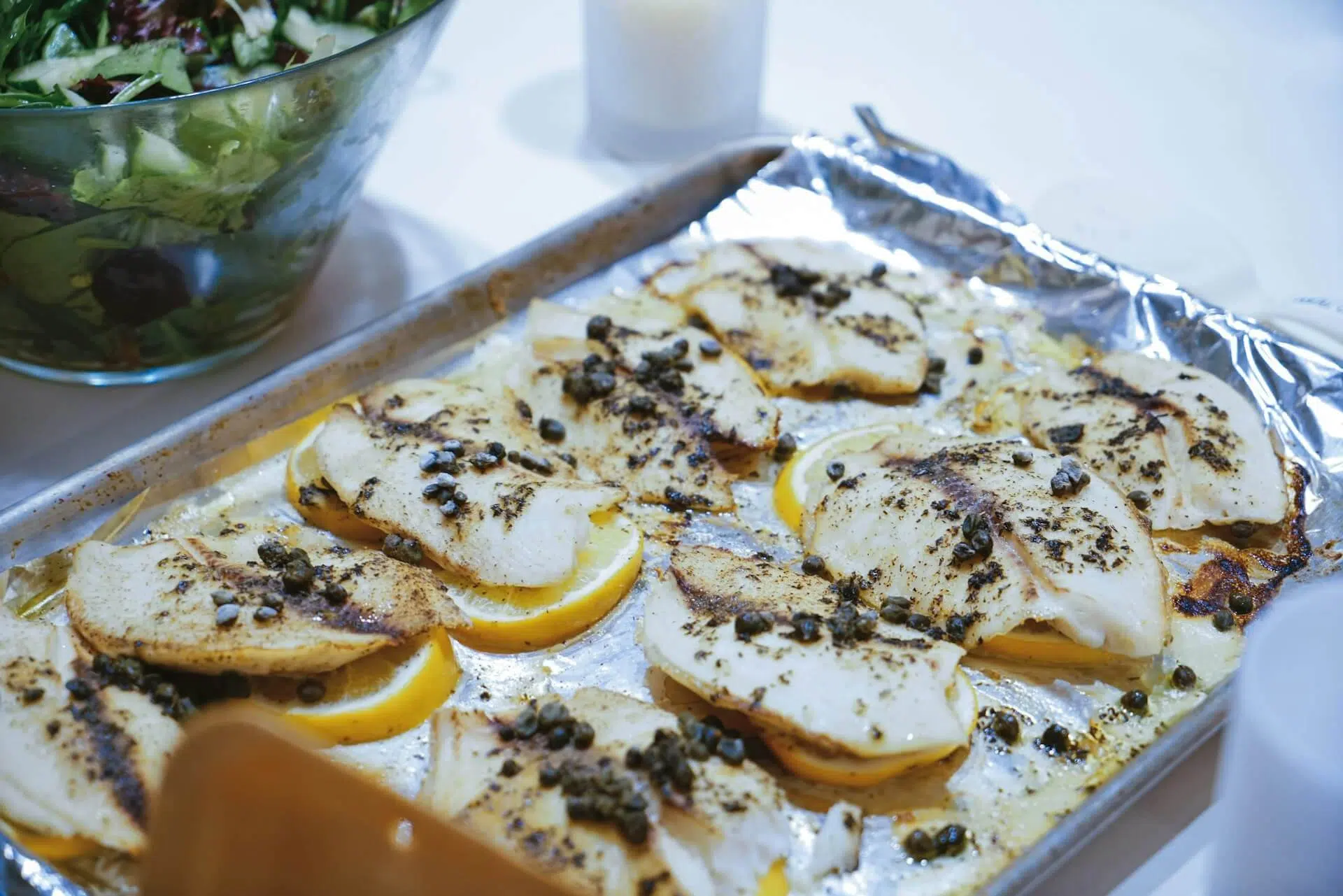
Sauce Thickness Dictates Cooking Speed
A thin broth transfers heat around the fish quickly. A thick coconut, tomato or onion-based sauce moves more slowly and may hold pockets of higher heat against the bottom of the pan. That difference changes how you should manage both the burner and the cooking time.
Bring a thin sauce to a gentle simmer before adding the fish, then reduce the heat as soon as the fillets go into the pan. You should see an occasional bubble near the edge, not vigorous bubbling across the surface. If the liquid boils hard, the moving sauce can knock flakes from the fish before its center has set.
Thick sauces need another check. Drag a spoon across the bottom of the pan before adding the fish. If the trail stays open for several seconds, loosen the sauce with a little water, stock or coconut milk. The fish needs enough surrounding moisture to cook evenly. A sauce that resembles a pourable gravy usually works better than one that sits in stiff mounds.
Pan shape matters too. Use a wide skillet or shallow braising pan that holds the fillets in one layer. Crowding cools the sauce at first, then creates uneven cooking as the burner brings it back to temperature. Leave a small gap between portions and cover the pan only if the recipe calls for it. A lid traps steam and can shorten the cooking time by several minutes.
Choosing the Right White Fish Cuts
Choose fillets with an even thickness whenever possible. A very thin tail end can finish while the thicker center still looks translucent, which makes timing difficult. Portions around 1 inch thick are forgiving enough for tomato sauce, curry or seasoned broth.
Haddock, cod, pollock and halibut all suit gentle simmering, though their textures differ. Haddock has a fine flake and mild flavor, while cod tends to form larger flakes. Halibut is firmer and often thicker, so it may need a few extra minutes. When ordering seafood for a sauced fish dish, evenly portioned haddock fillets can reduce the guesswork and help every serving finish at about the same time.
The cut’s condition also affects the result. According to guidance on selecting fresh fish, fillets should have firm flesh and a fresh, mild smell. Avoid pieces with dried edges or wide gaps between the muscle flakes because those signs can point to moisture loss.
If one end of a fillet is much thinner, fold that end underneath to create a more uniform shape. You can also divide a long fillet into two portions and add the thicker piece to the sauce one or two minutes before the thinner one. Pat the surface dry before seasoning. Excess water dilutes the sauce at the exact point where you want its flavor to cling to the fish.
Timing the Simmer to Avoid Toughness
Start checking earlier than you think. A 1-inch fillet in hot sauce may cook in 6 to 10 minutes depending on its starting temperature, the pan material and whether you use a lid. Thin pieces can finish in 4 or 5 minutes.
Keep the sauce below a boil throughout that window. High heat squeezes moisture from the muscle fibers and can make lean white fish feel cottony. The visual clues are more useful than a rigid timer. Watch for the flesh to change from translucent to opaque along the sides, then check the thickest part with the tip of a small knife. It should separate into moist flakes under light pressure.
For food safety, the FDA’s safe cooking guidance recommends cooking fish to an internal temperature of 145°F. Insert an instant-read thermometer sideways into the thickest section so the sensing area reaches the center. Remove the pan from the burner as soon as the fish reaches the target since retained heat from the sauce will continue cooking it briefly.
Starting temperature also matters. A refrigerator-cold, thick fillet will take longer than a thin piece that has been sitting out for 10 minutes during preparation. Don’t leave seafood at room temperature for an extended period. Simply season it while the sauce comes to a simmer.
If the sauce still needs reducing after the fish is done, transfer the portions to warm plates and cover them loosely. Simmer the sauce alone for another minute or two, then spoon it over the fish. This keeps sauce correction from becoming extra cooking time for the fillets.
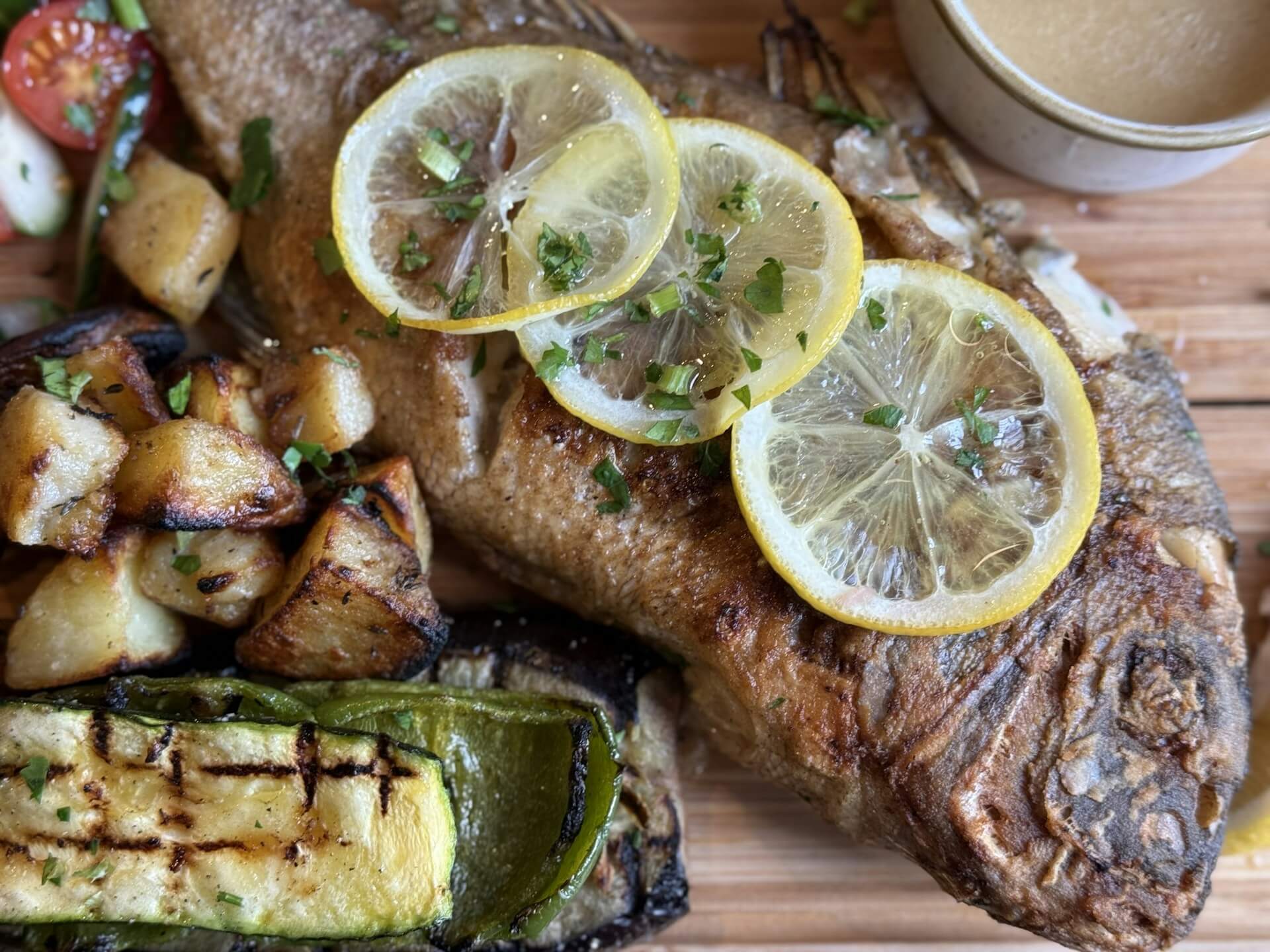
Infusing Deep Flavor Without Stirring
Build the sauce fully before the fish enters the pan. White fish cooks too quickly to wait for raw onions to soften or spices to lose their harsh edge. Sauté aromatics first, toast ground spices briefly and simmer tomatoes or stock until the flavors taste balanced. Once that foundation is ready, the fish only needs enough time to cook and absorb the surrounding seasonings.
Arrange each portion in the sauce with space around it, then use a spoon to coat the exposed top. Avoid stirring the pan after this point. A wooden spoon can split tender fillets, especially when they are halfway cooked and the proteins have begun separating into flakes.
Instead, shake the pan gently from side to side or spoon hot sauce over the fish once during cooking. For a practical example of how a seasoned sauce can surround a whole fish, see this recipe for braised whole fish in chilli and garlic sauce. The same principle applies to fillets, though their shorter cooking time calls for a lighter touch.
Layer flavor according to how each ingredient reacts to heat. Add sliced garlic, ginger and firm herb stems early. Put delicate herbs, citrus juice and fresh chile near the end so their aromas stay bright. Capers, olives or a small amount of soy sauce can add salt and savoriness, but taste the finished sauce before adding more seasoning.
Sustainable seafood references such as the MSC species guide can also help you compare common white fish choices and understand sourcing labels. The species may change, but the simmering method remains consistent: prepare the sauce first, keep the movement gentle and disturb the fillet as little as possible.
Let the cooked fish rest in the sauce off the heat for one minute before serving. That brief pause allows the surface to pick up more flavor without exposing the center to another round of bubbling. Lift each portion with a wide spatula, then spoon the sauce around and over it so the flakes arrive at the table intact.
Image Credit: Unsplash
Image Credit: Unsplash