
Every Indian kitchen leans on its refrigerator more than most. Idli and dosa batter, homemade curd, paneer, chutneys, ginger-garlic paste, a fresh bunch of coriander, and the dal you made for two days. When the fridge is off by even a few degrees, these are the first things to tell you.
Batter that turns too sour overnight, curd that splits, paneer that goes slimy by day three, or coriander that freezes into dark mush in the vegetable drawer. It is easy to blame the recipe or the shop. Often the real problem is the refrigerator itself. Here is how to check it before you throw out another batch.
Know the Numbers First
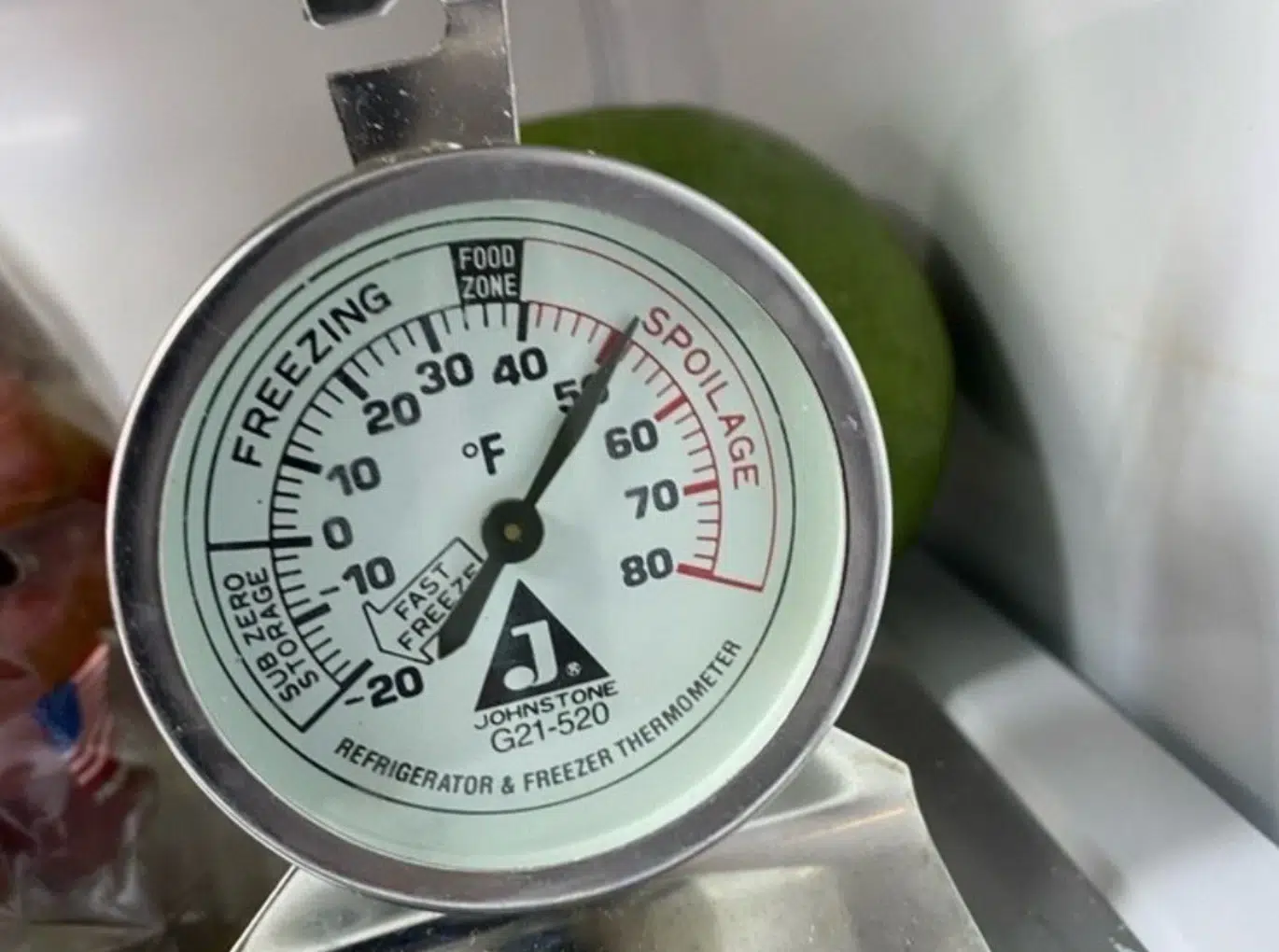
Food safety agencies recommend keeping the refrigerator at 40°F (4°C) or below and the freezer at 0°F (-18°C). Most cooks aim a little lower in the fridge, around 37°F (3°C), which keeps food safe without freezing delicate greens.
The dial inside many refrigerators does not show a temperature at all. It shows numbers from 1 to 5 or 1 to 9, and those numbers mean different things on different models. The only way to know what your fridge is actually doing is to measure it.
Run a Simple Thermometer Test
Buy an inexpensive appliance thermometer. Place a glass of water on the middle shelf, put the thermometer in it, and leave it overnight without opening the door more than you have to. Water changes temperature slowly, so it shows the real temperature your food lives at, not the burst of cold air from the vent.
Read it first thing in the morning. If the water sits between 35°F and 38°F (2°C to 3°C), your fridge is fine. If it reads above 40°F (4°C), food is spoiling faster than it should. Repeat the test in the freezer by placing the thermometer between two frozen packets.
Check the door shelves too. They are the warmest part of the fridge, which is why milk and curd belong on a middle shelf, not in the door.
What Your Food Is Telling You
Batter that over-ferments overnight and curd that turns watery and sour usually point to a fridge running warm. Fermentation slows down a great deal at proper refrigerator temperature. When it races ahead, the cold is not doing its job.
Coriander, mint, and curry leaves that freeze in the crisper point the other way. Either the setting is too cold, or cold air from the freezer vent is landing directly on that area. Moving greens away from the back wall often solves it.
Ice cream that turns soft and grainy, or frost forming inside sealed packets, suggests the freezer temperature is swinging up and down. That pattern deserves attention even if the fridge section still feels cold.
Check the Easy Things Yourself
Start with the door seal. Close the door on a sheet of paper or a currency note and try to pull it out. If it slides out with no resistance, warm kitchen air is leaking in. Test several spots around the door. A dirty gasket can sometimes be fixed with warm soapy water, but a torn or flattened one needs replacing.
Look at airflow next. A fridge packed tightly with steel dabbas and containers cannot move cold air around. Leave space near the vents, usually at the back of the freezer and the top of the fridge section, and avoid pushing containers against the back wall.
Let hot food cool before it goes in. A large pot of hot sambar or biryani warms everything around it and makes the compressor work hard for hours. Cool food on the counter, but get it into the fridge within two hours of cooking.
Finally, check the condenser coils if your model has them exposed at the back or underneath. In a busy kitchen they collect dust and a film of grease from tadka and frying. Unplug the fridge and clean them gently with a vacuum brush. Clogged coils make the refrigerator run longer and cool less.
Signs It Is Time for a Technician
Some problems are beyond a home fix, and it helps to recognize them early.
If the freezer is cold but the fridge section is warm, the fan that moves cold air between them may have stopped, or the cooling coil behind the freezer panel may be blocked with ice. A thick sheet of frost on the back wall of a frost-free freezer points to the same defrost problem.
Water collecting under the crisper drawers or on the floor usually means the defrost drain is clogged. Clicking sounds with no cooling, a compressor that runs constantly, or a fridge that stays warm after the coils and seals check out all need a proper diagnosis.
Keep a note of your thermometer readings and what you have already checked. A technician can use that information to find the cause faster, which saves you time and money.
A Cold Fridge Is Part of Good Cooking
We spend hours on a perfect batter, a smooth paneer, or a slow-cooked dal. It makes sense to give the appliance that protects that work ten minutes of attention once in a while. Test the temperature twice a year, keep the seals and coils clean, and do not ignore the small signs.
If your refrigerator still runs warm after these checks, call a qualified technician near you. For readers in Southern California, A11 Appliance Repair offers refrigerator repair in Greater LA, including built-in and high-end models. Wherever you live, a good technician will measure, explain what failed, and give you a written price before starting the work.