The first time someone cooks fish properly – not just edible, but actually good – there is usually a moment of quiet disbelief. The oil, just enough. The spices, bloomed in sequence. The fish, golden and fragrant and holding together the way it never quite did before. It feels like a small miracle. And then it becomes the thing you want to cook every week.
Fish has always had this quality in Indian kitchens. On the Konkan coast, a bangda curry is done before the monsoon rain has properly started. In Bengal, hilsa wrapped in mustard paste and steamed in banana leaf is its own kind of meditation. In Kerala, karimeen pollichathu arrives at the table still sizzling in its leaf parcel, and the whole room goes quiet for a second. These are not complicated dishes. They are precise ones.
The word “light” sometimes gets misread as bland. Not here. Light means fish that is not drowning in heavy gravy, not battered into unrecognisability, not masked by a sauce doing all the work. Light means the fish is the point – the spice is there to lift it, not bury it.
Table of Contents
Key Takeaways
- Tawa fry with minimal oil is one of the fastest and most flavour-forward ways to cook fish – bangda or surmai take under 25 minutes from start to plate.
- Scoring whole fish and marinating for at least 30 minutes makes a bigger difference than any single spice – this step is not optional.
- Steaming and baking preserve omega-3 fatty acids and lean protein better than deep frying, without sacrificing flavour.
- Fresh fish smells faintly of the sea, not strongly of fish – learning to judge freshness at the market saves every recipe before it begins.
- Each recipe here uses a different technique, so working through this list builds your skills across tawa fry, steaming, light curry, and pollichathu.
- Hilsa, karimeen, and pomfret carry cultural weight that goes beyond the plate – cooking them connects you to specific coastal traditions worth understanding.
TAWA FRY (TAVA FRY)
A dry-heat cooking method using a flat iron griddle (tawa) with minimal oil – typically one to two teaspoons – at high heat. The fish is marinated in a spice paste, placed on the hot surface, and cooked without liquid, producing a charred, crisp exterior while keeping the interior moist. The preferred method across Goan, Konkan, and Mangalorean coastal kitchens for whole or steak-cut fish.
India is the third largest fish producer in the world, and yet home cooking of fish remains intimidating for many people – especially those who grew up in non-coastal kitchens. These ten recipes are an answer to that. Each one comes with a clear technique, the common mistake people make with it, and a note on what makes it worth learning.
72.1% of the Indian population consume fish, according to a 2024 WorldFish study – with a notable rise in consumption in inland areas over the past decade.
Source: WorldFish: Fish Consumption in India – Patterns and Trends (2024)
At a Glance: All 10 Recipes
A quick reference before you start – cooking method, dominant flavour, difficulty, and how much time to set aside.
| Fish | Method | Dominant Flavour | Difficulty | Cook Time |
| Bangda (Mackerel) | Tawa fry | Spiced, tangy | Easy | 15 min |
| Pomfret | Shallow fry | Coastal, coconut | Easy | 20 min |
| Rawas (Indian Salmon) | Pan-roast | Smoky, mild | Easy-Medium | 20 min |
| Surmai (King Fish) | Tawa fry | Bold, meaty | Easy | 25 min |
| Karimeen (Pearl Spot) | Pollichathu / leaf | Earthy, coconut | Medium | 30 min |
| Tilapia | Bake in yoghurt | Tangy, aromatic | Easy | 20 min |
| Rohu | Light tomato curry | Mild, freshwater | Easy | 30 min |
| Prawn | Dry masala stir-fry | Sweet, briny | Easy | 12 min |
| Basa / Sole | Steam with ginger | Delicate, clean | Easy | 15 min |
| Hilsa (Ilish) | Mustard paste curry | Rich, pungent | Medium-Hard | 35 min |
1. Bangda Tawa Fry (Spiced Mackerel on the Griddle)
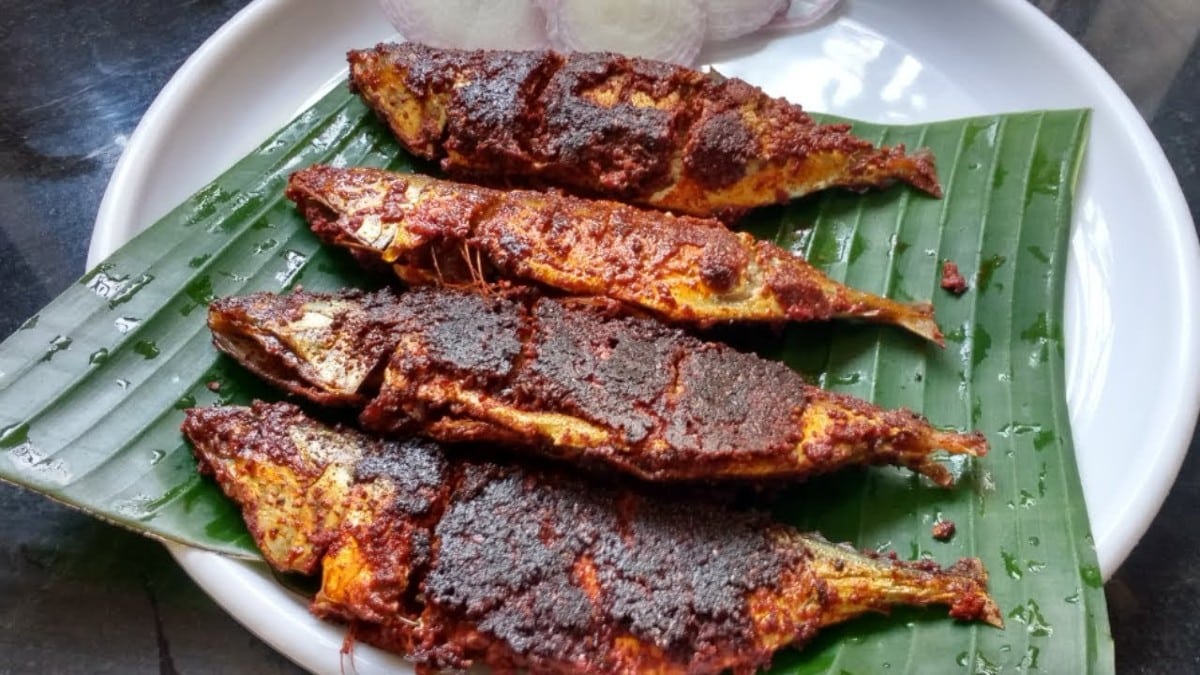
Image via YouTube
Mackerel – bangda in Marathi, ayla in Kerala – is affordable, deeply nutritious, and one of the best fish you can cook on a tawa. Its natural oils give it richness that stands up to bold spice, and it cooks fast. Once you have made this three or four times, it becomes the kind of recipe you start on autopilot after a long day. The charred edges, the lime wedge on the side, the sound of it hitting the hot pan – all of it becomes routine in the best possible way.
Key Ingredients
- 2 whole bangda (mackerel), cleaned and scored
- 1 tsp red chilli powder
- 1/2 tsp turmeric powder
- 1 tsp coriander powder
- 1/2 tsp cumin powder
- 1 tbsp tamarind pulp or 1 tsp kokum paste
- 1 tsp oil for marinade, 1-2 tsp oil for cooking
- Salt to taste
- Lime wedges and raw onion rings to serve
Method
- Score the fish on both sides with three diagonal cuts deep enough to reach the bone – without this, the marinade sits on the skin and does nothing.
- Mix all the spices with tamarind pulp or kokum paste and 1 tsp oil to make a thick paste. Rub it firmly all over the fish, getting the paste into the score marks.
- Leave to marinate for at least 30 minutes. An hour is better.
- Heat a cast iron tawa or heavy flat pan until genuinely hot. Add 1-2 tsp oil.
- Place the fish on the tawa. You will hear an immediate, confident sizzle. Do not touch it.
- Cook for 3-4 minutes per side. The outside should be crisp and slightly charred at the edges; the inside stays moist.
- Serve immediately with lime wedges and raw onion rings.
Pro tip: If the fish sticks to the pan, it is not ready to flip. When it releases cleanly, flip it. This applies to every fish on a tawa, not just bangda.
2. Pomfret Masala (Shallow Fried in Coconut Paste)
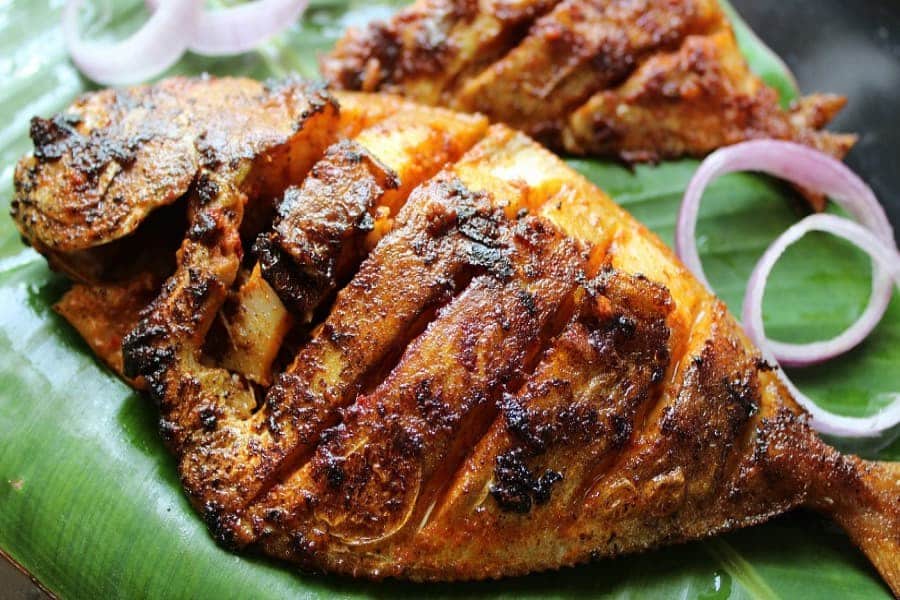
Silver pomfret – paplet in Marathi, vavval in Tamil – is the fish many Indian coastal families reach for when it matters. Flat and round, with mild but distinctive flesh, it holds its shape under heat and carries marinade beautifully. The coconut-green chilli paste coating is what sets this apart from a straightforward tawa fry – the fresh coconut caramelises slightly against the hot pan and fills the kitchen with the kind of smell that makes everyone arrive at the table quickly.
Key Ingredients
- 2 whole pomfret, cleaned and scored
- 3 tbsp fresh or desiccated coconut
- 3-4 green chillies
- 1 inch fresh ginger, roughly chopped
- 4-5 garlic cloves
- Small bunch of fresh coriander leaves
- Small piece of tamarind (marble-sized)
- 1/4 tsp turmeric
- 2-3 tbsp oil, salt to taste
Method
- Blend coconut, green chillies, ginger, garlic, coriander, tamarind, and turmeric into a thick paste. Add a splash of water if needed to bring it together.
- Score the pomfret on both sides. Coat generously with the paste, pressing it into the score marks and any cavity.
- Marinate for at least 30 minutes.
- Heat 2-3 tbsp oil in a wide, heavy pan over medium-high heat.
- Cook the fish for about 5 minutes per side. The coconut paste will catch slightly and turn golden – this is what you want.
- Serve with sliced onions and a squeeze of lime.
Pro tip: If pomfret is not available, sea bream or any firm, flat fish works well here. The marinade is the recipe.
3. Rawas Pan-Roast with Curry Leaf Butter
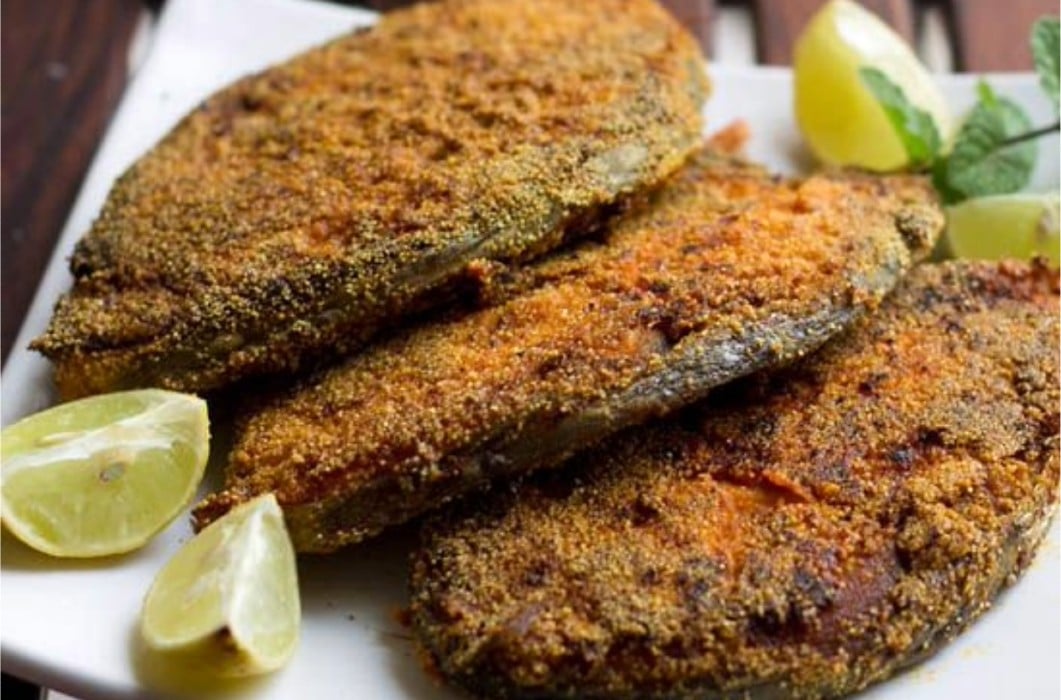
Rawas, sometimes called Indian salmon, has clean, mild flesh and a firm texture that holds up beautifully to high heat. It is leaner than Atlantic salmon, which means a little more attention is needed to keep it moist – but the payoff is that the flavour of the fish itself comes through clearly. The finishing touch here is a curry leaf butter poured over at the last moment, and it makes a quietly extraordinary difference.
Key Ingredients
- 2 rawas fillets (approx. 180g each)
- 1/2 tsp red chilli powder
- 1/2 tsp cracked black pepper
- Juice of half a lime
- 1 tsp oil for searing
- 1 small knob of butter (about 1 tbsp)
- 10-12 fresh curry leaves
- Salt to taste
Method
- Season the fillets with chilli powder, black pepper, lime juice, and salt. Leave for 15 minutes.
- Heat a pan with 1 tsp oil over high heat until very hot.
- Place the fillets skin side down. Press gently for the first 30 seconds to prevent the skin from curling.
- Cook for 3 minutes on the skin side, then flip and cook for 2 minutes on the other side.
- Remove the pan from the heat. Add the butter and curry leaves. The butter will melt and the curry leaves will sizzle and turn slightly crisp.
- Spoon this fragrant butter over the fish twice and serve immediately.
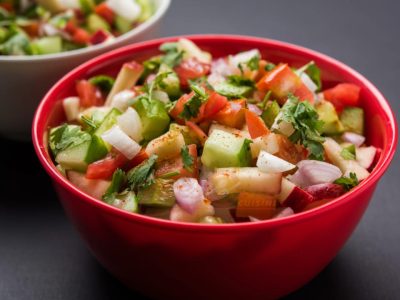
Pro tip: Serve alongside a simple kachumber – diced cucumber, tomato, red onion, green chilli, lime juice. The freshness of the salad balances the richness of the butter perfectly.
4. Surmai Tawa Fry (King Fish Steaks)
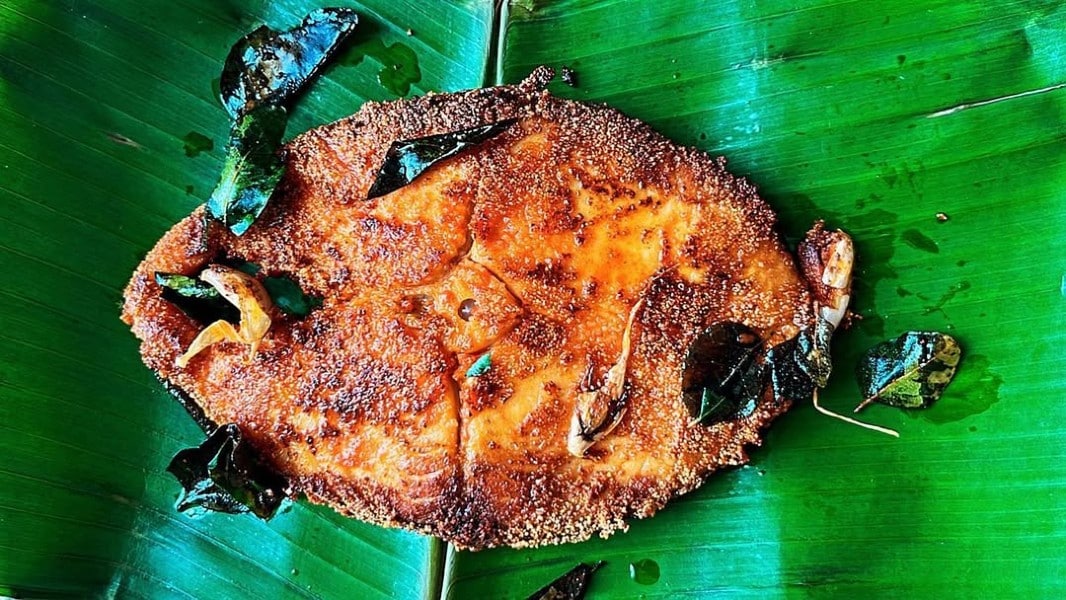
King fish, surmai in Hindi and Marathi, is the go-to choice when you want a tawa fry to look impressive. The thick steaks are meaty enough to anchor a full meal, the flavour is bold, and a well-spiced rub caramelises beautifully at high heat. This is the fish to cook when you have people coming over and want to look like you tried harder than you did.
Key Ingredients
- 4 surmai steaks (2.5-3 cm thick)
- 1 tsp Kashmiri red chilli powder (for colour without aggressive heat)
- 1/2 tsp regular red chilli powder
- 1/2 tsp turmeric
- 1 tsp coriander powder, 1/2 tsp cumin powder
- 1/4 tsp garam masala
- 1 tsp ginger-garlic paste
- 1-2 tsp oil, salt to taste
Method
- Mix all spices with ginger-garlic paste and a little oil to form a paste.
- Coat the surmai steaks on all sides. Marinate for at least 1 hour.
- Heat a tawa or heavy pan over high heat. Add 1-2 tsp oil.
- Cook the steaks for 4-5 minutes per side. Because they are thicker than whole fish, patience matters more here.
- The outer layer should be deeply spiced and slightly caramelised. The interior should stay juicy.
- Serve with sliced onions, lime, and green chutney.
Pro tip: Surmai is one of the more forgiving fish to cook on a tawa – the thickness means a little variation in timing does not ruin it. Good for beginners moving past the basics.
5. Karimeen Pollichathu (Pearl Spot in Banana Leaf)
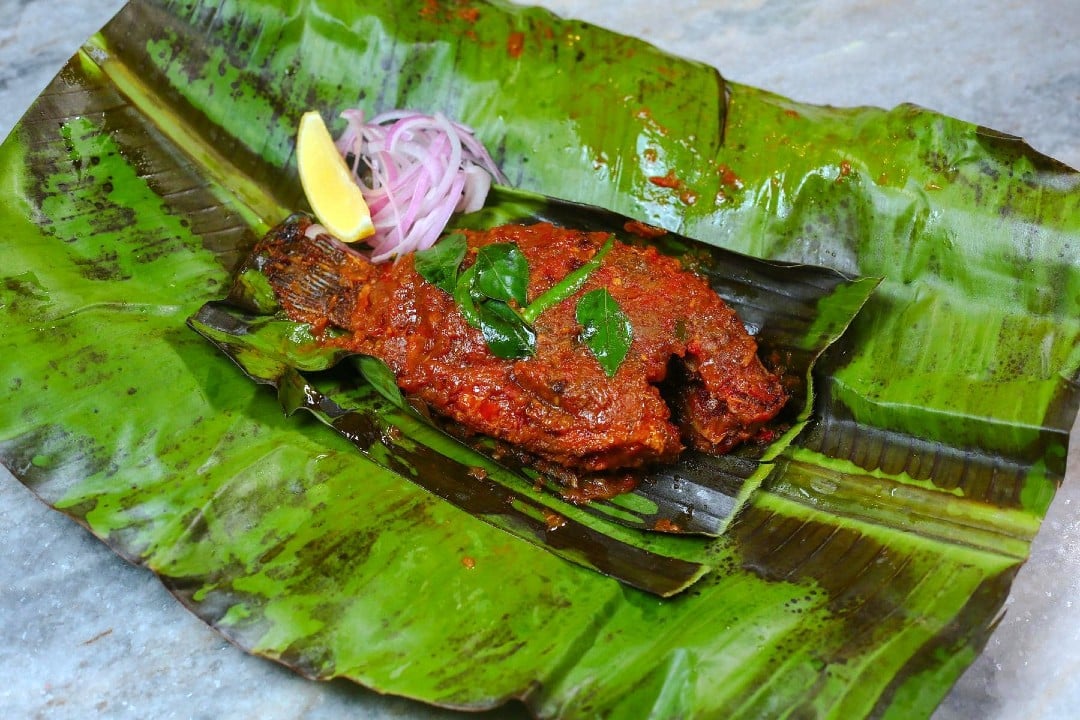
This dish from Kerala feels ceremonial every time you make it. Karimeen – pearl spot – is marinated in a paste of shallots, tomatoes, green chillies, ginger, garlic, coconut oil, and whole spices, then wrapped tightly in a banana leaf and cooked on a griddle. The leaf steams the fish from inside while the outside takes on a faint, smoky char. When you tear it open at the table, the aroma is something entirely its own.
Key Ingredients
- 2 whole karimeen (pearl spot), cleaned and scored
- 8-10 small shallots (pearl onions), finely chopped
- 2 medium tomatoes, chopped
- 3-4 green chillies, slit
- 1 tsp ginger-garlic paste
- 1/2 tsp fennel powder, 1/2 tsp black pepper powder, 1/2 tsp coriander powder
- 1/4 tsp turmeric
- 2 tbsp coconut oil
- Banana leaves, softened over a flame (or foil if unavailable)
- Salt to taste
Method
- Heat coconut oil in a pan. Fry the shallots until softened, then add tomatoes and cook until jammy, about 8 minutes.
- Add ginger-garlic paste, all the ground spices, and green chillies. Cook until the oil separates slightly at the edges. This is your masala paste.
- Coat the scored fish thoroughly in this masala.
- Place each fish on a banana leaf, fold the edges tightly, and secure with a toothpick or tie with string.
- Cook on a hot tawa for 5-6 minutes per side, or bake in an oven at 200 degrees Celsius for 20 minutes.
- Tear open the parcel at the table. Serve as-is.
Pro tip: No karimeen near you? Tilapia or a small bream works well. The technique and the masala are what matter here, and both are learnable on your first try.
6. Tilapia Baked in Spiced Yoghurt
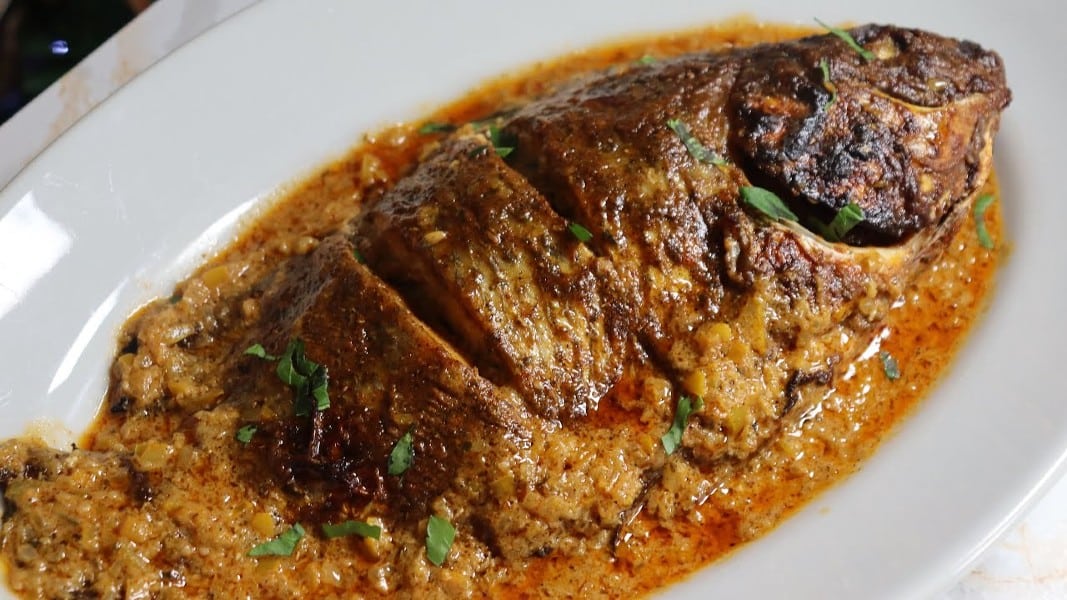
Tilapia is often underestimated. Its mild flavour – which some find uninteresting – is actually its strongest quality: it absorbs whatever you put it in completely. Baked in a spiced yoghurt marinade, it becomes tangy, aromatic, and light enough that you feel good about yourself afterward. This is the recipe that works for someone eating lighter without wanting to feel like they are making a sacrifice.
Key Ingredients
- 2 tilapia fillets
- 3 tbsp thick curd (hung curd or well-drained curd)
- 1 tsp cumin powder
- 1/4 tsp cardamom powder
- 1 tsp red chilli powder
- 1 tsp ginger-garlic paste
- 1/4 tsp turmeric
- Salt to taste, a little oil for the baking tray
Method
- Whisk together the curd, all spices, and ginger-garlic paste until smooth.
- Coat the tilapia fillets generously in the marinade. Refrigerate for 2 hours.
- Preheat the oven to 200 degrees Celsius. Lightly oil a baking tray.
- Place the fish on the tray and bake for 15-18 minutes.
- Switch to grill/broil mode for the final 2 minutes to caramelise the edges.
- Serve with roti or rice and a fresh salad.
Pro tip: Hung curd (curd drained overnight in a muslin cloth) gives a thicker marinade that clings better and caramelises more evenly in the oven.
7. Rohu in Light Tomato Curry
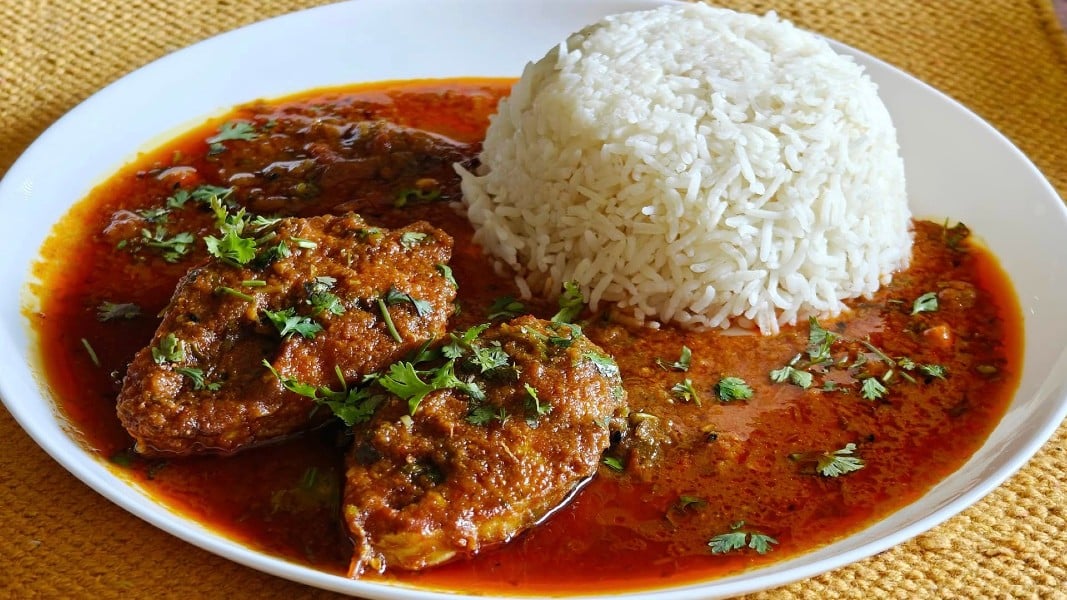
Rohu is a freshwater fish common across North and East India – mild, slightly earthy, and perfectly suited to a restrained curry that does not compete with the fish itself. This is not the thick, cream-heavy gravy that can mask the fish entirely. The tomatoes are bright, the tempering is aromatic, and the fish absorbs the curry rather than floating in it. It is the kind of dish that becomes a regular weeknight meal without ever feeling repetitive.
Key Ingredients
- 500g rohu pieces, cleaned
- 3 medium tomatoes, roughly chopped
- 1 large onion, thinly sliced
- 1 tsp ginger-garlic paste
- 1 tsp mustard seeds
- 2-3 dried red chillies
- 1 sprig curry leaves
- 1/2 tsp turmeric, 1 tsp chilli powder, 1 tsp coriander powder
- 1 tbsp oil, salt to taste
Method
- Heat oil in a wide pan. Add mustard seeds and wait for them to pop – that small explosive sound means the temperature is right.
- Add dried red chillies and curry leaves. The chillies will puff slightly; the leaves will sizzle and crisp at the edges.
- Add onions and cook until translucent. Add ginger-garlic paste and cook for 1 minute.
- Add the tomatoes, crushing them by hand directly into the pan. Add all the ground spices. Cook this down for 8-10 minutes, stirring occasionally.
- Add the rohu pieces gently into the pan. Add a small splash of water if needed to loosen the curry.
- Cover and cook on low heat for 10-12 minutes. Serve with steamed rice.
This curry pairs beautifully alongside something quick – a preparation like the quick fried prawns with spices on AwesomeCuisine makes an easy second dish that is ready in minutes.
The American Heart Association recommends at least two servings of fish per week, particularly fatty fish rich in omega-3 fatty acids, to reduce the risk of heart disease and sudden cardiac death.
Source: American Heart Association / Mayo Clinic (2026)
8. Prawn Dry Masala (Ready in 12 Minutes)
A dry prawn masala – no gravy, just shellfish and spice cooked together until the moisture has evaporated and everything is lightly caramelised – is one of the fastest things you can put on the table. Twelve minutes from raw prawn to plate, if your masala is assembled. For anyone who finds whole fish daunting, this is usually the confidence-builder that opens the door to everything else.
Key Ingredients
- 400g prawns, cleaned and deveined
- 1 tsp red chilli powder
- 1/4 tsp turmeric
- 1 tsp coriander powder
- 1/4 tsp garam masala
- 1 tsp ginger, finely minced
- 4-5 garlic cloves, finely minced
- 1 tbsp oil, salt to taste
Method
- Heat oil in a wide pan over high heat.
- Add the minced ginger and garlic. Stir for 30 seconds until fragrant.
- Add the prawns and all the spices. Toss constantly over high heat.
- Cook for 4-5 minutes, tossing regularly, until the prawns have curled into a C shape and the spices have dried onto the surface.
- Serve immediately with flatbread or plain rice.
Pro tip: Watch the shape: a C shape means cooked; an O shape means overcooked and rubbery. The window between the two is about 90 seconds, so stay at the stove.
The even-heat, constant-movement principle that makes this work applies to other proteins too. The technique covered in this stir-fried chicken guide explains the same logic and how to apply it across the board.
9. Basa Steamed with Ginger and Soy
Basa is mild, clean-tasting, and often unfairly dismissed because it is commonly sold frozen and handled carelessly. Done right – properly thawed, patted dry, and steamed with good aromatics – it is delicate and lovely. This preparation borrows from the Chinese-influenced cooking that has found a permanent home in Kolkata’s older kitchens and certain parts of Mumbai. The finishing pour of hot oil over ginger is a technique that takes ten seconds and changes everything.
Key Ingredients
- 2 basa fillets
- 2 inch piece of fresh ginger, cut into thin matchsticks
- 1 tbsp soy sauce
- 1 tsp sesame oil
- A pinch of sugar
- 2 spring onions, thinly sliced (for topping)
- 1 tbsp neutral oil (for the hot oil finish)
Method
- Pat the basa fillets dry with a kitchen towel. Place on a heatproof steaming plate.
- Scatter the julienned ginger generously over the top.
- Mix soy sauce, sesame oil, and sugar together and pour over the fish.
- Steam over actively boiling water for 10-12 minutes.
- Scatter spring onions over the fish.
- Heat the neutral oil in a small pan until smoking. Pour it directly over the ginger and spring onion on the fish. The sizzle is immediate and dramatic.
- Serve immediately with steamed rice.
If you enjoy ginger-forward seafood, the Thai prawn and ginger noodles on AwesomeCuisine is a natural companion recipe – the aromatics carry across beautifully.
10. Shorshe Ilish (Hilsa in Mustard Paste)
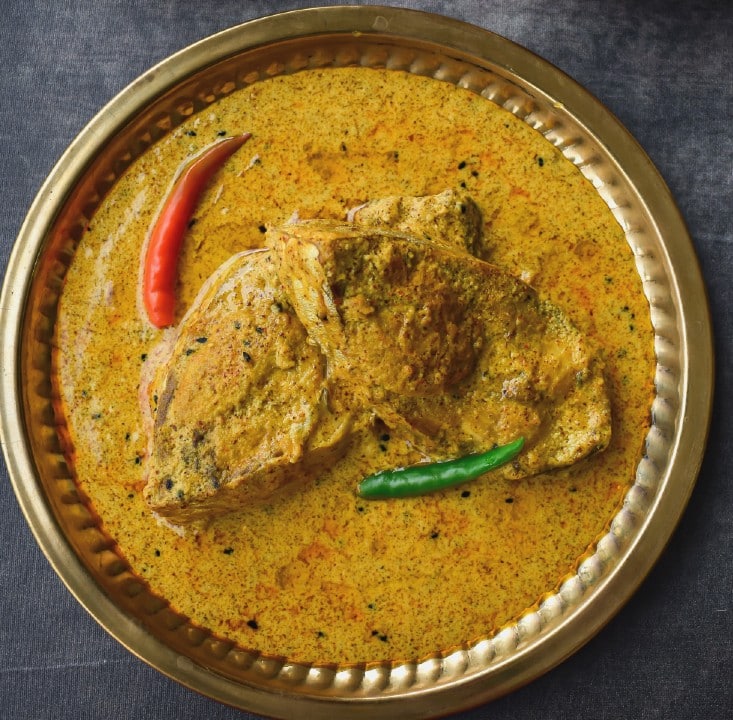
Hilsa – ilish – is treated in Bengal the way some cultures treat their finest wine. With reverence, with seasonal anticipation (the monsoon-run hilsa is considered the best, and people plan meals around it), and with a body of knowledge passed through families rather than written in books. Shorshe ilish, hilsa in a sharp mustard paste, is the dish that most represents this fish. It is considerably more approachable than its reputation suggests.
Key Ingredients
- 500g hilsa (ilish) pieces
- 2 tbsp yellow mustard seeds
- 1 tbsp black mustard seeds
- 3-4 green chillies
- 1/4 tsp turmeric
- 2 tbsp mustard oil, salt to taste
Method
- Soak both mustard seeds in water for 30 minutes. Drain and blend with green chillies, turmeric, and enough water to make a smooth paste.
- Heat mustard oil in a wide pan until it just begins to smoke (this removes the raw sharpness). Reduce the heat.
- Lightly fry the hilsa pieces in the mustard oil – about 1 minute per side. Remove and set aside.
- In the same oil, add the mustard paste and cook on low heat for 2 minutes.
- Add a small cup of water. Return the fish to the pan. Cover and cook on low heat for 10 minutes.
- The paste should remain bright yellow-gold – never let it brown. Serve with steamed rice.
Pro tip: Hilsa has fine bones throughout the flesh – this is part of eating it. Slow down, navigate them, and you will taste the fish properly. Bengali fish-eaters do this without thinking.
For a broader understanding of how light, health-forward eating works across seasons – including the role of fish – the guide to eating healthy during winter is useful companion reading.
The fish is the point. Every spice, every technique, every marinating hour exists to make the fish taste more like itself – not to replace it.
Which Cooking Method Works Best for Which Fish?
Before you buy, it helps to know how you plan to cook. Fat content, flesh density, and thickness all affect which method produces the best result.
| Method | Best Fish | Oil Needed | Health Rating | Texture Result |
| Tawa fry (dry) | Bangda, Surmai, Pomfret | 1-2 tsp | High | Crisp outside, moist inside |
| Shallow fry | Pomfret, Karimeen, Basa | 2-3 tbsp | Good | Golden, firm crust |
| Steam | Tilapia, Sole, Hilsa | None | Excellent | Silky, light, clean |
| Bake / oven roast | Rawas, Tilapia, Basa | Minimal rub | Excellent | Tender, slight caramelisation |
| Light curry | Rohu, Hilsa, Prawn | 1 tbsp tadka | High | Flavour-saturated, absorbed |
| Dry masala stir-fry | Prawn, small fish | 1 tbsp | High | Caramelised, spice-coated |
How Do You Know the Fish Is Fresh?
Fresh fish cooked with good aromatics does not leave an unpleasant smell in your kitchen. A strong fishy odour before cooking is a sign of age, not of fish. Learning to judge freshness at the market is the most important skill this list can teach.
| What to Check | Fresh Fish | Avoid If |
| Eyes | Clear, bright, slightly protruding | Cloudy, sunken, or grey |
| Smell | Clean, faintly sea-like | Strong fishy or ammonia odour |
| Gills | Bright red or pink | Brown, grey, or slimy |
| Flesh | Firm, springs back when pressed | Leaves a dent, feels mushy |
| Skin | Shiny, tight to the body | Dull, peeling, or discoloured |
India’s per capita fish consumption grew from 7 kg per year in 2011-12 to over 13 kg per year in 2022-23, with household monthly consumption nearly doubling in the same period.
Source: World Journal of Biology Pharmacy and Health Sciences (2024) / NCAER Report 2022-23
A Few Things Worth Knowing Before You Cook
Marinating time matters more than most people realise. Not because fish needs hours – it does not – but because twenty to thirty minutes of firm marinating makes the difference between spice sitting on the surface and spice that has actually become part of the fish. For whole fish, always score first. For fillets, press the marinade in firmly for a couple of minutes before setting it aside.
Oil temperature is the variable people most consistently underestimate. Fish placed into oil that is not hot enough will steam in its own moisture, go soft, and stick. Oil that makes a piece of fish sizzle immediately on contact is oil at the right temperature. Cast iron holds that temperature far more consistently than non-stick, which is why tawa fries look the way they do when made on an actual tawa.
The bone question comes up regularly. Many people avoid whole fish because of bones, which is understandable but is also a loss. Eating around bones slows you down. You taste more. You notice the texture of the flesh, the way the spice sits on it, the difference between the belly meat and the back. Fish eaten with attention is a different experience than fish eaten quickly – and for every recipe here, that attention is always worth it.
On the topic of health: fish cooked with the methods in this list – tawa fry with minimal oil, steam, bake, light curry – keeps its nutritional value largely intact. Omega-3 fatty acids, lean protein, zinc, and B vitamins survive these techniques far better than deep frying. The better news is that lighter techniques also produce better-tasting fish. The flavour is clearer, less masked. For more on how a health-conscious approach to eating holds across seasons, the bitter gourd benefits guide on AwesomeCuisine is worth reading alongside this.
Scoring, marinating, and hot oil. Get these three things right and most fish recipes follow naturally. The technique is simpler than it looks from the outside.
Frequently Asked Questions
Which fish is the best starting point for someone who has never cooked fish at home?
Tilapia and basa are the most forgiving – mild flavour, hold their shape, and absorb marinades without needing much technical skill. Prawns are also excellent for a first attempt because the dry masala method is fast and the results are reliable. Bangda (mackerel) is ideal if you want to learn the tawa fry technique – affordable, widely available, and very responsive to the marinade-and-score method.
How do you know when fish is cooked through without cutting it open?
For fillets, watch the colour change from translucent to opaque as it progresses from the edge inward. For whole fish, press the thickest part near the backbone – if the flesh flakes away easily and is no longer glassy, it is done. On a tawa, the fish also releases cleanly from the surface when it is ready to flip. If it sticks, give it another 30 seconds.
Can these recipes work with frozen fish?
Yes – with one critical step. Thaw frozen fish slowly in the refrigerator overnight, not at room temperature or under hot water. Rapid thawing breaks down the muscle fibres and creates a mushy texture no marinade can save. Once thawed, pat the fish completely dry before applying any marinade. Excess moisture creates steam in the pan rather than a sear, and you lose the crust entirely.
What causes the strong fishy smell some people associate with cooking fish at home?
Almost always, it is fish that was not fresh enough to begin with. Fresh fish cooked at high heat with aromatics like ginger, garlic, curry leaves, and turmeric produces almost no unpleasant odour – the spices and heat together prevent it. If your kitchen smells strongly during cooking, it is worth reconsidering your fish supplier. After cooking, simmer a small pot of water with cinnamon, cloves, and a bay leaf to clear the air.
Are these recipes suitable for people watching their fat intake?
Most of them, yes. Steamed basa, baked tilapia, and shorshe ilish add very little fat beyond what the fish itself contains. The tawa fry methods use one to two teaspoons of oil per serving. Fish itself – particularly leaner varieties like tilapia, rohu, and basa – is already a high-protein, low-fat food. These cooking methods are designed to highlight the fish, not add unnecessary richness.
Somewhere in this list is the recipe that becomes yours – the one you stop measuring for, start adjusting by feel, and make on a Tuesday because it is just dinner and it is excellent.
Start with the bangda if you want to learn a technique. Start with the prawns if twelve minutes sounds right for tonight. Start with the hilsa if you want to understand why Bengali cooks talk about this fish the way they do – with something close to devotion.
Get the oil hot. Score the fish. Trust the thirty-minute marinade.
And if the first attempt is not quite right – slightly dry at the edges, a little underspiced in the middle – it is already closer than you think. Fish is a generous teacher. It tells you exactly what went wrong, and the next time is almost always better.