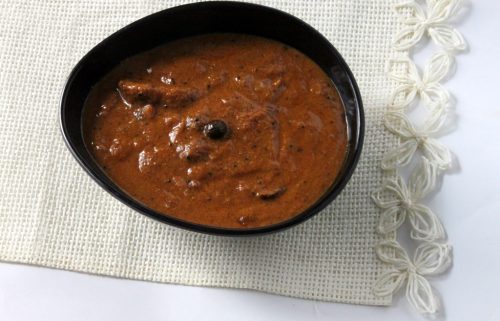
Chettinad Kara Kulambu is not your everyday tamarind gravy. The masala base is made fresh every time, with three dals, whole spices, red chillies and khus khus dry-roasted together, then ground with grated coconut into a thick paste that gives the kulambu its body and depth.
Sesame oil is not optional here. It carries the flavour of the small onions and brinjal in a way that refined oil simply does not.
The low-flame cooking after adding the tamarind water lets the raw smell of the masala cook out fully. This kulambu works well with plain rice, and the leftovers taste better the next day once the masala has settled into the gravy.
About the Recipe
The masala uses toor dal, Bengal gram dal and urad dal alongside coriander seeds, fenugreek and khus khus. Dry-roasting all of these before grinding is what separates this from a shortcut curry powder version. The roasted dals thicken the gravy naturally once ground fine with coconut.
Brinjal is the default vegetable, but the recipe works equally well with dried sundakkai and dried raw mango pieces soaked in hot water. Both versions are common in Chettinad cooking, and the base masala stays the same either way.
See how a similar approach works in Chettinad Meen Kuzhambu.
Why You Will Love This Recipe
The freshly ground masala paste is what makes this kulambu worth the effort. Most tamarind gravies rely on store-bought powders, but here every spice is roasted and ground at home, and the difference in flavour is immediately noticeable.
The paste blends into the tamarind water during the low-flame cooking and produces a gravy that is thick, aromatic and properly spiced without tasting harsh.
If you enjoy other Chettinad kuzhambu recipes, this one is a straightforward addition to your regular rotation.
Cooking Tips
The most common beginner mistake is rushing the dry roasting. Keep the heat low so nothing burns. Burnt fenugreek or red chillies will make the entire kulambu bitter.
Do not skip the full 10 to 15 minutes of low-flame cooking after adding the tamarind water and masala paste. Opening the lid too early or cooking on high heat leaves a raw masala taste in the finished gravy.
Top Tips
- Dry roast the masala ingredients on low heat and let them cool completely before grinding. Warm ingredients make the paste uneven.
- Use sesame oil for the tempering. It is part of the flavour of this kulambu and not just a cooking medium.
- Extract the tamarind pulp with 4 cups of water. Too little water makes the gravy too thick before the masala has cooked through.
- Add the jaggery only after turning off the flame. Cooking jaggery in the gravy can change the colour and make it slightly sticky.
- If grinding on an ammikallu or stone grinder, the coconut and roasted masala blend into a smoother, denser paste than a mixer produces, and the kulambu will be noticeably thicker.
- If you want more heat, add half a teaspoon of chilli powder along with the turmeric. The six red chillies in the masala give moderate spice on their own.
Serving and Storing Suggestions
Serve Chettinad Kara Kulambu hot with plain steamed rice and a dry vegetable side or papad. It also pairs well with idli or dosa the next morning.
Store leftovers in a clean, dry container in the refrigerator for up to two days. Reheat on low flame and add a splash of water if the gravy has thickened overnight. Do not freeze, as the coconut in the masala paste changes texture on thawing.
Similar Recipes
- Chettinad Meen Kuzhambu (Chettinad Fish Curry)
- Egg Kara Kuzhambu
- Chettinad Kola Urundai Kuzhambu
- Chettinad Muttai Kulambu
- Chettinad Lamb Bone Sambar (Chettinad Elumbu Kuzhambu)
Nutrient Benefits
Tamarind provides vitamin C and some B vitamins. The three dals in the masala contribute plant protein and iron. Fenugreek seeds are a source of fibre and magnesium. Sesame oil contains vitamin E and unsaturated fats. Together, the ingredients make this a reasonably balanced gravy when served with rice and a vegetable side.
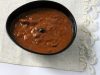
Chettinad Kara Kulambu
Ingredients
- To make masala powder
- Toor dal/Tuvaram paruppu-1 tsp
- Bengal gram dal/Kadala paruppu-1 tsp
- Urad dal/Ulitham paruppu-1 tsp
- Coriander seeds/Dhaniya-1 tsp
- KhusKhus/Kasakasa-1 tbsp
- Fenugreek seeds-1 tsp
- Red Chillies-6
- Asafoedia-1/2 tsp
- Cinnamon stick-one inch
- For Kulambu
- Kathirikai/Brinjal-1/4 kilo,sliced
- Tamarind-1 lemon size
- Small onions-1 cup,sliced
- Jaggery-1 tsp
- Coconut-half,grated or
- Coconut milk
- Turmeric powder-1/2 tsp
- Sesame oil-50 ml
- Salt to taste
Instructions
- Dry roast all the masala ingredients ,cool them and grind into fine paste along with the grated coconut
- Soak the tamarind in water for 20 minutes and extract the pulp with 4 cups of water
- Heat a fry pan,add the oil ,throw in the mustard seeds,small onions and the Brinjal and saute it for few mins
- Add the tamarind water,ground masala paste and the turmeric powder
- Close the lid and cook for 10-15 minutes in low flame
- Add the salt ,jaggery and off the flame
Notes
- If u r grinding the masala in ammikallu,the taste will reach another (best) level.
- Instead of brinjal,I used half cup of dried sundakkai and 3-4 dried mangoes,Just soaked them in hot water and added to the onions.
- Instead of grated coconut, you can add coconut milk too.
- Add half tsp of chilli powder to it, if u want it more spicy,otherwise leave it as it is.
Sign up for our newsletter
Add Awesome Cuisine as a Preferred Source

Frequently Asked Questions
Can I use regular onions instead of small onions?
Small onions are preferred because they have a sharper, slightly sweeter flavour that holds up well in tamarind-based gravies. Regular onions will work, but the kulambu will taste milder and slightly different. If using regular onions, slice them thin and saute until properly soft before adding the tamarind water.
My kulambu tastes raw even after 15 minutes of cooking. What went wrong?
This usually happens when the flame is too high. High heat causes the outer layer of the gravy to cook quickly while the masala inside does not get enough time to blend in. Keep the flame on low throughout, and make sure the lid is on so the steam helps cook the masala evenly. If the raw taste persists, cook for another 5 minutes on low flame.
Can I use coconut milk instead of grated coconut?
Yes. The recipe mentions this as an option. If using coconut milk, do not grind it with the dry-roasted masala. Instead, grind the roasted spices with a little water into a paste, and add the coconut milk directly to the kulambu after the tamarind water. Add it in the last 5 minutes of cooking and do not boil it hard, or the milk may split.
What is khus khus and can I leave it out?
Khus khus is white poppy seeds, called kasakasa in Tamil. They add a slight creaminess and help thicken the masala paste. Leaving them out is possible, but the paste will be slightly thinner and less rich. If you cannot find them, an extra tablespoon of grated coconut can compensate for the texture.
How do I use dried sundakkai and dried mango as the recipe suggests?
Soak the dried sundakkai and dried raw mango pieces in hot water for about 20 to 30 minutes before you start cooking. Drain them and add to the pan along with the small onions in place of the brinjal. Saute for a few minutes before adding the tamarind water and masala. The soaking softens them enough to cook through in the same time as brinjal.