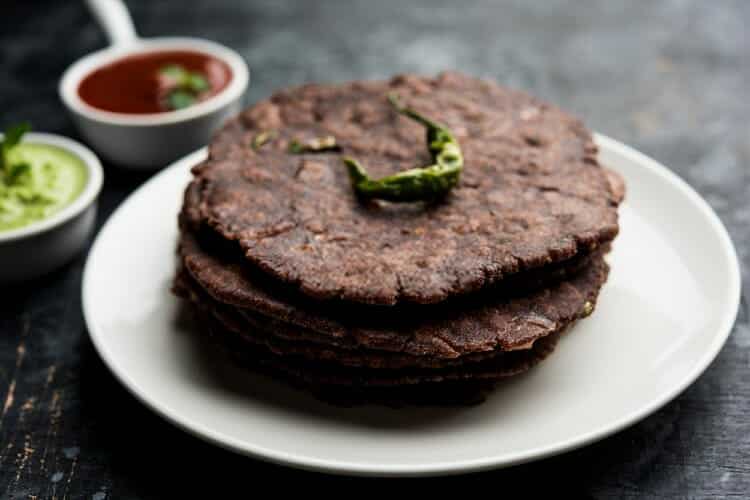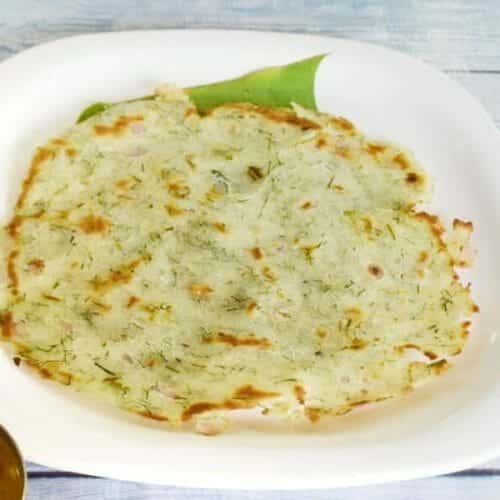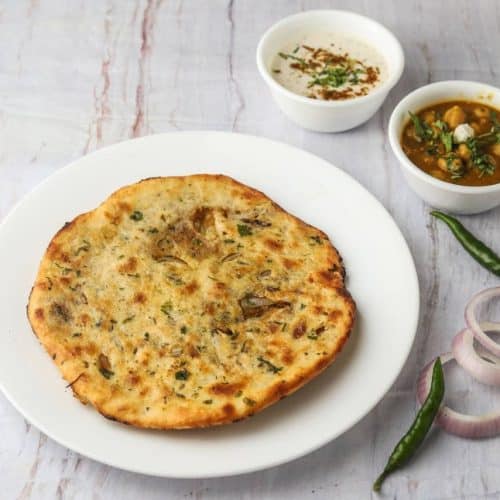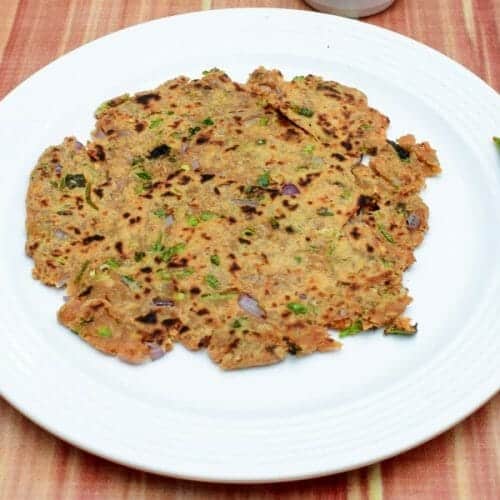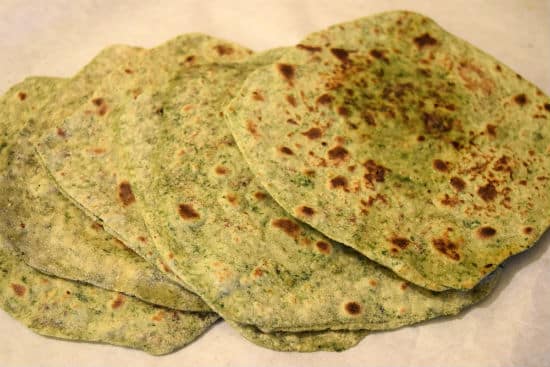
Ragi Roti is one of those recipes my husband and I genuinely disagree about. He grew up eating it plain, just ragi flour, salt, water, and maybe onion if someone was feeling generous. His mother made it that way, and he insists that is the correct version. I learned it from a neighbour in Bengaluru who always added grated coconut and a coarse peanut sesame powder, and once I tasted that version, I could not go back.
The coconut keeps the roti from drying out too fast on the tawa, which is the thing that goes wrong most often with ragi. That specific detail, keeping the dough moist from within, changed how this recipe worked for me. We still argue about it, but he eats two rotis every time, so I consider the debate settled.
About the Recipe
A batch of Ragi Roti takes about twenty-five to thirty minutes from start to finish, including the time to chop the onions and green chillies. Ragi flour is available at most Indian grocery stores and larger supermarkets, and the other ingredients are things most South Indian kitchens already have.
I make this on weekday mornings when I want a breakfast that holds you through until lunch without needing anything elaborate on the side. A simple onion chutney is enough.
Why you will love this recipe
Ragi flour on its own has an earthy, slightly bitter quality that needs company. The grated coconut, the coarse peanut sesame powder, and the finely chopped onion all work together to round that out, so the finished roti has layers of flavour in every bite rather than a flat, grainy taste. The sesame and peanut powder adds a quiet nuttiness that you notice without being able to identify immediately.
Because the dough is thick and shaped by hand rather than rolled with a belan, there is a satisfying unevenness to the rotis, slightly thicker in the centre, a little crisper at the edges where the oil hits the tawa. That texture, soft inside and just set on the outside, is what keeps this in regular rotation at home.
Cooking Tips
The most common beginner mistake is adding too much water at once. Ragi flour absorbs water differently from wheat flour, and a dough that looks dry will soften further as it sits. Add water a little at a time, two tablespoons at a stretch, and stop when the dough holds its shape without crumbling. If it gets sticky and wet, rolling becomes impossible and flattening by hand turns messy.
Also, keep the tawa on medium flame throughout. High heat will colour the outside before the inside cooks through.
Top Tips
- Dry roast the sesame seeds and peanuts on low heat and let them cool completely before grinding, otherwise the powder turns oily and clumps instead of staying dry and coarse.
- Use a greased plastic sheet or a zip-lock bag cut open to flatten the dough balls if rolling with a belan feels difficult. Press firmly with your palm and smooth the edges with wet fingers.
- Grate the coconut fresh if you can. Frozen desiccated coconut works but makes the dough slightly drier, so you may need a tablespoon or two of extra water.
- Do not skip greasing the tawa lightly before each roti. Ragi sticks faster than wheat flour, and a dry tawa will tear the roti when you try to flip it.
- Make the sesame peanut powder in a slightly larger batch and store it in an airtight jar. It keeps well for two weeks at room temperature and works in other chutneys and rice dishes too.
Serving and Storing Suggestions
Serves 3 to 4 people, roughly 2 rotis each, with a prep and cook time of about 30 minutes. Serve hot, straight from the tawa, with onion chutney or tomato chutney alongside. Ragi Roti does not keep well once cooled because it stiffens quickly. I always make only as many as will be eaten at the meal. If you need to prepare ahead, mix the dry ingredients together the night before and add water just before cooking.
Similar Recipes
- Jowar Roti
- Bajra Roti
- Akki Rotti
- Thalipeeth
- Methi Thepla
Nutrient Benefits
Ragi is one of the better plant sources of calcium, which makes this roti genuinely useful for people who do not eat dairy in large amounts. It also has a higher fibre content than refined wheat flour, which slows digestion and helps with longer satiety. The addition of peanuts brings in protein and healthy fats, so this is not just a carbohydrate-heavy flatbread. For a breakfast roti, that combination is worth noting.

Ragi Roti
Ingredients
- 2 cup Ragi Flour
- 1 Onion medium, finely chopped
- 2 1/2 cup Water adjust as required
- Oil as required
- Salt as per taste
- 3 Green Chillies finely chopped
- 2 tbsp Sesame Seed and Peanut Powder
- 1/2 tsp Red Chilli Powder
- 1 cup Coconut grated
Instructions
- Combine the ragi flour, onions, salt, green chillies, sesame peanut powder and red chilli powder in a bow.
- Add the grated coconut and mix well.
- Mix to a thick dough, adding little water if necessary.
- Make medium sized balls of the dough and roll them into rotis. You can also place them on a greased plastic sheet and flatten using your palm.
- Heat a nonstick tawa over medium flame.
- Cook the prepared rotis on both sides, adding oil around the edges.
- Serve hot with onion chutney or tomato chutney.
To make the sesame seed and peanut powder
- Dry roast 2 tblsp white sesame seeds and 2 tblsp raw peanuts in a pan.
- Grind to a coarse powder and use as required.
Sign up for our newsletter
Add Awesome Cuisine as a Preferred Source

Frequently Asked Questions
My ragi roti kept cracking and breaking when I tried to flatten it. What went wrong?
The dough was most likely too dry. Ragi flour has no gluten, so it does not stretch the way wheat dough does. Add water a little at a time until the dough is firm but pliable, not stiff. Also, using wet hands or a greased plastic sheet to flatten the roti helps prevent cracking at the edges.
Can I skip the coconut if I do not have it at home?
You can, but the roti will be noticeably drier. If you are skipping coconut, reduce the flour slightly or add a tablespoon of yoghurt to compensate for the moisture it provides. The flavour will also be less rounded without it.
The roti stuck to the tawa and tore apart when I flipped it. How do I prevent this?
Two things usually cause this. Either the tawa was not hot enough when you placed the roti, or there was not enough oil. Heat the tawa properly on medium flame before you start, grease it lightly, and add a few drops of oil around the edges of each roti as it cooks. Wait until the underside looks set and slightly dry before flipping.
Can I make the dough in advance and refrigerate it?
I would not recommend making the full dough ahead because the onions release moisture over time and make the dough wet and difficult to handle. What you can do is mix all the dry ingredients the night before and add water, coconut, and onion fresh in the morning. That saves about five minutes and the dough behaves much better.
I do not have peanuts or sesame seeds. Can I leave out the powder entirely?
You can leave it out, though the roti will taste plainer. A small amount of roasted chana dal powder or even a tablespoon of grated dry coconut can substitute for some of that nuttiness. The texture will not change much, just the depth of flavour in the finished roti.

3 comments
good job nice info thank’x
the recipe was really excellent . so this will be my dinner tonight
mouth watering lovely and tasty