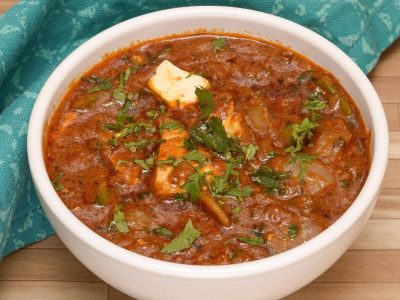
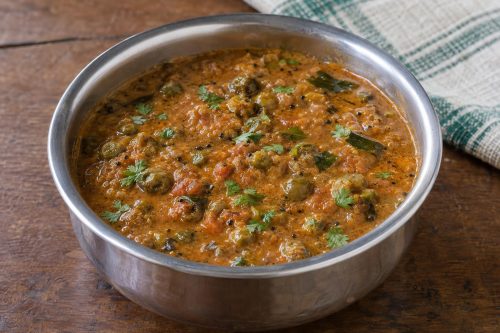
Sundakkai Gothsu Recipe is a traditional South Indian preparation that uses fresh turkey berries cooked in tamarind water with a ground paste of coconut, red chillies, coriander seeds, jeera and Bengal gram dal. The result is a thick, slightly sour gravy with a layered spice base. The addition of powdered sesame seeds at the end is what sets this gothsu apart from a plain kuzhambu. It is a practical recipe that uses straightforward pantry ingredients and comes together without much difficulty once the grinding is done.
About the Recipe
This gothsu has two separate grinding steps. Sesame seeds are dry roasted and powdered on their own, while the coconut, red chillies, jeera, coriander seeds and Bengal gram dal are fried and ground to a fine paste. Both go into the same gravy at different stages. The sundakkai is soaked before cooking, which softens the berries and removes some of their natural bitterness. Tamarind water forms the cooking liquid and the gravy is simmered until it thickens before the sesame powder is added.
Why You Will Love This Recipe
The combination of tamarind and the ground coconut paste gives this gothsu a depth that a simple tomato-based gravy does not have. The sesame powder thickens the gravy without making it heavy or starchy. If you have made a Tomato Kurma before, you will notice that this gothsu follows a similar logic of building a spiced base, but the tamarind and sundakkai give it a distinctly different character. It is also a recipe that reheats well, which makes it a sensible choice when cooking ahead.
Cooking Tips
The most common beginner mistake is skipping the soaking step for sundakkai. Unsoaked berries stay firm and bitter even after cooking. Soak them for at least 20 minutes before use. When frying the grinding ingredients, keep the flame low so the coconut does not brown unevenly. The gravy must boil properly before the ground paste goes in, otherwise the raw smell of the spices will remain. Add the sesame powder only after removing the pan from the fire to prevent it from burning.
Top Tips
- Soak the chopped sundakkai in water for at least 20 minutes before cooking to reduce bitterness.
- Dry roast sesame seeds on a low flame and stir continuously. They burn quickly and the flavour turns sharp.
- Grind the coconut paste as fine as possible. A coarse paste will leave the gravy with an uneven texture.
- Let the tamarind water come to a full boil before adding the ground paste so the raw smell cooks out properly.
- Add the powdered sesame seeds only after turning off the flame to avoid scorching.
- Pour the mustard and curry leaf tempering over the gravy just before serving so the aroma stays intact.
Serving and Storing Suggestions
Sundakkai Gothsu is traditionally served with plain rice or pongal. It also works as a side with idli or dosa. Serve it hot with a drizzle of the mustard and curry leaf tempering on top. Leftover gothsu keeps well in the refrigerator for up to two days. Reheat on a low flame with a small splash of water if the gravy has thickened too much on standing. Do not add the sesame powder again when reheating.
Similar Recipes
Nutrient Benefits
Sundakkai is a good source of dietary fibre and contains iron. Sesame seeds contribute calcium and healthy fats. Tamarind provides vitamin C and some B vitamins. Bengal gram dal adds plant protein to the gravy. Coconut contributes fat that helps carry the fat-soluble compounds in the spices. Together, these ingredients make this gothsu a reasonably balanced accompaniment when served with rice or a grain-based dish.

Sundakkai Gothsu
Ingredients
- 1/2 cup Sundakkai (chopped and soaked in water)
- Asafoetida (a pinch)
- 1/4 cup Shallots (finely chopped)
- 1/2 tsp Mustard Seeds
- 1 Tomato (finely chopped)
- 1/2 tsp Turmeric powder
- 1 tbsp Sesame seeds
- 1 cup Tamarind Water
- Curry Leaves (few)
- Coriander Leaves (to garnish)
- Oil (as required)
- Salt to taste
Grind Together:
- 2 tbsp Coconut (grated)
- 4 Red Chillies
- 1/2 tsp Jeera
- 1 tsp Coriander Seeds
- 1 tbsp Bengal Gram Dal
Instructions
- Dry roast the sesame seeds in low flame.
- Allow it to cool and grind them.
- To the same pan, add the ingredients listed for grinding and fry well.
- Allow them to rest and grind it to fine paste.
- Take a pan and saute shallots in oil.
- Add the chopped tomato and sundakkai and fry them.
- Add the tamarind water, turmeric powder and the required salt.
- When it starts to boil, add the ground paste with enough water and cook till the gravy becomes thick.
- Add powdered sesame seeds and remove from fire.
- To another pan, add oil and fry the mustard seeds, curry leaves and when it splatter, add it to the gravy.
- Garnish with chopped coriander leaves and serve hot.
- This kothsu will kill any germs in the stomach.
Sign up for our newsletter
Add Awesome Cuisine as a Preferred Source

Frequently Asked Questions
What is sundakkai and where can I find it?
Sundakkai is the Tamil name for turkey berry, a small round berry commonly used in South Indian cooking. Fresh sundakkai is available in Indian grocery stores, particularly those that stock South Indian produce. It is usually sold in small bunches. If fresh berries are not available, some stores stock dried or pickled sundakkai, though the flavour and texture will differ from fresh ones used in this gothsu recipe.
Why does my gothsu taste too bitter?
Bitterness in sundakkai gothsu almost always comes from insufficiently soaked berries. Sundakkai has a natural bitterness that reduces significantly when the chopped pieces are soaked in water before cooking. Soak them for at least 20 minutes and discard the soaking water before adding the berries to the pan. Cooking the berries thoroughly in tamarind water also helps balance the bitterness.
Can I use dried sundakkai instead of fresh?
Yes, dried sundakkai can be used, but you will need to soak them in warm water for a longer period, at least 30 to 45 minutes, to rehydrate them before cooking. The flavour of dried sundakkai is more concentrated and slightly more bitter than fresh. Adjust the tamarind quantity slightly if the dried berries make the gothsu taste too sharp.
What can I serve with sundakkai gothsu apart from rice?
This gothsu works particularly well as a side for pongal, which is a common pairing in Tamil Nadu. It can also be served with plain idli or dosa. The thick, tangy gravy balances well against mildly flavoured dishes. It is not typically served with rotis or parathas, but there is no strict rule against it if you prefer that combination.
Can I skip the sesame seeds or substitute them?
The sesame seeds serve a specific purpose in this recipe. When powdered and stirred in at the end, they thicken the gravy and add a mild nuttiness. Skipping them will result in a thinner gothsu. If sesame seeds are not available, roasted peanuts ground to a coarse powder can be used as a substitute, though the flavour will be noticeably different. Do not substitute with sesame oil as it will not provide the same thickening effect.