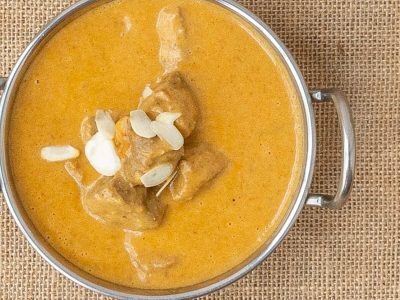
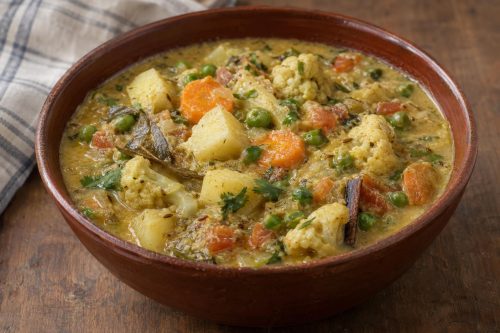
Kaikari Kuruma is a South Indian vegetable kurma made with a freshly ground spice paste. The paste brings together fresh coconut, almonds, white poppy seeds, roasted chana, green chillies, fennel, cumin and ginger, all ground with hot water to a smooth consistency. This is what gives the kurma its body and thickness. The vegetables used here, potatoes, carrots, cauliflower and green peas, are sturdy enough to hold their shape through the cooking time while still taking on the flavour of the paste. If you have been looking for a kaikari kurma recipe, this version is straightforward and uses ingredients that are easy to find.
About the Recipe
The spice paste is the foundation of this kaikari kuruma. Grinding the coconut, almonds, poppy seeds and roasted chana together creates a thick paste that thickens the gravy naturally without any flour or cream. Hot water is added gradually while grinding to keep the paste smooth.
The tempering uses both ghee and oil, which helps the whole spices release their aroma without burning. Potatoes take the longest to cook, so they go in early. Green peas and cauliflower are added later so they stay firm while the potatoes finish cooking.
Why You Will Love This Recipe
The spice paste does most of the work here. With almonds, poppy seeds and roasted chana alongside fresh coconut, the finished gravy has a natural richness that needs no added cream or thickener.
The vegetables stay distinct in the sauce, so each spoonful has something to bite into. The tempering matters too. Frying the cinnamon, bay leaf, cumin and fennel in ghee and oil before anything else sets the base flavour for everything that follows.
Cooking Tips
The most common mistake is adding the spice paste to a pan that is too hot, which causes the coconut to stick and scorch. Keep the heat at medium when you pour in the paste.
Grind the paste until it is genuinely fine. Coarse grinding leaves the coconut grainy in the finished dish.
Add the green peas and cauliflower only after the potatoes have had time to soften slightly. If they go in too early, the cauliflower will fall apart before the potatoes are done. Cover the pan once the liquid comes to a boil to trap the steam and cook the vegetables evenly.
Top Tips
- Use hot water, not cold, when grinding the spice paste. It helps the coconut and almonds blend to a smoother consistency.
- Cut the potatoes and carrots to a similar size so they cook in roughly the same time.
- Do not rush the tempering. Wait until the cumin and fennel seeds turn golden before adding the onions.
- Add the spice paste only after the onions and tomatoes have softened. Adding it earlier means the raw onion flavour carries through to the finished dish.
- Keep the heat low once the kurma comes to a boil. A hard boil will break up the cauliflower and make the gravy look thin.
- Taste for salt before serving. The spice paste absorbs some salt, so a small adjustment at the end is often needed.
Serving and Storing Suggestions
Kaikari Kuruma is best served hot with plain rice, chapati or paratha. It also works well alongside a simple Peas Paratha for a fuller meal.
Leftovers keep well in the refrigerator for up to two days in a covered container. Reheat gently over low heat with a splash of water to loosen the gravy, as the coconut paste thickens once cooled. Avoid boiling hard when reheating or the vegetables will break down.
Similar Recipes
Nutrient Benefits
Carrots and green peas contribute vitamin C, vitamin A and dietary fibre. Potatoes provide potassium and some B vitamins. Cauliflower adds folate and vitamin K. Almonds and poppy seeds in the spice paste bring in some protein, calcium and healthy fats. This is a vegetable-forward dish that covers a reasonable range of nutrients in a single serving.

Kaikari Kuruma
Ingredients
- 1 cup, finely chopped Onions
- 1 cup, chopped Tomatoes
- 2 cups, cubed Potatoes
- 1/2 cup, finely sliced Carrots
- 1/2 cup, shelled Green Peas
- 1 cup Cauliflower Florets
- 1/2 tsp Tumeric Powder
- 1 tsp Garam Masala Powder
- 1 tsp Salt
- 1/4 cup, chopped Fresh Coriander Leaves
- For the Spice Paste:
- 1/2 cup, ground Fresh Coconut
- 4 Green Chillies
- 12 Almonds
- 1 tblsp White Poppy Seeds
- 1 tsp Cumin Seeds
- 1/2 tsp Fennel Seeds
- 2 one inch pieces Fresh Ginger
- 1 tblsp Roasted Chana
- For Tempering:
- 1 tblsp Ghee
- 1 tblsp Oil
- 5 Curry Leaves
- 1 Bay Leaf
- 3 one inch pieces Cinnamon Sticks
- 1 tsp Cumin Seeds
- 1/2 tsp Fennel Seeds
Instructions
- Grind the spice paste ingredients to fine consistency, gradually adding 2 cups of hot water.
- Put the ghee and oil in a wide bottomed pan over medium heat.
- When the oil add the curry leaves, bay leaf, cinnamon sticks, cumin seeds and fennel seeds.
- Fry till the seeds are golden brown.
- Add the onions and 1/2 cup of tomatoes to the pan.
- Stir-fry for a few minutes.
- Add the potatoes and carrots and mix well.
- Sprinkle in turmeric powder and stir for a minute.
- Blend in the garam masala powder and stir for a few minutes.
- Add the spice paste, salt and 3 cups of warm water and mix thoroughly.
- Stir fry for a couple of minutes.
- Add the green peas and cauliflower.
- When the mixture comes a boil reduce the heat to low.
- Cover and cook till potatoes are tender.
- Serve hot.
Sign up for our newsletter
Add Awesome Cuisine as a Preferred Source

Frequently Asked Questions
What is the difference between kaikari kuruma and a regular vegetable curry?
A regular vegetable curry typically uses a tomato or onion base with dry spice powders. Kaikari kuruma gets its body from a freshly ground paste made with coconut, almonds, poppy seeds and roasted chana. This paste thickens the gravy naturally and gives it a creamier texture than a standard curry without any added cream or yoghurt.
Can I use desiccated coconut instead of fresh coconut in the spice paste?
Fresh coconut gives a noticeably smoother and more flavourful paste. Desiccated coconut can be used as a substitute, but soak it in warm water for about fifteen minutes before grinding so it softens enough to blend properly. The flavour will be slightly less bright than with fresh coconut, but the paste will still thicken the gravy.
Why does the recipe use both ghee and oil for tempering?
Ghee adds a distinct aroma to the tempering that plain oil does not. Oil raises the smoke point slightly so the ghee does not burn as quickly when the whole spices go in. Using both gives you the flavour of ghee without the risk of scorching it before the spices have had time to fry properly.
My kaikari kurma gravy turned out too thin. What went wrong?
The most likely cause is that the spice paste was not ground finely enough, or the lid was left off during cooking so too much liquid evaporated before the paste could thicken the gravy. If the gravy is still thin at the end, remove the lid and simmer on low heat for a few extra minutes. The coconut and almond paste will thicken the liquid as it reduces.
Can I add other vegetables to this kaikari kuruma recipe?
Yes. Beans, raw banana or raw jackfruit work well in this style of kurma because they hold their shape during cooking. Avoid very soft vegetables like spinach or courgette unless you add them in the last two or three minutes, as they will turn mushy well before the potatoes are done. Stick to vegetables that need similar cooking times to the ones already in the recipe.