
Key Highlights
- Learn why knowing fruits name in English and Tamil and fruits name in Hindi and English supports easier communication for students, travellers, and families across India.
- Understand the importance of identifying Indian fruit names correctly to avoid confusion while shopping or interacting in different regions.
- Know why mango is recognised as India’s national fruit and why it remains the most enjoyed fruit across the country.
- Use simple translation guides, including Hindi fruits name in Tamil and Hindi to Tamil fruit lists, to improve vocabulary for school, work, and daily conversations.
- Get clarity on how Indian languages refer to the same fruits differently, including common examples like Sathukudi, helping people match regional terms with English names.
- Strengthen language learning and fruit identification skills with practical examples, cultural context, and easy explanations suitable for learners of all ages.
Many people struggle to identify Indian fruits correctly because each state uses different names. This becomes a real challenge while shopping, studying, cooking, or helping children learn fruit names across languages. The confusion often leads to mistakes, hesitation, and difficulty understanding what a fruit is called in another region.
The problem grows when similar-sounding names refer to completely different fruits. For example, Sathukudi in English means Sweet Lime, while berikai in English refers to Jujube. Without a clear multilingual reference, learners find it hard to match fruits across English, Hindi, Tamil, Telugu, Kannada, Malayalam, and more.
This blog solves that problem by providing a simple, complete guide to Indian fruits name in multiple languages for easy learning and accurate identification.
Which Are the 60 Most Common Indian Fruits Name Across Languages?

Common Indian Fruits
Before exploring the multilingual list of Indian fruit names, it’s helpful to understand why these variations matter. India is home to hundreds of unique fruits, including tropical fruits that grow abundantly in warm regions and citrus fruits that are widely enjoyed for their refreshing taste and rich Vitamin C content.
India’s diverse regions use different names for the same fruits, which can be confusing when studying, cooking, or shopping. This guide serves as a helpful list of fruit names for learners who want clarity across multiple Indian languages.
| No. | English Name | Hindi | Tamil | Telugu | Kannada | Malayalam |
| 1 | Mango | Aam | Maanga | Mamidi | Mavina Hannu | Manga |
| 2 | Banana | Kela | Vazhai Pazham | Arati Pandu | Baale Hannu | Vazha Pazham |
| 3 | Apple | Seb | Apple | Apple | Sebu Hannu | Apple |
| 4 | Orange | Santra | Sathukudi | Kamala Pandu | Kittale | Orange |
| 5 | Grapes | Angoor | Draksha | Draksha | Drakshi | Munthiri |
| 6 | Watermelon | Tarbooz | Thannir Melon | Puchakaya | Kallangadi | Thannimathan |
| 7 | Pineapple | Ananas | Anasi Pazham | Anasa Pandu | Ananas | Kaitha Chakka |
| 8 | Lemon | Nimbu | Elumichai | Nimmakaya | Nimbe | Cherunaranga |
| 9 | Musk Melon | Kharbooja | Kirni Pazham | Kharbooja | Karbuja | Kani Pazham |
| 10 | Strawberry | Strawberry | Strawberry | Strawberry | Strawberry | Strawberry |
| 11 | Jackfruit | Kathal | Pala Pazham | Panasa Pandu | Halasu | Chakka |
| 12 | Guava | Amrood | Koyya Pazham | Jaam Pandu | Seebe Hannu | Perakka |
| 13 | Cherry | Cherry | Cherry | Cherry | Cherry | Cherry |
| 14 | Peach | Aadu | Peach | Pichuka Pandu | Pichu Hannu | Peach |
| 15 | Pear | Nashpati | Perikkai | Berikaya | Naspati | Sabari Pazham |
| 16 | Pomegranate | Anaar | Madhulai | Danimma | Dalimbe | Mathalam |
| 17 | Custard Apple | Sitaphal | Seetha Pazham | Sitaphal | Sitaphala | Seetha Pazham |
| 18 | Sweet Lime (Mosambi) | Mosambi | Sathukudi | Battayi | Madala | Mosambi |
| 19 | Tomato | Tamatar | Thakkali | Tameta | Tomaato | Thakkali |
| 20 | Ber (Jujube) | Ber | Ilantha Pazham | Regu Pandu | Berikai | Ilantha Pazham |
| 21 | Coconut | Nariyal | Thengai | Kobbari | Tengina Kaayi | Thenga |
| 22 | Plum | Alu Bukhara | Alpakoda Pazham | Alpakoda | Alubukhara | Plum |
| 23 | Sapota (Chikoo) | Chiku | Sapota Pazham | Sapota | Chiku | Sapota |
| 24 | Fig | Anjeer | Athi Pazham | Atti Pandu | Atti Hannu | Athi Pazham |
| 25 | Litchi | Litchi | Litchi | Litchi | Litchi | Litchi |
| 26 | Gooseberry | Amla | Nellikai | Usiri | Nellikayi | Nellikka |
| 27 | Papaya | Papita | Pappali Pazham | Boppayi | Parangi Hannu | Omakka |
| 28 | Plantain | Kacha Kela | Vazhaikai | Aratikaya | Bale Kayi | Ethakka |
| 29 | Tangerine | Narangi | Kamala | Kamala Pandu | Kittale | Kamala |
| 30 | Apple Custard | Sharifa | Seetha Pazham | Seetha Pandu | Seetha Hannu | Seetha Pazham |
| 31 | Black Grapes | Kale Angoor | Karuppu Draksha | Nalla Draksha | Kari Drakshi | Karutha Munthiri |
| 32 | Persimmon | Tendu | Theni Pazham | Theni Pandu | Theni Hannu | Theni Pazham |
| 33 | Mulberry | Shehtoot | Naga Pazham | Tuti Pandu | Thutthi | Cheeni Pazham |
| 34 | Wood Apple | Bael | Vilam Pazham | Velaga Pandu | Belada Hannu | Vilampazham |
| 35 | Jamun | Jamun | Naval Pazham | Neredu | Nerale | Njaval Pazham |
| 36 | Clementine | Narangi | Kamala | Kamala Pandu | Kittale | Kamala |
| 37 | Star Fruit | Kamrakh | Thambaratham | Thambaratham | Thambaratham | Chamaram Pazham |
| 38 | Tamarind | Imli | Puli | Chintapandu | Hunase | Puli |
| 39 | Dragon Fruit | Dragon | Pitaya | Dragon | Dragon | Dragon |
| 40 | Cactus Fruit | Nagfani | Pirandai Pazham | Nagapandu | Nagaballi | Chiraytha |
| 41 | Rambutan | Rambutan | Rambutan | Rambutan | Rambutan | Rambutan |
| 42 | Kiwi | Kiwi | Kiwi | Kiwi | Kiwi | Kiwi |
| 43 | Raisins | Kishmish | Ular Draksha | Endu Draksha | Endu Drakshi | Unakka Munthiri |
| 44 | Honeydew Melon | Kharbooja | Kirni Pazham | Kharbooja | Karbuja | Kani Pazham |
| 45 | Blueberry | Blueberry | Blueberry | Blueberry | Blueberry | Blueberry |
| 46 | Cranberry | Karonda | Kurundi | Karonda | Karande | Kurunnikka |
| 47 | Passion Fruit | Krishna Fal | Passi Pazham | Gulabi Pandu | Passion Hannu | Passi Pazham |
| 48 | Blackberry | Jamun | Karu Naval Pazham | Nalla Neredu | Kari Nerale | Karutha Njaval |
| 49 | Fig Cactus | Nagfani | Pirandai Pazham | Nagapandu | Nagaballi | Chiraytha |
| 50 | Berikai (Indian Jujube) | Ber | Ilantha Pazham | Regu Pandu | Berikai | Ilantha Pazham |
| 51 | Carambola | Kamrakh | Thambaratham | Thambaratham | Thambaratham | Chamaram Pazham |
| 52 | Sapodilla | Chikoo | Sapota | Sapota | Chiku | Sapota |
| 53 | Longan | Longan | Longan | Longan | Longan | Longan |
| 54 | Plum Black | Jamun Kala | Karuppu Plum | Nalla Plum | Kari Plum | Karutha Plum |
| 55 | Pineberry | Pineberry | Pineberry | Pineberry | Pineberry | Pineberry |
| 56 | Ambarella | Amra | Kudalai Pazham | Ambali Pandu | Amate Hannu | Ambazham |
| 57 | Sugarcane Fruit | Ganna | Karumbu | Cherukura Pandu | Kabbu | Karimbu |
| 58 | Bael Fruit | Bel | Vilam Pazham | Velaga Pandu | Belada Hannu | Vilampazham |
| 59 | Nungu (Ice Apple) | Taadgola | Nungu | Taati Munjalu | Taati Nungu | Pana Nungu |
| 60 | Falsa | Phalsa | Phalsa | Phalsa | Phalsa | Falsa |
What Are the 10 Benefits of Eating Fruits?
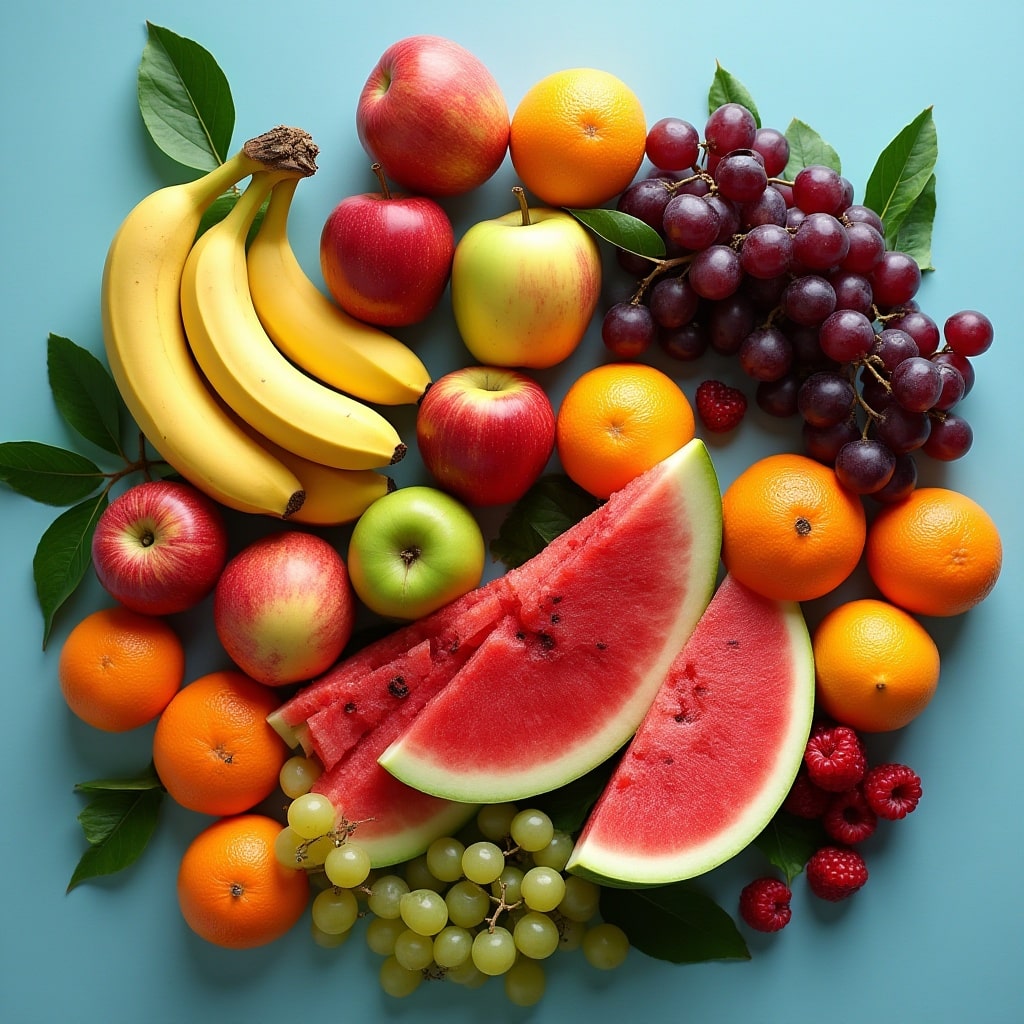
Assorted fresh fruits arranged together to represent the health benefits of eating fruits
India offers a rich variety of nutritious fruits, each known by different names across regions and languages. Whether you search for Indian fruit names in English, Hindi, Tamil, or Telugu, the variations can be fascinating. From Sathukudi to Berikai, these fruits support digestion, immunity, and overall daily health.
Eating a variety of fruits each day offers numerous health benefits, supporting immunity, digestion, and overall wellness. Here are some key benefits:
1. Rich in Vitamins and Minerals
Many Indian fruits, especially sweet fruits like mango and chikoo, are enjoyed daily across households. They provide essential nutrients such as Vitamin C, Vitamin A, folate, and potassium, all vital for strong bones, healthy skin, and sustained energy. Whether you’re checking Indian fruit names in English for nutrition learning or making healthier daily choices, adding diverse fruits naturally boosts overall wellness.
2. Boost Immunity
Immunity-boosting fruits such as oranges, amla, grapes, and mosambi help protect the body from seasonal infections. These antioxidant-rich fruits strengthen the immune system and enhance resistance against common illnesses. Across India, families value these fruits for daily wellness, making them a staple in diets supporting strong immunity and fast recovery.
3. Improve Digestion
Fruits like papaya, bananas, guava, and jujube contain natural fibre that supports smooth digestion and prevents constipation. Including fibre-rich fruits in everyday meals improves gut health and enhances nutrient absorption. Many traditional Indian diets rely on fresh fruits to maintain digestive balance and long-term stomach comfort. You can include this easily by having ripe papaya after meals or a simple banana milkshake.
4. Support Heart Health
Pomegranate, grapes, apples, and berries are packed with antioxidants that help regulate blood pressure and cholesterol levels. Eating these fruits regularly supports healthy blood circulation and reduces the risk of heart disease. Their natural nutrients protect the heart and contribute to long-term cardiovascular wellness without the need for processed supplements. A heart-friendly, refreshing choice is grape sherbet.
5. Provide Natural Energy
Fruits such as bananas, dates, mangoes, and apples provide quick, natural energy thanks to healthy carbohydrates and natural sugars. They are ideal pre- or post-workout snacks and a smart alternative to sugary packaged foods. Eating fruits helps sustain energy levels throughout the day while supporting active lifestyles across all age groups. A popular energising option is a banana and date smoothie or even mango lassi during summer.
6. Aid in Weight Management
Low-calorie fruits like watermelon, papaya, and sweet lime help manage appetite and encourage healthier snacking choices. The water and fibre content keeps you full longer, reducing cravings. Replacing heavy processed snacks with fresh fruits supports natural weight balance, making fruits an essential part of weight-loss and fitness-focused diets.
7. Promote Healthy Skin
Fruits such as oranges, berries, kiwi, and pomegranate nourish the skin from within. They boost collagen production, protect cells from damage, and reduce the signs of ageing. Their hydration and antioxidants help improve skin texture and create a natural glow without relying on artificial products.
8. Reduce Disease Risk
A fruit-rich diet lowers the risk of lifestyle-related diseases like diabetes, high blood pressure, and heart disorders. Antioxidants found in fruits protect cells from damage, support healthy ageing, and improve metabolic balance. Eating fruits daily contributes to long-term well-being and reduces the risk of chronic illness.
9. Help Hydrate the Body
Fruits like watermelon, coconut, sweet melon, and oranges contain high water content that keeps the body hydrated. These fruits help maintain electrolyte balance, support kidney health, and prevent fatigue caused by dehydration, especially in hot climates where the body loses moisture quickly through heat and activity.
A refreshing hydration option is muskmelon splash or lemon mint juice, perfect for hot days and a quick electrolyte balance.
10. Improve Brain Function
Memory-supporting fruits such as blueberries, apples, grapes, and pomegranates contain natural compounds that strengthen brain cells, improve focus, and support mental clarity. They help protect against age-related cognitive decline and enhance concentration, making them especially beneficial for students, working professionals, and older adults.
Conclusion
Learning Indian fruits name across languages such as English, Hindi, Tamil, Telugu, Kannada, and Malayalam helps students, travellers, and families identify fruits easily in markets, recipes, and classrooms. With India’s rich variety of fruits and diverse regional names, a multilingual fruit list simplifies learning and reduces confusion.
Whether you’re exploring the English names of fruits like sathukudi or berikai, or looking for fruit names across Hindi, Tamil, and English, this guide helps simplify those differences. Learning the names of Indian fruits improves communication, supports better food choices, and deepens appreciation for India’s diverse food culture.
Frequently Asked Questions
What is the Indian national fruit name and why is it important?
The Indian national fruit name is Mango. It is also widely known as the king of fruits because of its flavour and cultural importance. Knowing this helps learners explore Indian all fruits name and understand why mango holds a special place in India’s agricultural identity.
Why should learners explore Indian all fruits name across languages?
Exploring Indian all fruits names across languages helps students, travelers, and food lovers identify fruits sold with different regional names. Understanding fruit names across different languages helps avoid confusion during travel, cooking, or schooling. This is also helpful for people looking for fruits name in Kannada, fruits name in Marathi, or fruits name in Malayalam as part of multilingual learning.
Which fruit do Indians eat more?
Mango is the most consumed fruit in India. Whether you search for fruits name in Tamil and English or fruits name in Marathi, mango consistently ranks highest due to its seasonal availability, sweetness, and popularity across all regions.
How helpful is it to learn Hindi fruits name in Tamil or Hindi to Tamil fruits name?
These translations help students and migrants adapt in Tamil Nadu. Guides showing Hindi fruits name in Tamil or complete Hindi to Tamil fruit name lists improve vocabulary, especially for food shopping, schooling, and daily communication.
What is the berikai fruit in English called?
The berikai fruit in English is known as Indian Jujube. Knowing the berikai English name helps shoppers understand fruit labels across states and avoid confusion between similar regional fruit names.
What is the benefit of learning fruits name in English and Tamil together?
Learning fruits name in English and Tamil together helps students, shoppers, and families understand labels, recipes, and markets across states. It also supports bilingual learning and makes identifying Indian fruits easier for Tamil and non-Tamil speakers.
Why is it useful to learn fruits name in Hindi and English for daily life?
Knowing fruits name in Hindi and English helps with school studies, travel, and shopping across India. It creates a clear connection between regional and global fruit vocabulary, making communication easier for multilingual learners.
Which Indian fruits are most commonly taught to children with their English names?
Children commonly learn Indian fruit names such as mango, banana, apple, Sathukudi in English, and Berikai in English, often alongside fruits name in Hindi and English or fruits name in English and Tamil.