
Key Highlights
- Understand why knowing these names matters for cooking, shopping, and following international recipes.
- Get comprehensive lists of spices in Tamil, Telugu, Kannada, and Malayalam, along with their English and Hindi equivalents for easy cross-referencing.
- Clear explanations with examples show how each contributes to flavor in Indian and global cuisines.
- Learn essential condiments like mustard oil, ghee, tamarind paste, ginger-garlic paste, pickles, and chutneys in Tamil, Telugu, Kannada, Hindi, and English.
- Know about dry spices, blended seasonings, herbs, salt-based, and acidic elements to enhance taste and aroma.
- Learn the English and Hindi names of spices and seasonings frequently used in Indian and global dishes.
- Keep spices and herbs fresh, flavorful, and aromatic for longer with proper storage techniques.
- Match regional names like Tamil ‘pachai milagai’ or Telugu ‘jeelakarra’ with their English equivalents to confidently follow recipes from any part of India or South Asia.
Finding the correct spices name in English can be confusing, especially when recipes, grocery labels, and regional terms all use different names. This is especially true for Indian food from different parts of the country and across the Indian subcontinent and South Asia, where spices appear in different forms and local names.
The challenge becomes even bigger when spices appear under Tamil, Telugu, Kannada, or Malayalam names, making it hard for home cooks, beginners, and food lovers to match them with their English or Hindi equivalents. Without a reliable reference, even simple dishes become complicated.
This blog solves that problem by offering a complete, easy-to-follow guide to spices, herbs, condiments, and seasonings in multiple Indian languages. With clear tables and accurate translations, it helps you cook confidently anywhere.
How Do Spices Differ from Condiments, Herbs and Seasonings?
Spices, herbs, and seasonings are often used together in the kitchen, but each plays a distinct role in shaping flavour. To understand how each contributes to taste, here’s what sets them apart:
- Spices come from the dried seeds, bark, roots, or fruits of plants, giving dishes a strong aroma and depth. Examples of Indian spices include raw turmeric, dry turmeric, black cardamom, red chili powder, carom seeds, bay leaf (tej patta), poppy seeds, white sesame seed, and char magaz. They’re what intensify the flavour of biryanis, masala sambar, pudina rasam, and rich North Indian curries.
- Condiments are ready-to-eat accompaniments like chutneys, pickles, sauces, and pastes that are added during or after cooking to boost flavour, texture, or tang. They enhance meals such as dosa with coconut chutney, parathas with pickle, or chaats with tamarind and mint sauces.
- Herbs, on the other hand, are the fresh or dried leaves of plants such as mint, coriander, and curry leaves. They add brightness to meals like lemon rice, mint chutney, and dal tadka.
- Seasonings form a broader category that includes herbs, spices, and salt-based blends used to enhance taste. You’ll find seasoning spices used everywhere, from tandoori marinades to chana masala, to balance heat, aroma, and overall flavour.
What Are the Common Spices Names in Tamil, Telugu, Kannada, and Malayalam?
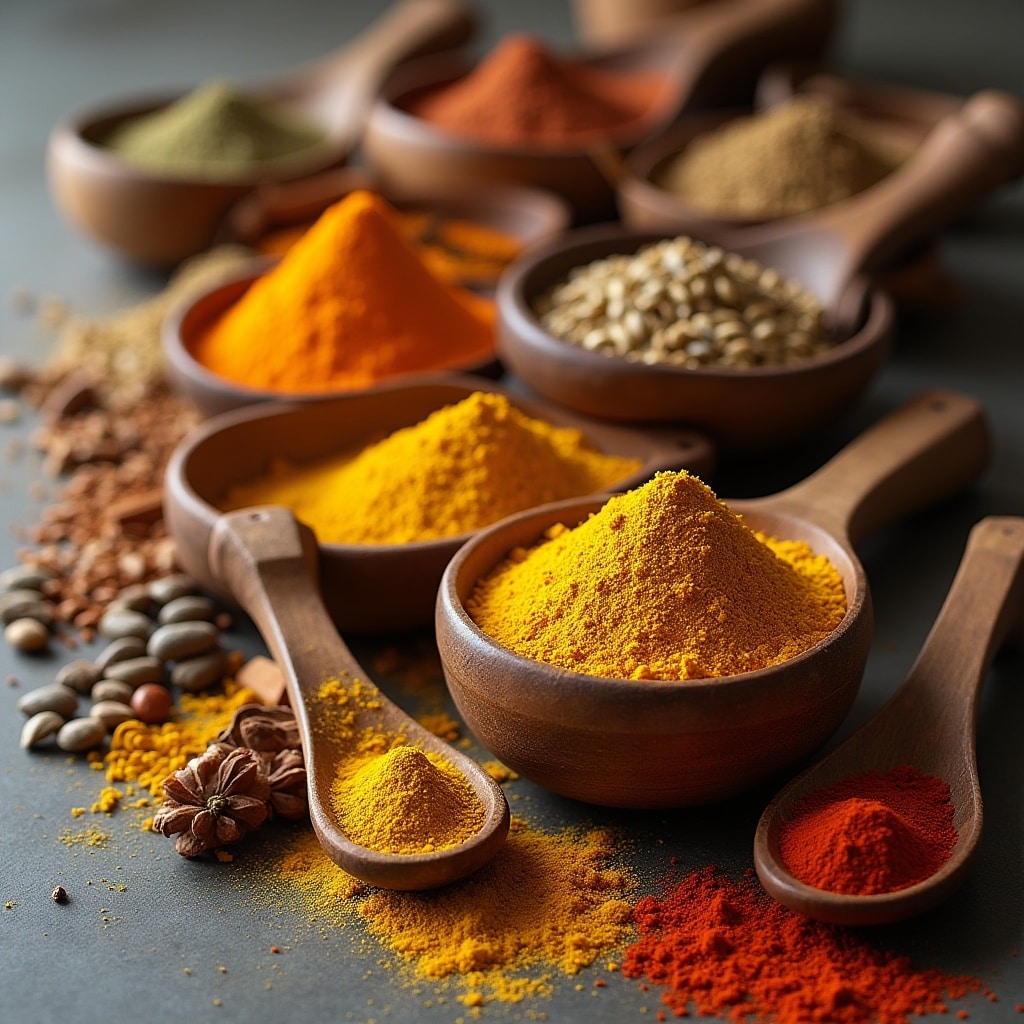
Common Indian spices like turmeric cumin coriander cardamom cloves cinnamon mustard seeds
Learning the spices names in Tamil, Telugu, Kannada, and Malayalam makes it easier to navigate recipes across regions. Now that you’ve seen how each language refers to common ingredients, let’s break them down in detail:
Spices Names in Tamil
With the spices names in Tamil covered, it becomes easier to match everyday kitchen terms with their spices name in English. Tamil Nadu cooking uses a wide variety of aromatics, which is why many people look up spices in Tamil when comparing traditional names. It’s also common to check terms like pachai milagai in English or krambu in English while translating family recipes.
Exploring these differences across states ensures you have a complete and accurate Indian spices list with names for all your cooking needs:
| Tamil Name | English Name |
| கடுகு (Kadugu) | Mustard Seeds |
| சீரகம் (Seeragam) | Cumin Seeds |
| பெருஞ்சீரகம் (Perumjeerakam) | Fennel Seeds |
| மிளகு (Milagu) | Black Pepper |
| கிராம்பு (Krambu) | Cloves |
| இலவங்கப்பட்டை (Ilavangappattai) | Cinnamon Bark |
| மஞ்சள் தூள் (Manjal Thool) | Turmeric Powder |
| சிவப்பு மிளகாய் (Sivappu Milagai) | Red Chilli |
| வெந்தயம் (Vendhayam) | Fenugreek Seeds |
| பட்டை (Pattai) | Cinnamon Stick |
| கறிவேப்பிலை (Karuveppilai) | Curry Leaves |
| கடலை பருப்பு (Kadalai Paruppu) | Bengal Gram |
| குங்குமப்பூ (Kungumapoo) | Saffron |
Spices Names in Telugu
The spices names in Telugu often differ from Tamil or Kannada terms, even though the ingredients are the same. Many learners search for spices names in Telugu to match grocery labels with English terms. Popular lookups include jeelakarra in English for cumin seeds and the rarer magrail spice in English, referring to nigella seeds.
To make these differences easy to recognise, and to match each one with its spices name in Hindi and English, here is a clear, simple table you can use as a reference:
| Telugu Name | English Name |
| జీలకర్ర (Jeelakarra) | Cumin Seeds |
| మిరియాలు (Miriyalu) | Black Pepper |
| లవంగాలు (Lavangalu) | Cloves |
| దాల్చిన చెక్క (Daalchina Chekka) | Cinnamon Stick |
| ఆవాలు (Aavalu) | Mustard Seeds |
| సోంపు (Sompú) | Fennel Seeds |
| మెంతులు (Menthulu) | Fenugreek Seeds |
| పసుపు (Pasupu) | Turmeric Powder |
| ఎర్ర మిరప (Erra Mirapa) | Red Chilli |
| కరివేపాకు (Karivepaku) | Curry Leaves |
| శజీరా (Shajeera) | Caraway Seeds |
| నువ్వులు (Nuvvulu) | Sesame Seeds |
| కుంకుమపువ్వు (Kunkumapuvvu) | Saffron |
Spices Names in Kannada
Just like Tamil and Telugu, Karnataka has its own set of unique spice terms used in everyday cooking. Understanding the spices names in Kannada helps you confidently identify ingredients in recipes, markets, and local dishes.
Beginners often compare spices names in kannada with English when learning home cooking. Searches like menasu in english for pepper or clarifications of kaduku in kannada appear frequently among new cooks.
To make these names easy to compare with their spices name in English and Hindi equivalents, here is a clear reference table you can explore next.
| Kannada Name | English Name |
| ಸಾಸಿವೆ (Sasive) | Mustard Seeds |
| ಜೀರಿಗೆ (Jeerige) | Cumin Seeds |
| ಮೆಣಸು (Menasu) | Black Pepper |
| ಲವಂಗ (Lavanga) | Cloves |
| ದಾಲ್ಚಿನ್ನಿ (Dalchini) | Cinnamon |
| ಶೋಂಪು (Shompu) | Fennel Seeds |
| ಮೆಂತೆಕಾಳು (Menthya Kaalu) | Fenugreek Seeds |
| ಅರಿಶಿನ (Arishina) | Turmeric Powder |
| ಕೆಂಪು ಮೆಣಸಿನಕಾಯಿ (Kempu Menasinkayi) | Red Chilli |
| ಕರಿಬೇವು (Karibevu) | Curry Leaves |
| ಶಾಹಿ ಜೀರಿಗೆ (Shahi Jeerige) | Caraway Seeds |
| ಎಳ್ಳು (Ellu) | Sesame Seeds |
| ಕೇಸರಿ (Kesari) | Saffron |
Spices Names in Malayalam
Kerala’s cuisine uses a rich variety of aromatics, each known by distinct local names. Learning the spices names in Malayalam helps you easily interpret traditional recipes, identify ingredients in Kerala markets, and match them with their spices name in English.
Many readers look up spices names in Malayalam to better understand Kerala-style recipes. A common query is Perumjeerakam English, which refers to fennel seeds used in many regional masalas.
To make these regional terms simple to understand, here is a clear table comparing Malayalam, English, and Hindi spice names:
| Malayalam Name | English Name |
| കടുക് (Kaduku) | Mustard Seeds |
| ജീരകം (Jeerakam) | Cumin Seeds |
| മുളക് (Mulaku) | Black Pepper |
| ഗ്രാമ്പൂ (Grampu) | Cloves |
| കറുവപ്പട്ട (Karuvaptta) | Cinnamon |
| പെരുംജീരകം (Perumjeerakam) | Fennel Seeds |
| ഉലുവ (Uluva) | Fenugreek Seeds |
| മഞ്ഞൾ (Manjal) | Turmeric Powder |
| ചുവന്ന മുളക് (Chuvanna Mulaku) | Red Chilli |
| കറിവേപ്പില (Kariveppila) | Curry Leaves |
| ഷാജീര (Shajeera) | Caraway Seeds |
| എള്ള് (Ellu) | Sesame Seeds |
| കുങ്കുമപ്പൂവ് (Kunkumappoov) | Saffron |
What Are the Common Condiments Used in Indian Cooking?
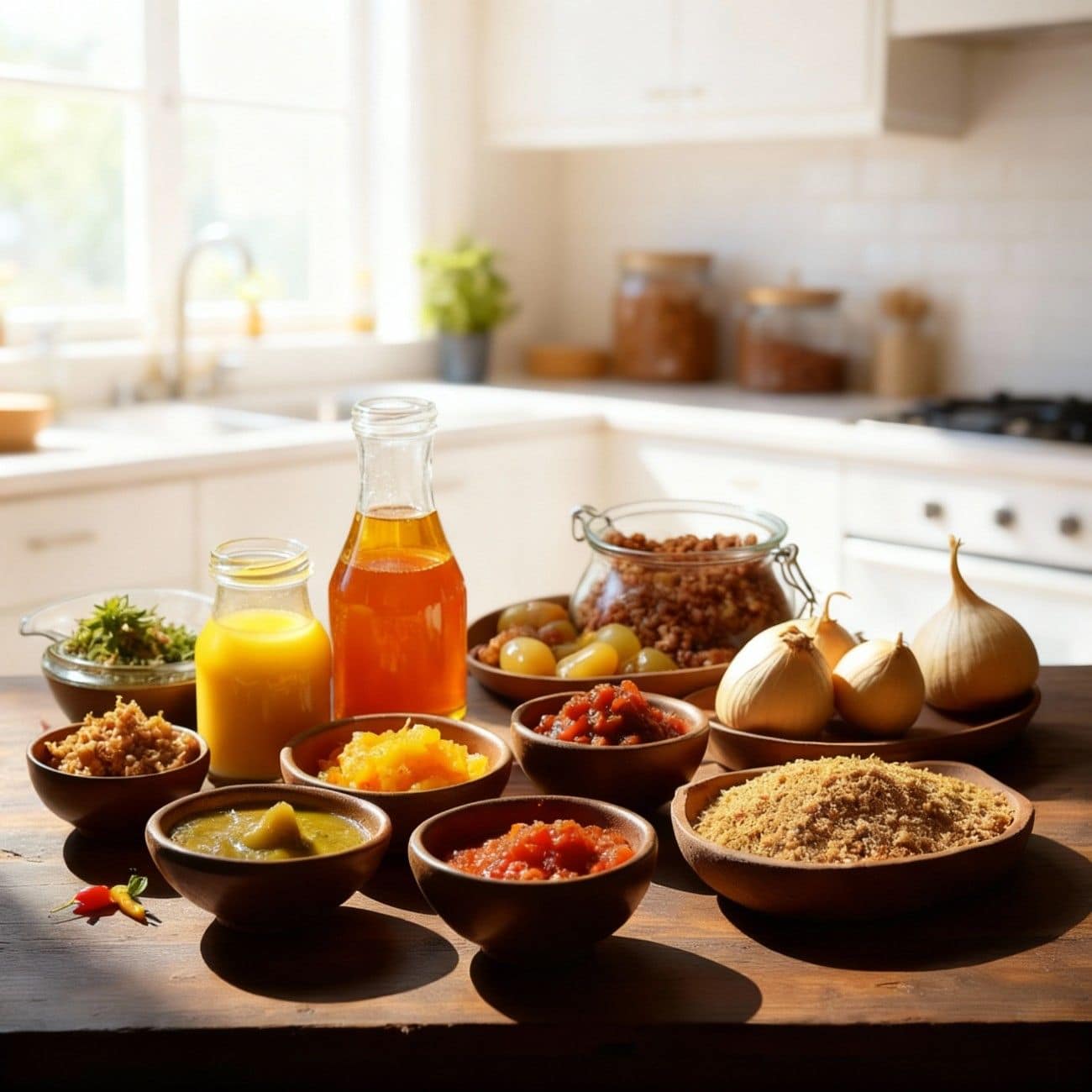
Various Indian condiments and spices in bowls and jars
Common condiments in Indian cooking are ingredients that enhance flavour, aroma, and texture in everyday dishes. These include spice pastes, oils, tangy elements, and seasoning blends used across regions, whether you’re preparing dal tadka, aloo paratha, or biryani.
Key condiments include mustard oil, ghee, tamarind paste, ginger-garlic paste, pickles, chutneys, spice mixes like garam masala. Many regional variations also use items such as sasive enne (mustard oil), curry leaves oil, and traditional podis that add character to dishes like sambar, rasam, or curd rice.
Together, these condiments elevate simple meals, enhance depth, and bring out the authentic taste of Indian cuisine across everyday cooking.
What Are the Condiment Names in Hindi, Tamil, Telugu, and Kannada?
To make cooking and grocery shopping easier, it’s helpful to know the names of common condiments across multiple languages. The table below serves as a comprehensive list of condiments and spices, helping you match ingredients across English, Hindi, Tamil, Telugu, and Kannada for accurate cooking:
| English Name | Hindi Name | Tamil Name | Telugu Name | Kannada Name |
| Mustard Oil | सरसों का तेल (Sarson Ka Tel) | கடுகு எண்ணெய் (Kadugu Ennai) | ఆవాల నూనె (Aavala Noone) | ಸಾಸಿವೆ ಎಣ್ಣೆ (Sasive Enne) |
| Ghee | घी (Ghee) | நெய் (Nei) | నెయ్యి (Neyi) | ತುಪ್ಪ (Tuppa) |
| Tamarind | इमली (Imli) | புளி (Puli) | చింతపండు (Chintapandu) | ಹುಣಸೆ ಹಣ್ಣು (Hunasé Hannu) |
| Ginger-Garlic Paste | अदरक-लहसुन का पेस्ट (Adrak-Lahsun Ka Paste) | இஞ்சிச் பூண்டு விழுது | అల్లం వెల్లుల్లి పేస్ట్ | ಶುಂಠಿ ಬೆಳ್ಳುಳ್ಳಿ ಪೇಸ್ಟ್ |
| Pickle | अचार (Achar) | ஊறுகாய் (Oorugai) | ఊరగాయ (Ooragaya) | ಉಪ್ಪಿನಕಾಯಿ (Uppinakayi) |
| Chutney | चटनी (Chatni) | சட்னி (Chatni) | చట్ని (Chatni) | ಚಟ್ನಿ (Chatni) |
| Coconut Chutney | नारियल चटनी (Nariyal Chatni) | தேங்காய் சட்னி | కొబ్బరి చట్ని | ತೆಂಗಿನ ಚಟ್ನಿ |
| Coriander Chutney | धनिया चटनी (Dhaniya Chatni) | கொத்தமல்லி சட்னி | ధనియా చట్ని | ಕೊತ್ತಂಬರಿ ಚಟ್ನಿ |
| Sesame Oil | तिल का तेल (Til Ka Tel) | நல்லெண்ணெய் (Nallenney) | నువ్వుల నూనె (Nuvvula Noone) | ಎಳ್ಳೆಣ್ಣೆ (Ellenne) |
| Curd / Yogurt | दही (Dahi) | தயிர் (Thayir) | పెరుగు (Perugu) | ಮೊಸರು (Mosaru) |
| Lemon Juice | नींबू का रस (Nimbu Ka Ras) | எலுமிச்சை சாறு | నిమ్మరసం (Nimmarasam) | ನಿಂಬೆ ಸಾರು (Nimbe Saaru) |
| Salt | नमक (Namak) | உப்பு (Uppu) | ఉప్పు (Uppu) | ಉಪ್ಪು (Uppu) |
What Are the Different Types of Seasonings?
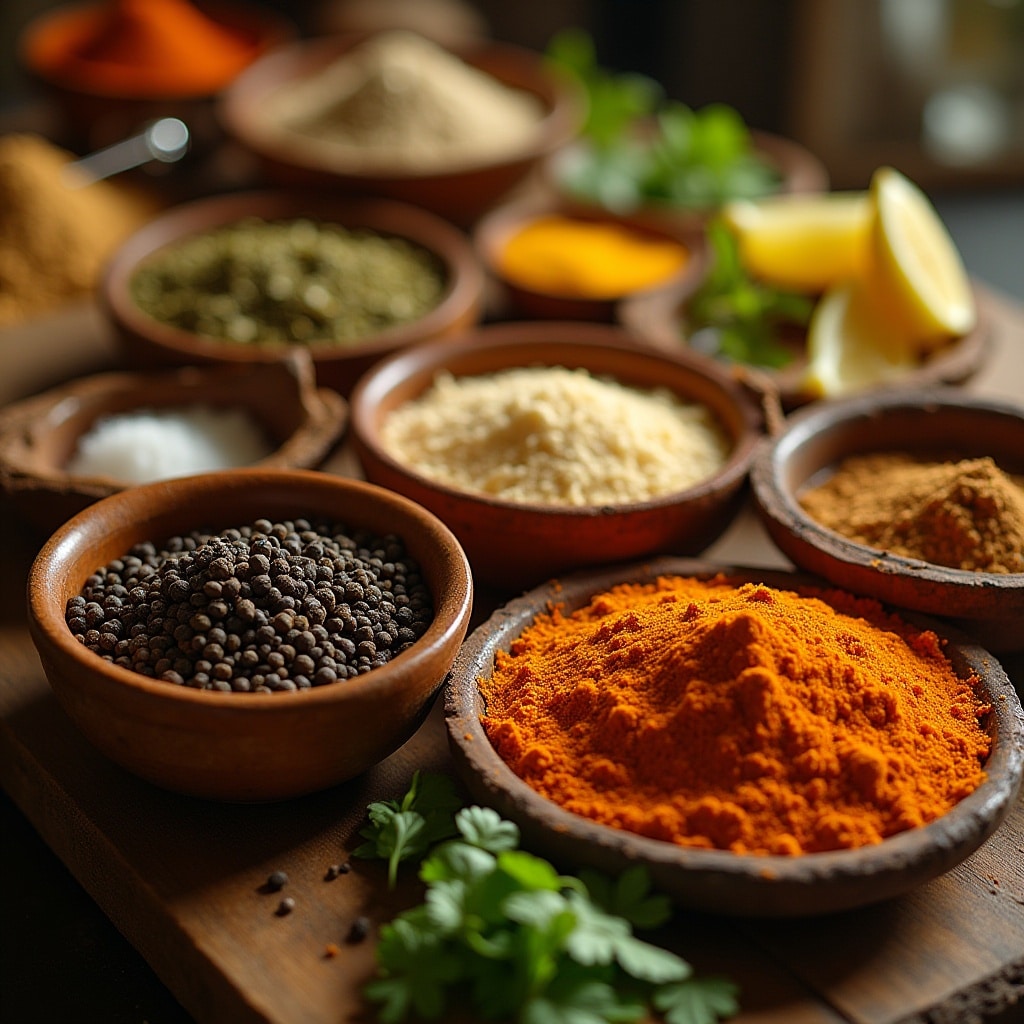
Various types of seasonings displayed in bowls and containers
Seasonings play a key role in enhancing flavour, aroma, and balance in any dish. They go beyond individual spices or herbs, combining ingredients in various ways to create depth and complexity. To make it easier to understand, here’s a seasoning herbs list, grouped into several major types:
- Dry seasoning spices: Black pepper, cumin, coriander, turmeric, paprika, and other ground or whole spices.
- Blended seasonings: Garam masala, curry powder, sambar powder, rasam powder, Italian seasoning, and chilli flakes.
- Seasoning herbs: Mint, coriander leaves, basil, oregano, thyme, dill, and curry leaves.
- Salt-based seasonings: Table salt, rock salt, black salt, seasoned salt, and soy sauce.
- Acidic seasonings: Lemon juice, vinegar, tamarind, and yogurt, used to balance and brighten flavours.
These different types of seasonings work together to shape the taste of both Indian and global dishes.
What Are the English, Hindi, and Regional Names for Popular Seasonings?
Popular seasonings form the backbone of both Indian and international recipes. Knowing their names in English, Hindi, Tamil, Telugu, and Kannada makes cooking, shopping, and following recipes much easier. The table below lists commonly used seasonings with their multilingual equivalents, so you can quickly identify ingredients and use them confidently in any dish:
| English Name | Hindi Name | Tamil Name | Telugu Name | Kannada Name |
| Black Pepper | काली मिर्च (Kali Mirch) | மிளகு (Milagu) | మిరియాలు (Miriyalu) | ಮೆಣಸು (Menasu) |
| Cumin Powder | जीरा पाउडर (Jeera Powder) | சீரகம் தூள் (Seeragam Thool) | జీలకర్ర పొడి (Jeelakarra Podi) | ಜೀರಿಗೆ ಪುಡಿ (Jeerige Pudi) |
| Coriander Powder | धनिया पाउडर (Dhaniya Powder) | கொத்தமல்லி தூள் (Kothamalli Thool) | ధనియాల పొడి (Dhaniyalu Podi) | ಕೊತ್ತಂಬರಿ ಪುಡಿ (Kottambari Pudi) |
| Turmeric Powder | हल्दी पाउडर (Haldi Powder) | மஞ்சள் தூள் (Manjal Thool) | పసుపు పొడి (Pasupu Podi) | ಅರಿಶಿನ ಪುಡಿ (Arishina Pudi) |
| Red Chilli Flakes | लाल मिर्च फ्लेक्स (Lal Mirch Flakes) | சிவப்பு மிளகாய் தூள் (Sivappu Milagai Thool) | ఎర్ర మిరపపు ఫ్లేక్స్ (Erra Mirapa Flakes) | ಕೆಂಪು ಮೆಣಸು ಪುಡಿ (Kempu Menasu Pudi) |
| Garam Masala | गरम मसाला (Garam Masala) | கரம் மசாலா (Garam Masala) | గరం మసాలా (Garam Masala) | ಗರಂ ಮಸಾಲಾ (Garam Masala) |
| Curry Powder | करी पाउडर (Curry Powder) | கறி தூள் (Kari Thool) | కరివేపాకు పొడి (Karivepaku Podi) | ಕರೀ ಪುಡಿ (Kari Pudi) |
| Chaat Masala | चाट मसाला (Chaat Masala) | சாட் மசாலா (Chaat Masala) | చాట్ మసాలా (Chaat Masala) | ಚಾಟ್ ಮಸಾಲಾ (Chaat Masala) |
| Italian Seasoning | इटैलियन सीज़निंग | இத்தாலியன் சீசனிங் (Italian Seasoning) | ఇటాలియన్ సీజనింగ్ (Italian Seasoning) | ಇಟಾಲಿಯನ್ ಸೀಸನಿಂಗ್ (Italian Seasoning) |
| Oregano | ओरेगैनो / अजवायन के पत्ते | ஒரிகானோ (Oregano) | ఒరేగానో (Oregano) | ಓರೆಗಾನೋ (Oregano) |
| Basil | तुलसी (Tulsi – Western Basil) | துளசி (Thulasi) | తులసి (Tulasi) | ತುಳಸಿ (Tulasi) |
| Parsley | अजमोद (Ajmod) | பார்ஸ்லி (Parsley) | పార్స్లీ (Parsley) | ಪರ್ಸ್ಲಿ (Parsley) |
| Mixed Herbs | मिक्स्ड हर्ब्स (Mixed Herbs) | கலந்த மூலிகைகள் (Mixed Herbs) | మిక్స్డ్ హర్బ్స్ (Mixed Herbs) | ಮಿಕ್ಸ್ಡ್ ಹರ್ಬ್ಸ್ (Mixed Herbs) |
What Are the Indian Herbs and Their Names in English, Hindi, Tamil, Telugu, and Kannada?
Herbs add freshness, aroma, and unique healing properties to Indian cooking. For beginners and culinary enthusiasts, an Indian herbs and spices list provides a handy reference to learn, identify, and use them effectively in cooking.
The table below lists commonly used Indian herbs with their English, Hindi, Tamil, Telugu, and Kannada names, along with notes on their typical uses:
| English Name | Hindi Name | Tamil Name | Telugu Name | Kannada Name |
| Holy Basil | तुलसी (Tulsi) | துளசி (Thulasi) | తులసి (Tulasi) | ತುಳಸಿ (Tulasi) |
| Mint | पुदीना (Pudina) | புதினா (Pudina) | పుదీనా (Pudina) | ಪುದೀನಾ (Pudina) |
| Coriander Leaves | धनिया पत्ता (Dhaniya Patta) | கொத்தமல்லி (Kothamalli) | ధనియాల ఆకు (Dhaniyalu Aaku) | ಕೊತ್ತಂಬರಿ ಸೊಪ್ಪು (Kottambari Soppu) |
| Curry Leaves | करी पत्ता (Curry Patta) | கருவேப்பிலை (Karuveppilai) | కరివేపాకు (Karivepaku) | ಕರಿಬೇವು (Karibevu) |
| Carom Leaves | अजवाइन के पत्ते (Ajwain Patte) | ஓமம் இலைகள் (Omam Ilaigal) | వాము ఆకు (Vaamu Aaku) | ಓಮ ಎಲೆ (Oma Ele) |
| Fenugreek Leaves | मेथी पत्ता (Methi Patta) | வெந்தய இலைகள் (Vendhay Ilai) | మెంతులు ఆకులు (Menthulu Aakulu) | ಮೆಂತೆಕಾಳು ಎಲೆ (Menthe Kaalu Ele) |
| Spinach | पालक (Palak) | பாலக் (Paalak) | పాలకూర (Palakura) | ಪಾಲಕ್ (Paalak) |
| Roselle Leaves | गोंगुरा (Gongura) | காங் குரா (Gongura) | గోంగూర (Gongura) | ಗೋಂಗುರ (Gongura) |
| Dill | सोया साग (Soya Saag) | சவ்வி இலைகள் (Savi Ilaigal) | ಸೋಯಾ ಸೊಪ್ಪು (Soya Soppu) | ಸಾಬ್ಸಿಗೆ ಸೊಪ್ಪು (Sabsige Soppu) |
| Mustard Greens | सरसों का साग (Sarson Ka Saag) | கடுகு இலைகள் (Kadugu Ilaigal) | మసూరి ఆకులు (Masuri Aakulu) | ಸಾಸಿವೆ ಎಲೆ (Sasive Ele) |
How Should You Store Spices and Herbs for Long Freshness?

Airtight glass jars filled with colorful spices
Storing your spices and herbs correctly is essential if you want to preserve their strong flavour, aroma, and potency for months. Here are the most effective ways to keep them fresh for longer:
- Use airtight containers: Keep spices in tightly sealed glass jars to protect them from air exposure, which quickly reduces their aroma.
- Store them away from heat and sunlight: Avoid keeping masalas near the stove. Heat, humidity, and direct light cause spices to lose essential oils faster.
- Keep them in a cool, dark cabinet: A dedicated spice drawer or closed shelf is ideal for maintaining long-term freshness.
- Avoid moisture contact: Never shake spice jars directly over steaming pots. Steam can cause clumping and spoil the spice.
- Buy whole spices whenever possible: Whole spices like milagu (pepper), lavang/krambu (cloves), and perumjeerakam (fennel) last much longer than powdered versions.
- Label with purchase dates: This helps you track which masalas or seasonings need replacement first.
- Use clean, dry spoons: Prevents contamination and extends the shelf life of blends, herbs, and masalas.
Conclusion
Understanding spices, herbs, and condiments across English and Indian languages makes cooking easier, more enjoyable, and far more accurate. Whether you’re translating family recipes, following international cooking videos, or shopping in multilingual markets, knowing these names helps you identify ingredients with confidence.
By exploring Tamil, Telugu, Kannada, and Malayalam terms alongside their English and Hindi equivalents, you gain a complete reference that supports everyday cooking as well as regional specialties. With this guide, you can navigate recipes, labels, and kitchen essentials effortlessly, bringing authentic flavour and clarity to every dish you prepare.
Frequently Asked Questions
What are some uncommon spice translations?
Cooks also search for uncommon names such as long masala in english, patta lavangam in english, kadugu english name, and elaichi and laung in english while interpreting regional recipes or comparing spice blends.
Are there any resources to learn both the Hindi and English names for spices?
Yes. Many cooking blogs, printable charts, and bilingual spice lists provide Hindi and English names for popular Indian spices. They’re useful for beginners, recipe conversions, and understanding regional masalas more clearly.
Where can I find a glossary of Indian spice names in English and other languages?
You can explore multilingual spice glossaries on trusted food websites, regional cooking guides, and downloadable tables that list Indian spice names in English, Hindi, Tamil, Telugu, Malayalam, and Kannada for easy cross-reference.
How can beginners easily remember Indian spices and their English names?
Using labeled jars, visual charts, and simple flashcards helps beginners memorise spices more quickly. Repeated exposure in the kitchen strengthens recall of both Indian and English names.
Why do some spices have multiple names across Indian languages?
India’s linguistic diversity means each region has its own traditional terms. Cultural variations and local dialects create multiple names for the same spice across Tamil, Hindi, Telugu, Malayalam, and Kannada.
What are the botanical names for common spices listed in English?
Common spices have botanical names that uniquely identify them: Black Pepper- Piper nigrum, Cumin- Cuminum cyminum, Coriander- Coriandrum sativum, Turmeric- Curcuma longa, Cloves- Syzygium aromaticum.