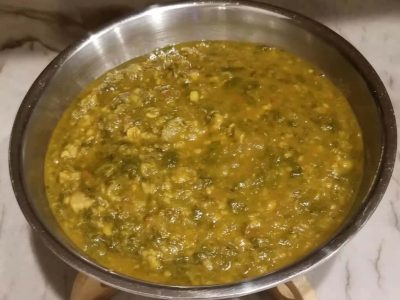
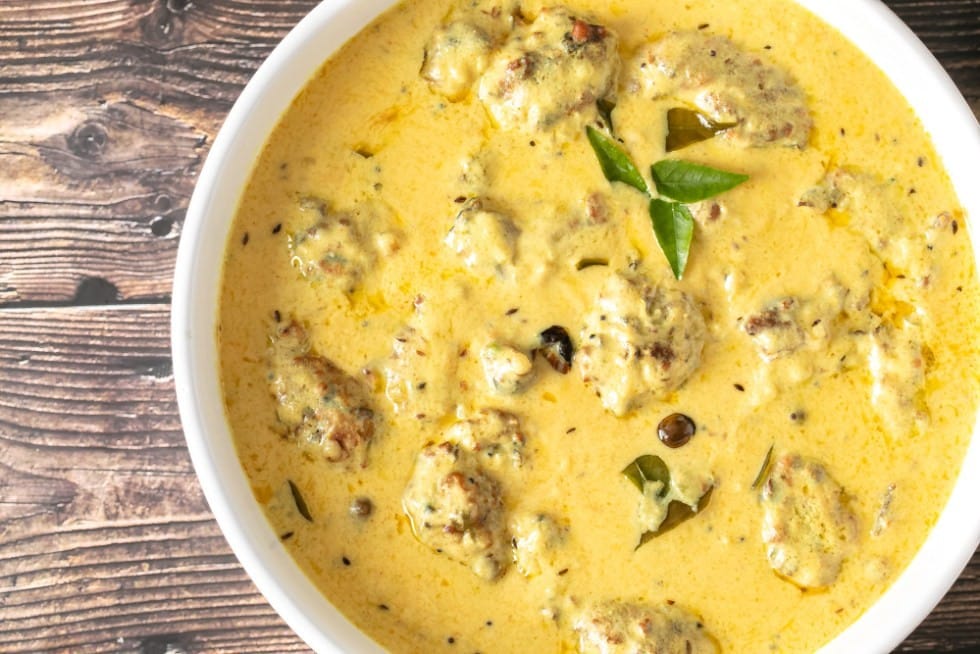
Dahi ki Kadhi is the recipe I turn to when I have leftover curd that has turned too sour for eating plain. My mother used to make this on rainy afternoons, and the smell of cumin crackling in hot oil still reminds me of sitting near the kitchen while the kadhi bubbled away. The bhajias are the part I always look forward to.
They start out crisp and golden, then soften as they soak in the tangy base, taking on all that flavour. I learned early on that rushing the cooking time leaves the kadhi grainy, so I always set aside a full hour when I make this. The dish needs that gentle heat to come together properly.
About the Recipe
This recipe takes about an hour from start to finish, with most of that time spent letting the kadhi simmer on its own. The ingredients are straightforward and easy to find in any Indian kitchen. I make this when I have sour curd sitting in the fridge and want something more interesting than plain rice and dal. The bhajias add a bit of texture without making the dish feel heavy. It is a good choice for a weekend lunch when you have time to cook slowly and do not mind stirring a pot every few minutes.
Why you will love this recipe
The tangy sharpness from the sour curd balances well with the earthy besan, and the cumin in both the kadhi and the tempering ties everything together. The bhajias give you something to bite into, which makes the dish feel more substantial than a plain kadhi. I like how the flavours develop as it cooks, turning from raw and sharp to mellow and rounded.
The tempering at the end adds a smoky note that lifts the whole dish. It pairs beautifully with plain boiled rice, where the kadhi soaks into each grain.
Cooking Tips
Stir the kadhi every seven to eight minutes so the besan does not settle and stick to the bottom of the pan. If you see lumps forming, whisk vigorously for a minute or two until they break down. Do not skip the water soak for the bhajias. Without it, they stay too firm and do not absorb the kadhi properly.
If your kadhi tastes too sour, add a pinch of sugar to balance it out. Keep the heat at medium so the curd does not split and turn grainy.
Top Tips
- Use a whisk to blend the curd and besan mixture before cooking to avoid lumps from the start.
- Let the bhajia batter rest for the full twenty minutes so the besan hydrates and fries evenly.
- Squeeze the soaked bhajias gently but thoroughly so they do not make the kadhi watery.
- Add the bhajias to the kadhi just before serving so they stay soft but not mushy.
- Double the tempering ingredients if you prefer a stronger smoky flavour in the final dish.
Serving and Storing Suggestions
This recipe serves four people comfortably with boiled rice on the side. Prep time is about fifteen minutes, and cooking takes forty five to fifty minutes. Serve the kadhi hot, straight from the stove, so the bhajias stay soft and do not break apart. Store leftovers in the fridge for up to two days.
The bhajias will soften further as they sit, which some people prefer. Reheat gently on low heat, adding a splash of water if the kadhi has thickened too much.
Similar Recipes
- Punjabi Kadhi Pakora
- Sindhi Kadhi
- Gujarati Kadhi
- Besan Ke Gatte Ki Sabzi
Nutrient Benefits
Sour curd provides probiotics that support digestion, and the live cultures can help balance gut health. Besan is high in protein and fibre, which keeps you full longer and helps maintain steady energy. Turmeric brings anti inflammatory properties, while ginger and garlic support immunity and digestion. The dish is relatively low in fat if you use minimal oil for frying the bhajias. Pairing it with rice gives you a complete meal with carbohydrates, protein, and beneficial spices.

Dahi ki Kadhi
Ingredients
- 500 gms Sour Curd
- 2 tbsp Besan Flour
- 1/2 tsp Ginger Paste
- 1/2 tsp Garlic Paste
- 2 tsp Cumin (ground)
- 2 Onions (finely chopped)
- 10 Curry Leaves
- 5 to 6 Green Chillies (slit)
- 1/2 tsp Turmeric Powder
- Salt as per taste
For Seasoning:
- 2 tsp Oil
- 4 Dry Red Chillies
- 1/2 tsp Cumin Seeds
- 6 cloves Garlic
For Bhajias:
- 3 tbsp Besan Flour
- Salt as per taste
- 1/2 tsp Red Chilli Powder
- Baking Powder (a pinch)
Instructions
- To make the kadhi, mix sour curd, besan flour, cumin, onions, curry leaves, green chillies, turmeric powder, ginger and garlic paste and salt.
- Blend them for a few seconds.
- Transfer them to a deep frying pan and cook for 35 to 45 minutes till it is smooth.
- Stir occasionally so that it does not stick to the pan.
- Meanwhile, heat 2 tsp oil in a pan.
- Fry the seasoning ingredients till dark brown.
- Pour it over the kadhi and cover with a lid.
- To make the bhajias, mix besan flour with water, salt, red chilli powder and baking powder.
- Make it to a stiff paste and keep aside for 20 minutes.
- Make small walnut size balls.
- Deep fry till golden brown in hot oil.
- Put them into a bowl of water and remove after 5 minutes.
- Squeeze out the water and drop them into the kadhi.
- Serve hot with boiled rice.
Sign up for our newsletter
Add Awesome Cuisine as a Preferred Source

Frequently Asked Questions
Why did my kadhi turn grainy instead of smooth?
This happens when the heat is too high or you do not stir often enough. The besan and curd need gentle heat to blend properly. Keep the flame at medium and stir every few minutes to prevent the mixture from splitting or curdling.
Can I skip soaking the bhajias in water?
You can, but they will stay firm and will not absorb the kadhi flavour. Soaking softens them so they turn pillowy and soak up the tangy base. Without this step, they taste like separate fried fritters rather than part of the dish.
My bhajias fell apart when I added them to the kadhi. What went wrong?
They were likely soaked too long or squeezed too hard. Five minutes in water is enough. Squeeze them gently to remove excess water without breaking them. Add them to the kadhi just before serving so they hold their shape better.
How do I fix kadhi that tastes too sour?
Add a pinch of sugar or jaggery and let it simmer for another five minutes. This balances the sourness without making the kadhi sweet. Taste as you go so you do not overdo it.
Can I make the bhajias ahead of time?
Yes, fry them and store in an airtight container for up to a day. Soak them in water and add to the kadhi when you are ready to serve. They may soften a bit more than freshly fried ones, but the flavour stays good.