
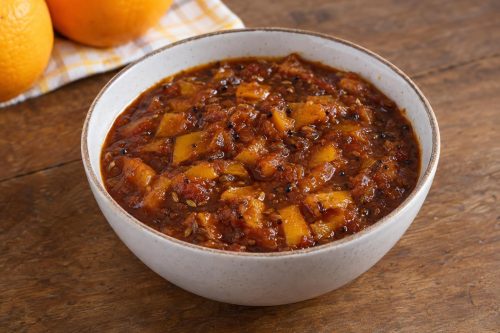
Orange Skin Pachadi Recipe is one of those South Indian preparations that makes good use of something most kitchens throw away. Fresh orange peel is simmered until soft, then cooked together with tamarind juice, tomato puree, red chilli powder and jaggery to produce a thick, flavourful pachadi with a pleasing balance of sweet and sour. The tempering of mustard, jeera, fenugreek and asafoetida added at the right stage gives the dish its characteristic aroma. It is a straightforward recipe that takes under thirty minutes once the peel is ready.
About the Recipe
The recipe uses one cup of fresh orange peel cut into small pieces. The peel is first cooked separately in water until soft before the tamarind juice and tomato puree are added. This two-stage cooking is important because underdone peel stays chewy and bitter. Jaggery goes in only at the end so it does not interfere with the cooking of the peel. The finished pachadi should be semi-liquid, not watery. If you have tamarind paste and readymade tomato puree at hand, those work fine and save time.
Why You Will Love This Recipe
The main reason to make this pachadi is the balance of flavours you get from very ordinary ingredients. Jaggery softens the sharpness of tamarind, the tomato adds body, and the fenugreek in the tempering gives a faint bitterness that keeps the dish from tasting flat. The peel itself, once properly softened, has a mild citrus flavour that comes through without being overpowering. It is also a practical recipe because it works equally well with bittergourd if orange peel is not available, so the method is useful beyond a single ingredient.
Cooking Tips
The most common beginner mistake is not cooking the peel long enough in the first stage. If the peel is still firm when the tamarind and tomato are added, it will not soften further properly and the pachadi will taste bitter and chewy. Cook the peel in water on medium flame until it is genuinely soft before moving on. Also, add jaggery only after the gravy has reduced to a semi-liquid consistency, as adding it too early can cause the mixture to stick and burn at the bottom of the pan.
Top Tips
- Use only fresh peel from the loose-skin variety of orange, commonly called Kamala Orange in South India. Hard-skin orange peel stays tough even after long cooking.
- Scrape away as much of the white pith under the orange skin as possible before cutting. The pith holds most of the bitterness.
- Check that the peel is completely soft before adding tamarind juice and tomato puree. Press a piece between your fingers to confirm.
- Add jaggery only in the final two to three minutes on low flame. Adding it earlier can cause the pachadi to stick and scorch.
- Adjust red chilli powder to your preference. One teaspoon gives moderate heat. Reduce to half a teaspoon for a milder result.
- To save time, use ready tamarind paste and store-bought tomato puree in place of soaking whole tamarind and grinding fresh tomatoes.
Serving and Storing Suggestions
Serve Orange Skin Pachadi as a side dish with plain steamed rice or chapati. It also works well alongside a simple dal. The pachadi keeps well in the refrigerator for two to three days in a covered container. Reheat gently on a low flame, adding a tablespoon of water if it has thickened too much on standing. Do not freeze as the texture of the peel changes on thawing.
Similar Recipes
- Bitter Gourd Sweet Pachadi
- Ladies Finger Pachadi
- Kerala Mango Pachadi
- Pineapple Pachadi
- Mangai Pachadi
Nutrient Benefits
Orange peel contains dietary fibre and vitamin C. Jaggery provides small amounts of iron and is less refined than white sugar. Tamarind contributes tartaric acid and some B vitamins. Fenugreek seeds are a source of fibre and protein. Together these ingredients make the pachadi a reasonably varied source of everyday nutrients when eaten as part of a balanced meal.

Orange Skin Pachadi
Ingredients
- Orange skin cut into small pieces – 1 cup
- Tamarind – a small lemon size
- Tomatoes – 2 (medium size)
- Jaggery powdered – ½ cup
- Red Chilli Powder – 1 teaspoon
- Asafotida Powder – 1¼ teaspoon
- Oil – 1 tablespoon
- Mustard – ½ teaspoon
- Jeera – 1 teaspoon
- Fenugreek – ½ teaspoon
- Salt – 1 teaspoon or as per taste
Instructions
- Soak tamarind in water and squeeze out thick juice of about one cup.
- Cut the tomatoes into big pieces and grind it to a fine puree.
- Put the orange skin pieces in a vessel and add half cup water and cook on medium flame till the skin is soft. Add tamarind juice and tomato puree, red chilli powder, salt and stir well. Allow to boil.
- In a kadai put the oil and when it is hot add mustard. When it pops up add jeera, fenugreek and asafotida powder and fry.
- Add the cooked orange skin-tamarind gravy to it and stir well. Allow to cook till it is semi liquid. Finally add jaggery powder and mix well.
- Let it cook for two to three minutes on low flame. Then remove.
- Tips: Use only fresh orange skin. The loose variety, that means, you can easily peel the skin from orange, and not the hard variety. Normally it is called in South India as “Kamala Orange”.
- When cutting the skin, remove the white skin under the orange one as much as possible to reduce bitterness. You can increase or decrease the red chilli powder according to your taste.
- To save time, you can use tamarind paste and readymade tomato puree.
- Note: You can also prepare above pachadi using bittergourd, instead of Orange skin.
Sign up for our newsletter
Add Awesome Cuisine as a Preferred Source

Frequently Asked Questions
Which variety of orange should I use for this pachadi?
Use the loose-skin variety, commonly called Kamala Orange in South India. The skin peels away easily and cooks to a soft texture. Hard-skin oranges, such as the navel variety, have a thicker, tougher peel that does not soften well even with extended cooking and tends to stay more bitter.
How do I reduce the bitterness of the orange peel?
The main step is to remove as much of the white pith beneath the orange skin as possible before cutting the peel into pieces. The pith is the chief source of bitterness. Cooking the peel in water until fully soft also helps reduce bitterness before the tamarind and tomato are added.
Can I use tamarind paste instead of whole tamarind?
Yes. Tamarind paste works well and saves the soaking and squeezing step. Use roughly one to one and a half teaspoons of paste dissolved in one cup of water to get a similar level of sourness to the thick juice extracted from a lemon-sized ball of whole tamarind. Adjust the quantity to taste.
What consistency should the finished pachadi be?
The pachadi should be semi-liquid when it comes off the flame. It will thicken slightly as it cools. If it looks too watery after the gravy stage, continue cooking on medium flame, stirring occasionally, until it reduces before adding the jaggery. If it thickens too much on standing, stir in a little water when reheating.
Can I make this pachadi with bittergourd instead of orange peel?
Yes, the same method works with bittergourd. Cut the bittergourd into small pieces and cook it in water on medium flame until soft, then follow the remaining steps exactly as written. The sweet and sour profile of the tamarind and jaggery balances the bitterness of bittergourd in much the same way it does with orange peel. You can find a related version in our Bitter Gourd Sweet Pachadi recipe.
different variety item,yet to try it