
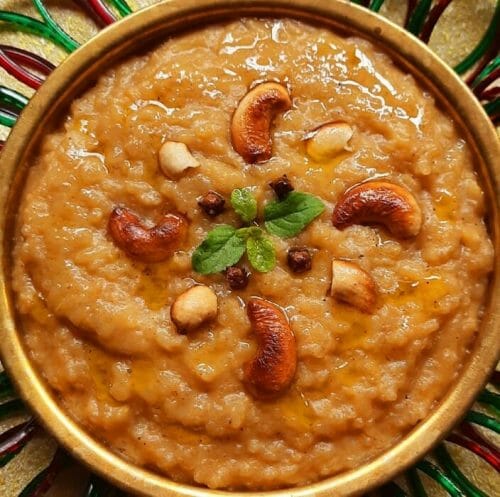
Akkaravadisal is one of those recipes I got completely wrong the first time I made it. I added the jaggery directly into the hot milk and rice without straining it first, and the whole pot curdled within minutes. I stood there staring at a grainy, split mess wondering what went wrong. That one mistake taught me more about this dish than any written recipe ever did.
Since then, I always dissolve the jaggery separately, strain it carefully, and let it cool just slightly before combining it with the rice. That small step changed everything. The detail I keep coming back to is the pacha karpooram — just a tiny pinch, but it gives the finished dish that specific temple-style fragrance that nothing else replicates. I have made this for Pongal, for family gatherings, and sometimes just on a slow Sunday morning when I want something that feels like more than ordinary breakfast.
About the Recipe
All the ingredients here are kitchen staples if you cook South Indian food regularly — raw rice, moong dal, milk, jaggery, ghee, and a handful of cashews and raisins. Saffron and pacha karpooram are specialty items, but both are available at any Indian grocery store. The recipe takes about 45 to 50 minutes from start to finish, most of which is hands-on stirring at the stove. I would make this on a festival morning or when I have guests coming for a late breakfast and I want something that reads as effort without actually being complicated.
Why you will love this recipe
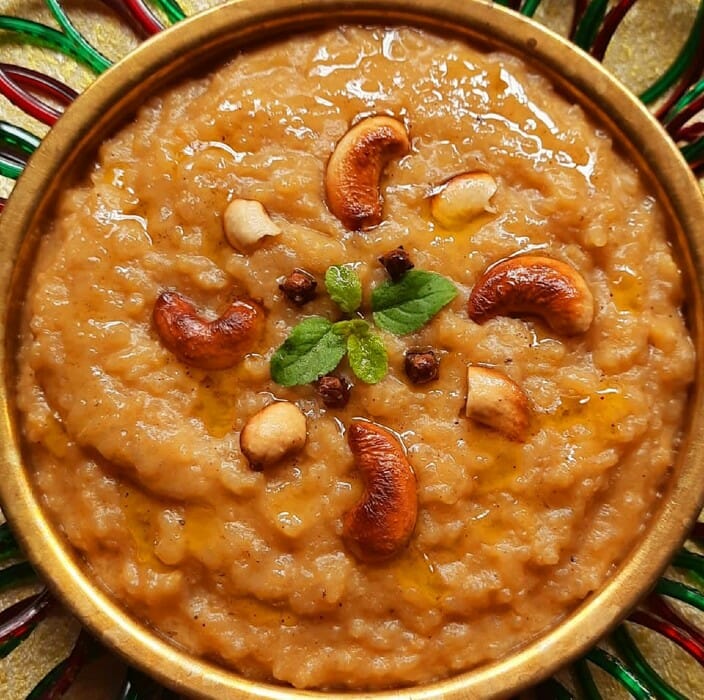
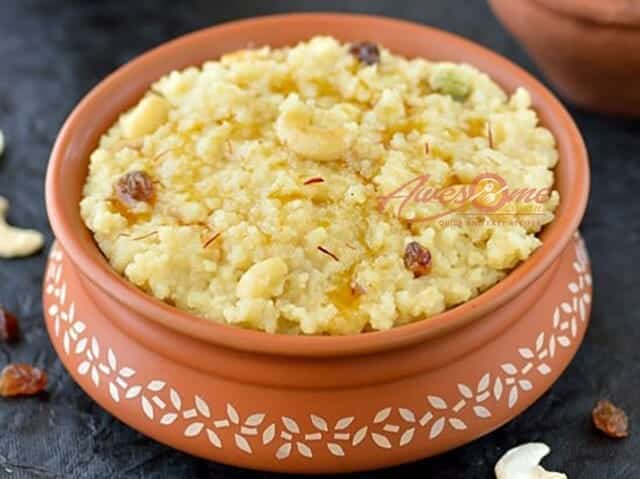
The combination of milk-cooked rice with jaggery gives you a sweetness that is rounded and slightly caramel-like rather than sharp or sugary. Saffron adds a subtle warmth and colour that you can actually smell as you stir it in. The ghee-fried cashews go in right at the end, so they stay crisp against the soft, thick pongal — that contrast of textures is genuinely satisfying in every spoonful.
What also keeps me coming back to this recipe is how specific it tastes. The pacha karpooram is not an ingredient you can skip or substitute if you want the real version — just a small pinch makes the whole dish smell like a proper South Indian prasad. Once you have tasted that, a version without it feels like something is missing.
Cooking Tips
The biggest beginner mistake is rushing the jaggery step. If you add unfiltered or still-boiling jaggery syrup to hot milk, the milk will curdle. Dissolve the jaggery in a little water, strain it through a fine sieve, and let it cool for two to three minutes before adding it to the rice mixture.
Also, keep the flame on medium throughout — high heat will scorch the bottom of the pot faster than you expect with this much milk and rice together. Stir every two to three minutes without fail.
Top Tips
- Dry roast the moong dal on a low flame until it smells nutty before cooking it. This step takes about three minutes but makes the dal taste much less raw in the finished dish.
- Use a thick-bottomed pan or a heavy kadai for this recipe. The milk and rice mixture will stick and scorch on a thin pan much more quickly.
- Do not add pacha karpooram directly to a very hot mixture. Add it at the very end, off or near the end of the flame, so the fragrance stays intact rather than burning off.
- If the pongal thickens too much before you are ready to serve, stir in a quarter cup of warm milk and it will loosen back to the right consistency.
- Saffron dissolved in hot milk gives a stronger colour and fragrance than saffron added dry. Give it at least five minutes to steep before you stir it into the pongal.
Serving and Storing Suggestions
Akkaravadisal serves four to five people as a sweet course or a standalone festival breakfast. Prep time is about ten minutes, with around 35 to 40 minutes of cooking. Serve it warm, not piping hot, because the flavours settle and come through better once it cools slightly. Leftovers keep well in the refrigerator for up to two days in an airtight container. Reheat on a low flame with a splash of milk, stirring gently, since cold pongal will have thickened considerably overnight.
Similar Recipes
- Sakkarai Pongal
- Chakkara Pongal
- Semiya Payasam
- Rice Kheer (Chawal Ki Kheer)
- Moong Dal Halwa

Akkaravadisal
Ingredients
- 1 cup Raw Rice
- 1/4 cup Moong Dal dry roasted and cooked
- 5 to 6 cup Milk
- 2 cup Water
- 2 cup Jaggery grated
- 1/2 tsp Cardamom Powder
- 10 Cashewnuts broken
- 10 to 12 Raisins
- 2 tbsp Ghee - 2 tblsp
- a small pinch Pacha Karpooram (Borneal Flakes)
- 1/4 tsp Saffron - 1/4 tsp dissolved in 1 tblsp hot milk
Instructions
- Boil milk with water in a large pan.
- When it starts to boil, add the raw rice and cook until thick, stirring from time to time.
- In a different pan, heat jaggery with little water and cook till it is fully dissolved.
- Strain the jaggery to remove any impurities.
- Combine the dal, jaggery and rice together.
- Cook over medium flame, stirring regularly.
- Add the saffron with the milk and stir well.
- Heat a little ghee in a small frying pan and fry the cashews and raisins.
- Add the fried cashews, raisins, cardamom powder and pacha karpooram to the pongal.
- Mix well and remove from flame.
- Serve.
Sign up for our newsletter
Add Awesome Cuisine as a Preferred Source

Frequently Asked Questions
My pongal curdled when I added the jaggery. What went wrong?
This almost always happens when the jaggery syrup is added while it is still very hot, or when it has not been strained properly. Dissolve the jaggery in a small amount of water, strain it through a fine sieve to remove any grit or impurities, and let it cool for two to three minutes before adding it to the rice and milk mixture. Never add jaggery directly to boiling milk.
Can I use condensed milk or evaporated milk instead of regular milk?
Condensed milk will make the dish far too sweet and will also affect the texture. Evaporated milk can be used in a pinch if you dilute it with water, but the flavour will be noticeably different. Full-fat whole milk gives the best result here and is worth using if you can.
I cannot find pacha karpooram. Can I leave it out?
You can leave it out and the dish will still taste good, but it will not have that specific prasad-like fragrance that makes Akkaravadisal recognisable. Pacha karpooram is available at most Indian grocery stores, usually near the puja supplies. A very small pinch is all you need, so one packet lasts a long time.
How do I know when the rice is cooked enough before adding the jaggery?
The rice should be very soft and almost mushy, not just cooked through. Press a grain between your fingers — it should crush with no resistance at all. The mixture should also look thick and have reduced noticeably from when you started. If the rice still has any bite, keep cooking and add a little more milk if it looks too dry.
The pongal turned out too thin and watery. How do I fix it?
Continue cooking it on a medium flame, stirring regularly, and it will thicken as more liquid evaporates. If you have already added the jaggery and it is still thin, just give it another eight to ten minutes on the stove. Pongal thickens considerably as it cools, so a consistency that looks slightly loose on the flame will usually be just right once it rests for five minutes off the heat.

1 comment
accaravadasal