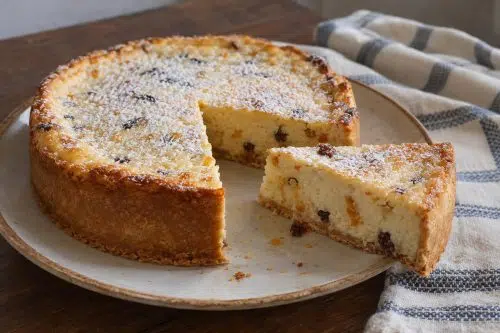
This ricotta cheesecake sits somewhere between a classic baked cheesecake and an Italian crostata di ricotta. The base is a soft, sticky short pastry pressed into the tin by hand. The filling combines ricotta and cream cheese for a texture that is creamy but not dense, with candied citrus peel and plump raisins scattered throughout. Once dusted with icing sugar it looks impressive, but it does not need specialist equipment or hard-to-find ingredients.
About the Recipe
The pastry uses a higher butter ratio than a standard shortcrust, which makes it softer and stickier. It sets into the tin sides easily enough, but it needs a well-floured surface to handle without tearing.
The filling uses both cream cheese and ricotta, beaten until smooth before combining. Toasting the almond flour lightly before adding it deepens its flavour noticeably. Soaking the raisins overnight keeps them soft so they do not draw moisture from the filling during baking.
Why You Will Love This Recipe
The filling is lighter than most baked cheesecakes. Ricotta holds less fat than cream cheese alone, so the result is not heavy even after a full 60-minute bake.
The candied citrus peel and raisins give each slice a little textural contrast against the smooth cheese filling. If you enjoy recipes like Apple and Raspberry Cheesecake or Walnut Cheesecake, this one offers a different but equally satisfying experience with the added character of a pastry shell.
Cooking Tips
The most common mistake is not sealing the pastry edges properly when pressing the sides into the tin, which lets the filling leak under the base. Press firmly where the side meets the base circle.
Do not overbake. The filling should still have a very slight wobble at the centre when you pull it from the oven; it firms up as it cools.
Beat the ricotta and cream cheese until completely smooth before adding the eggs. Small lumps at this stage will not smooth out during baking.
Top Tips
- Soak the raisins overnight without skipping this step; dry raisins will sink and harden inside the baked filling.
- Flour your surface generously when rolling the pastry base circle, as the dough is very sticky by design.
- Toast the almond flour in a dry pan just until it smells nutty, then remove it immediately so it does not burn.
- Seal every join between the base circle and the side pastry carefully before pouring in the filling.
- Allow the cheesecake to cool completely in the tin before attempting to remove it, as it is fragile when warm.
- Dust icing sugar only just before serving so it does not absorb into the surface and disappear.
Serving and Storing Suggestions
Serve the cheesecake at room temperature rather than straight from the refrigerator. The filling is creamier and easier to slice when not cold. A light dusting of icing sugar just before serving is all it needs.
Store leftovers covered in the refrigerator for up to three days. Remove slices about 20 minutes before eating to take the chill off. This cheesecake does not freeze well, as the ricotta filling tends to become watery on thawing.
Similar Recipes
- Apple and Raspberry Cheesecake
- Walnut Cheesecake
- Chocolate and Baileys Cheesecake
- Vanilla and Almond Cake
- Almond Biscotti
Nutrient Benefits
Ricotta contributes a reasonable amount of protein and calcium per serving. Eggs add further protein along with fat-soluble vitamins. Almond flour provides some dietary fibre and vitamin E. Raisins supply natural sugars and small amounts of iron. Portions naturally stay moderate with a dessert like this, but the dairy and eggs do mean each slice delivers something useful alongside the indulgence.
Ricotta Cheesecake
Ingredients
- 100 gms, unsalted, softened Butter
- 50 gms Caster Sugar
- 1 , small Egg
- 1 cup Maida
- For the filling
- 40 to 50 gms Almond Flour
- 2 , small Eggs
- 1/4 cup Sugar
- 175 gms Cream Cheese (Amul Cheese)
- 325 gms Ricotta Cheese
- 40 ml Cream
- 40 gms, candied, diced Citrus Peel
- 50 gms, soaked overnight Raisins
- Icing Sugar
Instructions
- Combine the butter and sugar in a bowl.
- Beat until pale.
- Add the egg and beat well.
- Now add the flour and beat again till well combined.
- The pastry dough should be very sticky.
- Roll out the dough on a floured surface.
- Place a medium cake tin over the pastry and cut around to make a circle that will fit into the base.
- Transfer the circle onto a baking tray lined with parchment paper.
- Bake the pastry for 12 minutes on a preheated oven at 180C until golden.
- Remove and cool.
- Meanwhile, lightly toast the almond flour and keep aside.
- Butter the cake tin and lay the baked circle into the base.
- Use fresh pastry and press into the sides of the tin and seal all edges.
- Beat the eggs with half of the sugar until frothy.
- Beat the cheese and remining sugar until smooth.
- Add the ricotta cheese and beat until smooth.
- Add cream and gently add the eggs.
- Continue to beat and add the almond flour, orange peel and raisins.
- Transfer this to the cake tin and place it in the oven.
- Bake for 60 minutes and remove to cool.
- Remove from the tin.
- Sprinkle some icing sugar on top.
- Serve.
Sign up for our newsletter
Add Awesome Cuisine as a Preferred Source

Frequently Asked Questions
Can I use store-bought ricotta or do I need to make it fresh?
Store-bought ricotta works perfectly well here. The key thing to check is that it is not too watery. If it looks very wet, spoon it into a muslin cloth or a fine sieve set over a bowl and let it drain in the refrigerator for a couple of hours before using. Excess moisture can prevent the filling from setting properly during baking.
What can I use instead of Amul cream cheese if I cannot find it?
Any full-fat block-style cream cheese will work in place of Amul cheese. Avoid spreadable cream cheese sold in tubs, as it has a higher water content and a softer texture that can make the filling too loose. The total quantity needed is 175 grams, so weigh it out regardless of the brand you use.
My pastry tore when I was pressing it into the tin sides. What should I do?
This is very common with this dough because it is intentionally soft and sticky. Simply pinch the torn edges back together with your fingers and press firmly to seal. Since the pastry is not rolled thin like a traditional shortcrust, small repairs are easy and will not be visible once the filling is added and the cheesecake is baked.
How do I know when the cheesecake is done if it still looks soft at 60 minutes?
Gently shake the tin. The outer two thirds of the filling should be set and not moving, while the very centre may have a slight wobble, similar to a just-set custard. That residual wobble is correct and the centre will firm up fully as the cheesecake cools. If the entire surface is still liquid and moves in a wave, give it another 5 to 10 minutes and check again.
Can I leave out the candied citrus peel or raisins?
You can leave out either or both, though the filling will be noticeably plainer without them. If you want to keep some flavour variation, you could substitute the candied peel with a little finely grated fresh orange or lemon zest. Dried cranberries or chopped dried apricots can replace the raisins if you prefer a different flavour.