
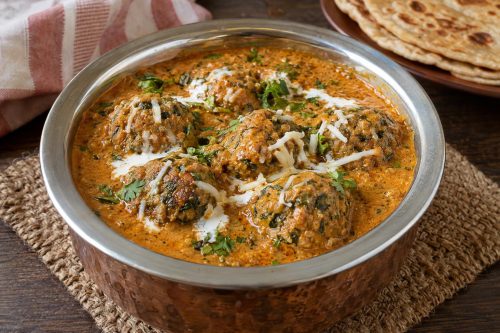
Methi Kofta Curry is a vegetarian curry where the koftas are made entirely from fenugreek leaves bound with gram flour and sour curd. The slight bitterness of the methi is balanced by the spiced tomato and onion gravy poured over just before serving. Fresh cream and grated cheese at the end mellow the sharpness nicely. This is a good recipe to try when you have several bunches of fresh methi on hand and want something more substantial than a simple stir fry.
About the Recipe
The kofta mixture is cooked on the stove before frying, which sets this recipe apart from most kofta preparations. The methi leaves and curd paste are stirred together over low heat until the mixture pulls away from the pan and holds its shape. If you rush this step, the balls will not hold together in the oil.
The curry itself is a straightforward ground paste of onion, tomato, ginger and green chilli, fried until the oil separates and the raw smell is gone.
Why You Will Love This Recipe
The koftas have a firm, slightly chewy outside and a soft interior that holds up well when hot gravy is poured over them. Because the fenugreek is cooked into the mixture rather than added raw, the bitterness is noticeably reduced and the flavour becomes more rounded.
The optional raisins and cashewnuts add a mild sweetness and a small contrast in texture that works well against the spiced gravy. The dish looks impressive on the table and uses ingredients that are easy to find.
Cooking Tips
The most common mistake is not cooking the curd and methi mixture long enough. It must become a thick, dry mass that you can roll without it sticking to your hands. If it is still wet, the koftas will break apart in the oil.
Fry the koftas in properly hot oil so they seal quickly and turn golden without absorbing too much oil. For the curry, fry the ground paste until the oil clearly separates at the edges before adding water, otherwise the gravy will taste raw.
Top Tips
- Cook the methi and curd mixture on a reduced flame, stirring constantly, until it is completely dry and pulls away from the pan before you attempt to shape it.
- Let the mixture cool fully before rolling into balls. Warm mixture is sticky and difficult to shape neatly.
- Test the oil temperature by dropping a tiny piece of the mixture in. It should rise to the surface within a couple of seconds. If it sinks and stays down, the oil is not hot enough.
- Pour the gravy over the koftas only just before serving. If the koftas sit in the gravy for too long, they soften and lose their texture.
- Use sour curd as specified. Fresh, sweet curd does not give the same binding and the koftas may not hold their shape as well.
- Grate the cheese finely so it melts quickly into the hot gravy and cream topping rather than sitting in clumps on the surface.
Serving and Storing Suggestions
Serve Methi Kofta Curry hot with parathas. Top with fresh cream and finely grated cheese just before bringing it to the table.
The koftas are best eaten immediately after the gravy is poured. If you need to store them, keep the koftas and gravy separately in the refrigerator for up to a day and combine only when reheating. Reheat the gravy on the stove and warm the koftas briefly in a dry pan or oven before assembling.
Similar Recipes
Nutrient Benefits
Fenugreek leaves are a reasonable source of iron, calcium, and vitamins A and C. Bengal gram flour adds protein and dietary fibre, making this a more filling dish than a simple vegetable curry. Curd contributes additional calcium and protein.
Methi Kofta Curry
Ingredients
- For Koftas:
- 2 to 3 bunches Fenugreek (Methi) Leaves
- 3/4 cup, sour Thick Curd
- 1/4 tsp Turmeric powder
- 1/2 tsp Chilli powder
- 1/2 tsp Garam Masala Powder
- Salt - as required
- 1 cup Bengal gram flour
- 1/4 tsp Ajwain
- Oil - for deep frying
- 2 tblsp, for topping Fresh Cream
- 1 tblsp, finely grated (optional) Cheese
- 1 tblsp (optional) Raisins
- 1 tblsp (optional) Cashewnuts
- For Curry
- 2 Onions
- 3 Tomatoes
- 1 inch piece Ginger
- 2 Green Chilli
- 1 tsp Sugar
- Salt - as required
- 3/4 tsp Red Chilli powder
- 1/2 tsp Garam Masala powder
- 1 tblsp Dhania powder
- 1/4 tsp Turmeric powder
Instructions
- Mix salt, turmeric powder, chilli powder, bengal gram flour in thick curds to a paste.
- Heat little oil, add ajwain and then chopped fenugreek leaves.
- Fry for a minute and then pour the curd mixture in it.
- Stir constantly in reduced flame till it forms a thick mass.
- Allow it to cool, add garam masala powder and prepare small balls.
- Deep fry in hot oil till the koftas turn golden brown. Keep aside.
- For Curry:
- Grind all the curry ingredients together.
- Heat oil in a frying pan and fry the ground paste till oil separates from the masala.
- Add more oil if necessary while frying.
- When curry changes its colour and becomes thick, pour just enough water and boil for few minutes.
- Arrange koftas on a serving dish. Pour hot gravy on top. Garnish with chopped coriander leaves and finely grated cheese.
- Serve hot with parathas and top it up with fresh cream.
Sign up for our newsletter
Add Awesome Cuisine as a Preferred Source

Frequently Asked Questions
Can I bake or air fry the koftas instead of deep frying them?
You can try air frying them at around 180 degrees Celsius, brushing lightly with oil, but the texture will be different. Deep frying gives the koftas a firm, sealed outer surface that holds up when the gravy is poured over. Air fried koftas tend to be softer on the outside and may absorb more gravy and break apart. If you do air fry, serve the gravy on the side and spoon it over individual portions rather than pouring it all over at once.
My kofta mixture is too wet to roll into balls. What should I do?
This usually means the mixture was not cooked long enough. Return it to the pan on a low flame and keep stirring until it is fully dry and leaves the sides of the pan cleanly. You can also add a small amount of extra gram flour, a tablespoon at a time, to help it come together, but more cooking time is generally the better fix.
Can I prepare any part of this recipe in advance?
Yes. The kofta mixture can be prepared and shaped into balls a few hours ahead and kept covered in the refrigerator until you are ready to fry. The curry paste can also be ground and stored in the refrigerator for up to a day. Fry the koftas and cook the gravy close to serving time so both are fresh and hot when you assemble the dish.
The fenugreek leaves I have are very bitter. Is there a way to reduce the bitterness?
Sprinkle a little salt over the chopped methi leaves and leave them for ten to fifteen minutes, then squeeze out the water before using. The cooking step in this recipe, where the methi is fried in oil with ajwain before the curd mixture is added, also mellows the bitterness considerably. Ajwain has a strong flavour of its own that balances the sharp edge of methi.
What can I use instead of Bengal gram flour if I do not have it?
Bengal gram flour, which is besan, is the standard choice here because it binds well and fries to a firm texture. Chickpea flour sold in most grocery stores is the same thing and can be used directly. Rice flour is not a suitable substitute as it does not bind the mixture in the same way. If you are looking for a similar kofta dish, you might find our Dahi Kofta Curry useful for comparison.
I have tried this and worked excellent