
The first sign of jamun season was never the fruit itself. It was your tongue. You’d come home from the terrace or the school ground with a mouth stained deep violet, fingers to match, and your mother would take one look and know exactly what you’d been up to under the neighbour’s tree.
Jamun doesn’t announce itself the way mango does. There’s no festival built around it, no queue at the fruit seller’s cart. It just shows up in June, small and unglamorous, sold in little steel bowls with a twist of salt and chilli powder on top, and disappears again by August. Ask anyone who grew up in an Indian summer and they’ll have a jamun memory tucked away somewhere, usually one involving a purple tongue and a scolding.
What most of us didn’t know back then is that this modest little fruit, Syzygium cumini, also called black plum or java plum, has been studied for decades for exactly the kind of everyday health support a fruit like this ought to offer. Let’s get into what’s actually backed by evidence, and what’s simply been repeated so often it sounds true.
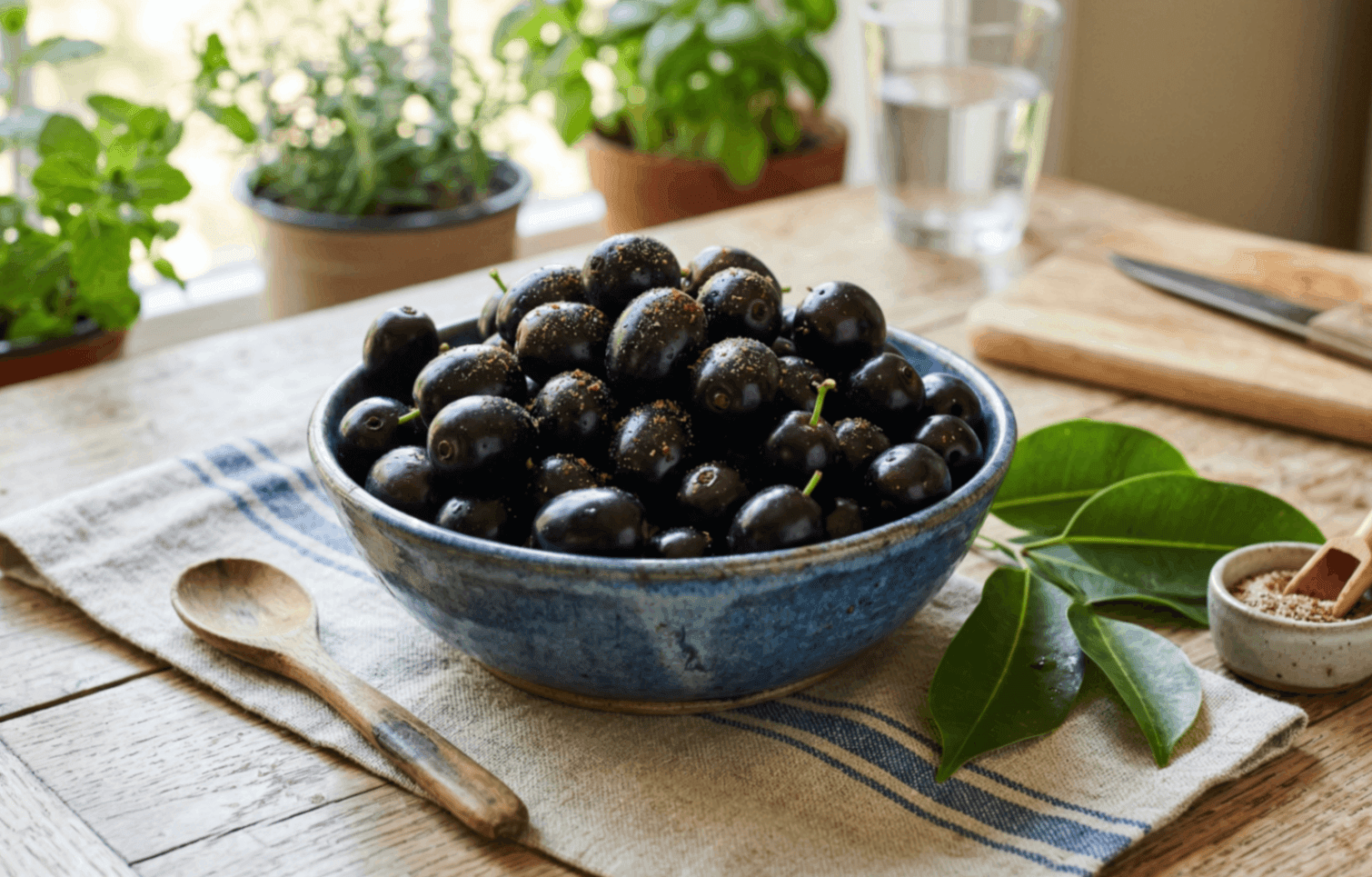
Table of Contents
Key Takeaways
- Jamun is low in calories and rich in fibre, vitamin C, and antioxidant compounds called anthocyanins, the pigments behind its deep purple colour.
- Its traditional use for blood sugar support has genuine scientific backing, particularly from its seeds, though it isn’t a substitute for diabetes medication.
- The fruit supports digestion, and its potassium content plays a small role in heart health as part of a balanced diet.
- Fresh jamun, jamun juice, and seed powder each offer slightly different benefits, and each has its own best way to use it.
- Eating it on an empty stomach can cause mild discomfort for some people, and it’s worth knowing who should be more cautious.
What Is Jamun, Exactly?
Jamun is the fruit of a large, evergreen tree that grows across India and much of South and Southeast Asia, prized for its deep purple, tangy-sweet berries and its centuries-long place in Ayurvedic and Unani medicine.
Jamun (Syzygium cumini) is an edible purple berry native to the Indian subcontinent, commonly called black plum or java plum. It ripens through the monsoon months, has a tight, astringent skin, a juicy sweet-sour pulp, and a single hard seed, and has long been used across South Asia both as a food and as a folk remedy, particularly for diabetes and digestive complaints.
You’ll find it under different names depending on where you are: neredu pandu in Telugu, naaval pazham in Tamil, jaam in Bengali, jambhool in Marathi. The tree itself is a common sight along roadsides and old bungalow compounds, which is part of why the fruit has always felt more like a neighbourhood gift than a purchased one.
What Does 100 Grams of Jamun Actually Contain?
A 100-gram serving of fresh jamun provides around 62 calories, a modest amount of protein and fat, and a useful dose of fibre, vitamin C, calcium, and iron, according to India’s foundational nutrient reference tables.
| Nutrient | Amount per 100g |
| Energy | 62 kcal |
| Moisture | 83.7 g |
| Protein | 0.7 g |
| Fat | 0.3 g |
| Carbohydrates | 14.0 g |
| Dietary fibre | 0.9 g |
| Calcium | 15 mg |
| Phosphorus | 15 mg |
| Iron | 1.2 mg |
| Vitamin C | 18 mg |
Jamun provides 62 kcal and 18 mg of vitamin C per 100g, according to the Nutritive Value of Indian Foods (ICMR-National Institute of Nutrition). That’s a meaningful chunk of daily vitamin C for very little calorie cost, which is part of why the fruit has stayed a summer favourite for generations.
How Does Jamun Help with Blood Sugar?
Jamun’s reputation as a diabetes-friendly fruit isn’t folklore. Its seeds contain a compound called jamboline, which research suggests interferes with the conversion of starch into sugar, and several clinical studies have looked at jamun seed extracts specifically for their effect on blood glucose control.
This is largely why you’ll see dried, powdered jamun seeds sold in health stores and why grandmothers across India have long recommended a spoonful mixed into water first thing in the morning. The fruit itself has a low glycaemic index too, which means it doesn’t spike blood sugar the way many other sweet fruits can.
A double-blind randomised controlled trial published in the Journal of Medical Science and Clinical Research found that jamun seed powder improved glycaemic control over a 90-day period in adults with type 2 diabetes. It’s a genuinely promising result, though it should complement medical treatment for diabetes, not replace it.
If you’re managing diabetes, jamun and its seed powder are worth discussing with your doctor as part of your overall plan, rather than treated as a standalone fix.
“Ripe jamun juice mixed with a little curd was the first thing my grandmother reached for whenever anyone in the house had loose motions. It worked more often than the medicine cabinet did.”
What Other Health Benefits Does Jamun Offer?
Digestion and Gut Health
Jamun’s fibre content and natural astringency make it genuinely useful for digestive complaints, which is exactly why it has held a place in home remedies for generations. Traditionally, ripe jamun juice mixed with a pinch of salt or a spoon of curd has been used to settle an upset stomach and ease mild diarrhoea, and the fibre in the fruit supports regular bowel movement more generally.
Heart Health
The potassium in jamun plays a small but real role in balancing sodium levels and supporting healthy blood pressure, while its antioxidant compounds, particularly anthocyanins, the same pigments that stain your tongue purple, help protect blood vessels from oxidative damage over time. None of this makes jamun a treatment for heart disease, but it’s a reasonable addition to a heart-conscious diet.
Immunity and Skin
Vitamin C is jamun’s other quiet strength. It supports immune function and plays a role in collagen production, which is where the fruit’s reputation for skin benefits comes from. Eating it fresh, rather than as juice with added sugar, keeps this benefit intact.
Liver and Oral Health
In Ayurveda, jamun bark and leaves have long been used for oral hygiene, largely thanks to their natural astringent and antibacterial properties, and the fruit’s antioxidants are believed to support the liver’s own detoxification processes. These uses are grounded in traditional practice more than large clinical trials, so they’re worth knowing about without over-promising what they can do.
How Does Jamun Compare to Blueberries?
Both are deep purple, antioxidant-rich berries, but they aren’t nutritionally interchangeable. Jamun is the more traditional choice for blood sugar support in Indian households, while blueberries carry a stronger, more researched reputation for brain and heart health in Western nutrition science.
| Nutrient (per 100g) | Jamun | Blueberries |
| Energy | 62 kcal | ~57 kcal |
| Carbohydrates | 14.0 g | ~14.5 g |
| Dietary fibre | 0.9 g | ~2.4 g |
| Vitamin C | 18 mg | ~10 mg |
| Standout trait | Traditional glycaemic support | Higher fibre, manganese-rich |
Source for blueberry values: USDA FoodData Central.
How Can You Add Jamun to Your Diet?
Jamun is easiest to enjoy simply, which is half its charm. Here are a few ways to work it into your week, from the classic roadside version to something you can make at home.
Classic Jamun Bowl
A short paragraph on the simplest way to eat jamun, exactly the way most Indian kids first fall for it.
Key Ingredients
- Fresh jamun, washed
- A pinch of black salt
- A pinch of roasted cumin powder (optional)
Method
- Wash the jamun thoroughly and pat dry.
- Place in a bowl and sprinkle with black salt and cumin powder.
- Toss gently and eat straight away, spitting out the seeds as you go.
Jamun Juice
Key Ingredients
- 10 fresh jamun, deseeded
- 1 cup water
- 1 tsp honey or a pinch of black salt
Method
- Blend the deseeded jamun with water until smooth.
- Strain to remove the skins if you prefer a smoother drink.
- Stir in honey or black salt to taste and chill before serving.
Jamun and Curd Bowl
Key Ingredients
- 1 cup fresh jamun, deseeded and lightly mashed
- 1 cup thick curd
- A drizzle of honey
Method
- Mash the jamun lightly, leaving some texture.
- Fold it into the curd along with a little honey.
- Serve immediately as a light breakfast or evening snack.
If you’re craving something more indulgent, our jamun fruit ice cream is a lovely way to use up a big haul from the market without letting any of it go to waste.
What Mistakes Do People Make with Jamun?
- Eating it on an empty stomach: this can cause mild acidity or a sudden dip in blood sugar for some people. Have it after a meal instead.
- Skipping the wash: jamun is sold loose at roadside carts more often than any other fruit, so give it a proper rinse before eating.
- Overdoing the seed powder: more isn’t better here, especially if you’re on diabetes medication. Stick to the dose your doctor or the product label recommends.
- Drowning the juice in sugar: a spoon of honey is plenty. Too much sugar cancels out exactly the benefit you’re going for.
“You know summer is properly here in Chennai when the jamun cart appears at the signal, right alongside the tender coconut and the sugarcane juice stall.”
Jamun fits naturally alongside other seasonal produce if you’re building a broader diabetes-friendly diet, and it’s in good company with other purple, antioxidant-rich fruits like pomegranate and guava, both worth knowing about if you’re eating with your blood sugar in mind. And if you’re curious about how jamun stacks up against India’s other summer fruits by name, our guide to Indian fruit names is a handy reference.
A Fruit Worth Waiting For
Jamun never lasts long. A short window in the year, a few weeks at most, and then it’s gone until the next monsoon rolls around. Maybe that’s exactly why it’s stayed so beloved despite never getting the marketing that mango or pomegranate enjoy. It doesn’t need to. Anyone who grew up with a purple-stained tongue already knows what it’s worth.
So the next time you spot a cart with those small, dark berries piled up with a twist of salt, don’t walk past it. Buy a bowl, eat it the old way, and let your tongue give away exactly what you’ve been up to.
Frequently Asked Questions
Are there any side effects of eating jamun?
Jamun is safe for most people in normal quantities. Eating it on an empty stomach can occasionally cause mild acidity or a sharp drop in blood sugar, and its astringent nature can leave your mouth feeling slightly dry, so it’s best enjoyed after a meal rather than first thing in the morning.
Can people with diabetes eat jamun?
Yes, jamun is traditionally considered supportive for blood sugar management, and its seed powder has shown promise in clinical research for glycaemic control. It should be used alongside, not instead of, any diabetes medication your doctor has prescribed, and it’s worth mentioning to your doctor if you plan to use the seed powder regularly.
How many jamun fruits can you eat in a day?
A moderate portion, around 8 to 10 medium fruits, is a reasonable amount for most adults in a day. This provides a good dose of fibre and vitamin C without excessive sugar intake, and it’s a sensible starting point if you’re new to eating jamun regularly.
Is jamun better than blueberries?
Neither fruit is strictly better, since they offer different things. Jamun has a longer track record for blood sugar support in Indian traditional use, while blueberries carry more clinical research behind their antioxidant and brain-health benefits. Which one suits you better depends on what you’re eating for.
What is the best way to eat jamun for maximum benefit?
Fresh, whole jamun with a pinch of salt is the simplest way to get its full fibre and vitamin C content intact. Juice is a good alternative if you prefer it, but skip adding excess sugar, and if you’re using seed powder for blood sugar support, stick to the recommended dose rather than assuming more will help faster.





This is awesome…I love jamun..as a kid we used to get so much Jamun for free .. Now you have to buy each and everything…It feels bad