
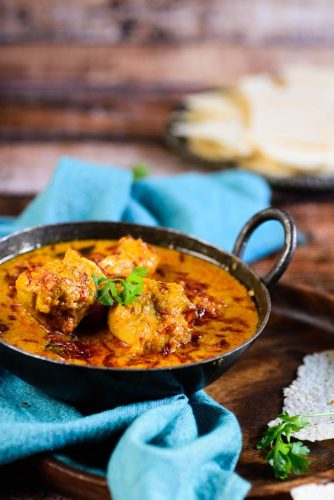
Kori Gasi is one of those recipes I come back to whenever I want to cook something that actually feels worth the effort. It is not a weeknight throw-together. It asks you to dry roast, fry, and grind — but every step has a purpose, and the kitchen smells extraordinary by the time you are done. The moment the coconut starts browning in a dry pan, that nutty, almost smoky scent tells you something good is happening.
What keeps me making it is the paste. I always grind it as fine as I can get it, because a coarse grind means the gravy never quite comes together the way it should. That paste — coconut, spice, tamarind, garlic — is what makes this curry feel like itself. Serve it over torn rotti or pita and it becomes one of those meals people ask about.
About the Recipe
Every ingredient here is something you likely already have or can find at a regular supermarket. Dried red chillies, coriander seeds, cumin, fenugreek, a fresh coconut or desiccated coconut if fresh is not available — nothing exotic, nothing difficult to source. The prep takes about 30 to 40 minutes, and the chicken cooks in roughly another 20 to 25.
I would make this on a weekend afternoon when I have time to stand at the stove and pay attention, or on a Friday evening when I want something that feels a little special. The paste does most of the heavy lifting.
Why you will love this recipe
The roasted coconut base is what sets this apart from most chicken curries. Dry roasting the coconut until it turns a deep, toasty brown concentrates its natural oils and adds a warmth to the gravy that you just cannot get from raw coconut or a tin of coconut milk. Combined with the tamarind — just a small marble-sized piece — you get a gentle sourness that keeps the richness of the coconut in check.
The spice blend is also worth noting. Fenugreek in small amounts adds a faint bitterness that balances the whole thing, and the pepper gives it a clean heat that is different from chilli heat alone. When the ground paste hits the hot pan, the aroma shifts immediately — deeper, warmer, almost caramel-like. That is when you know the curry is going somewhere good.
Cooking Tips
The most common mistake is not roasting the coconut long enough. Pale coconut gives you a bland, flat gravy. You want it a proper medium brown, stirring constantly because it burns fast once it picks up colour. The second thing beginners get wrong is grinding the paste too coarsely — take your time with the grinder and add water in small amounts until the paste is genuinely smooth. Also, keep the flame low when the chicken is cooking before you add the masala, because the onions and butter need time to work together without catching.
Top Tips
- If fresh coconut is unavailable, 2 cups of desiccated coconut works well — soak it briefly in warm water before dry roasting so it does not burn too quickly.
- Grind the spice and coconut paste in batches if your grinder is small, then combine and grind again for a finer result.
- Traditional Kori Gasi uses closer to 25 to 30 dried red chillies. Start with 15 if you are new to this curry and adjust next time.
- I keep the tamarind soaked in a tablespoon of warm water for 10 minutes before adding it to the grinder — it blends more evenly that way.
- The curry thickens as it sits, so if you are making it ahead, add an extra half cup of water when reheating.
- Butter added with the chicken is not optional — it softens the onion and adds a quiet richness to the base that ghee alone does not give.
Serving and Storing Suggestions
Serves 4 to 5 people. Total time is around 60 to 75 minutes, including prep. Traditionally, Kori Gasi is served over torn rotti, which is a thin, unleavened Mangalorean flatbread. Naan or pita work well as substitutes — break them into rough pieces in a bowl and ladle the hot curry over the top so the bread absorbs the gravy.
Leftovers keep well in the fridge for up to 2 days. Reheat gently on the stovetop over low heat, adding a little water to loosen the gravy.
Similar Recipes
- Chicken Chettinad
- Kerala Chicken Curry
- Goan Chicken Xacuti
- Malvani Chicken Curry
Nutrient Benefits
Chicken is a reliable source of protein, and the spices in this recipe — fenugreek, cumin, and coriander — each contribute something beyond flavour. Fenugreek in particular has been linked to digestive support, and cumin is high in iron. Coconut provides medium-chain fatty acids, and tamarind adds a small but notable amount of antioxidants. This is not a light dish given the ghee and butter, but the spice profile means a modest serving goes a long way.

Kori Gasi
Ingredients
- 1 kg chicken (clean and cut into bite size pieces)
- coconut (1 big, grated)
- dried red chillies (15 or to taste)
- 2 tbsp corriander seeds
- 1 1/2 tsp cumin
- 1 3/4 tsp fenugreek
- 1 tsp pepper corns - 1 tsp
- 3 tbsp ghee
- 8 flakes garlic
- 1 tsp turmeric powder
- tamarind (size of a small marble)
- 1 1/2 cup onions (chopped finely)
- salt (to taste)
- 1 tbsp butter
If fresh coconut is not available, use 2 cups of desiccated coconut.
In traditional recipe, almost double the number of chillies are used.
Instructions
- Dry roast coconut till brown.
- Fry chillies, corriander, cumin, fenugreek and pepper corns in a little ghee.
- Grind all these with garlic, turmeric tamarind and coconut to a very fine paste.
- Heat remaining and fry 1 cup chopped onion till brown.
- Add chicken and remaining onion, salt, butter and cook on low flame for 10 minutes.
- Add ground masala and 2-3 cups of water and cook till done.
- To serve, break rotti, or naan or pita into pieces. Place them in a serveing bowl and top with gasi.
Sign up for our newsletter
Add Awesome Cuisine as a Preferred Source




Hi!
I tried this recipe and its simple Awesome…. My husband could not stop raving about it..
Thanks