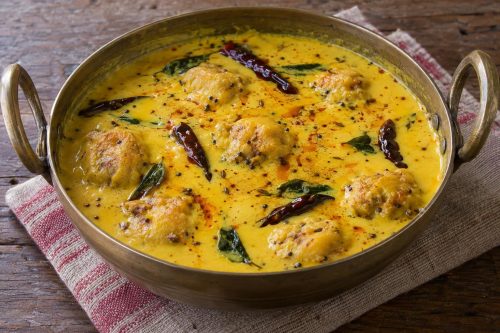
Kadhi is a yoghurt-based curry thickened with gram flour and cooked for a long time on low heat until the raw flour taste is completely gone and the sauce turns smooth and slightly tangy. This version uses mustard oil as the cooking fat, which gives the finished dish a sharpness that plain oil does not. The whole spices, including fenugreek, mustard, cumin and coriander seeds, are bloomed directly in the hot oil before the yoghurt mixture goes in. Soft onion pakoras are added at the end, and a final tempering of clarified butter and red chilli powder goes over the top just before serving.
About the Recipe
The two-hour cooking time on low heat is the most important part of this recipe. The gram flour needs that time to cook through fully and thicken the yoghurt into a stable, smooth sauce. Rushing it on high heat causes the yoghurt to split and the flour to taste raw.
The pakoras are made separately and added only at the end, which keeps them from breaking apart. The mustard oil is heated until it smokes before the spices go in, which removes its raw bitterness.
Why You Will Love This Recipe
After two hours on the stove, the kadhi turns thick and coating. The pakoras soak up the tangy sauce without turning mushy, as long as you add them just before serving.
The tempering of clarified butter and red chilli powder poured over the top at the end adds heat and richness that comes through in every spoonful. It is a complete dish that needs nothing more than plain rice or roti alongside it.
Cooking Tips
The most common mistake is cooking the kadhi on too high a heat. The yoghurt will curdle and the sauce will look broken. Keep the flame low throughout the two hours and stir occasionally.
Whisk the gram flour and yoghurt together until there are no lumps before adding the mixture to the pan. If the kadhi thickens too much during cooking, add a small splash of water and stir it in. Do not add the pakoras too early or they will become soggy and fall apart.
Top Tips
- Whisk the gram flour and yoghurt together thoroughly before adding to the pan to avoid lumps in the finished kadhi.
- Heat the mustard oil until it visibly smokes before adding the whole spices. This removes the raw sharpness of the oil.
- Keep the heat low for the full two hours. High heat will cause the yoghurt to split.
- Add the pakoras only just before serving so they absorb the kadhi without disintegrating.
- Pour the clarified butter and red chilli powder tempering over the kadhi off the heat so the chilli powder does not burn.
- Make the pakora batter thick enough to hold its shape. A loose batter will spread in the oil and not form proper balls.
Serving and Storing Suggestions
Serve the kadhi hot with steamed rice or plain roti. It thickens considerably as it cools, so when reheating add a little water and warm it gently on low heat, stirring as it heats through.
Store leftover kadhi without the pakoras if possible, as they become very soft when kept in the sauce overnight. Refrigerate in a covered container and use within two days. The tempering is best done fresh each time.
Similar Recipes
Nutrient Benefits
Gram flour provides plant protein and is used in both the pakoras and the kadhi base, making this a reasonably filling dish. Yoghurt contributes calcium and is the main liquid in the curry. Turmeric is a widely used spice in Indian cooking. Fenugreek seeds and curry leaves are standard flavouring ingredients, and clarified butter is used in small quantity for the finishing tempering.

Kadhi
Ingredients
- For the Pakoras:
- Gram flour – 1 cup
- Onions – 1/2 cup, chopped
- Ginger – 1 tbsp, chopped
- Green chillies – 4 to 5, chopped
- Salt – 1/2 tsp
- Baking powder – 1/2 tsp
- Oil for frying
- For the Kadhi:
- Gram flour – 1 cup
- Yoghurt – 1 kg
- Salt to taste
- Turmeric powder – 1 tsp
- Mustard Oil – 1/2 cup
- Whole Red Chillies – 10
- Coriander Seeds – 1 tsp
- Fenugreek Seeds – 1 tsp
- Mustard Seeds – 1tsp
- Cumin Seeds – 1 tsp
- 1/4 tsp Asafoetida
- Curry Leaves – 15 to 20
- For the Tempering:
- Clarified Butter – 2 tbsp
- Red Chilli Powder – 2 tsp
Instructions
- For the pakoras, to the gram flour, add onions, ginger, green chillies, salt and baking powder.
- Add just enough water to make a thick batter.
- Divide the batter into lemon-sized balls and keep aside.
- Heat the oil in a kadai.
- Carefully slide in the balls and deep fry till golden brown.
- Remove with a slotted spoon and drain the excess oil on absorbent kitchen towels.
- Keep aside.
- For the kadhi, mix the gram flour with yoghurt.
- Add the salt and turmeric powder.
- Heat the mustard oil till it smokes.
- Add the whole red chillies, coriander, fenugreek, mustard and cumin seeds.
- When they crackle, add asafoetida.
- Now add the gram flour mixture and the curry leaves.
- Cook on low heat for 2 hours.
- For the tempering, heat the clarified butter and remove from the heat.
- Add the red chilli powder and immediately, pour this to the above mixture.
- Add the dumplings and serve hot.
Sign up for our newsletter
Add Awesome Cuisine as a Preferred Source

Frequently Asked Questions
Why does my kadhi look curdled or split?
This happens when the heat is too high. The yoghurt needs to cook slowly on a low flame for the full two hours. If you cook it on a medium or high flame, the proteins in the yoghurt separate and the sauce looks grainy. If it splits early in cooking, lower the heat immediately and whisk it gently. It may not fully recover, but it will still taste fine. Next time, make sure the flame is as low as it will go before adding the yoghurt and gram flour mixture.
Can I use regular cooking oil instead of mustard oil?
You can, but the flavour of the finished kadhi will be noticeably different. Mustard oil has a sharp, pungent quality that becomes mellow once heated to smoking point, and it gives the dish a distinct taste. If mustard oil is not available, a neutral oil such as sunflower or groundnut oil will work. The kadhi will still be good but will taste milder. Olive oil is not a good fit here as the flavour does not suit this dish.
My pakoras are absorbing too much oil when frying. What am I doing wrong?
The most likely cause is that the oil is not hot enough when you add the pakoras. If the temperature is too low, the batter soaks up oil instead of forming a crust quickly. Heat the oil well before adding the first batch and fry in small batches so the temperature does not drop. Also check that your batter is thick enough. A thin batter will spread and absorb more oil than a firm, thick one.
How do I know when the kadhi is ready after two hours?
The kadhi should look smooth, thick and a deep yellow colour. It should coat the back of a spoon and have no raw flour smell. Taste it after about ninety minutes. If you still notice a starchy or floury taste, continue cooking. The texture will also change from a thin, slightly grainy liquid early on to a smooth, pourable sauce once the flour has fully cooked through.
Can I make the pakoras in advance?
Yes. Fry the pakoras ahead of time and keep them aside at room temperature for a few hours. Add them to the hot kadhi only just before you are ready to serve. If you add them too early or leave them sitting in the kadhi for a long time, they absorb the liquid and become very soft and difficult to serve intact. If you are storing the kadhi overnight, keep the pakoras separate and add them when you reheat the curry.