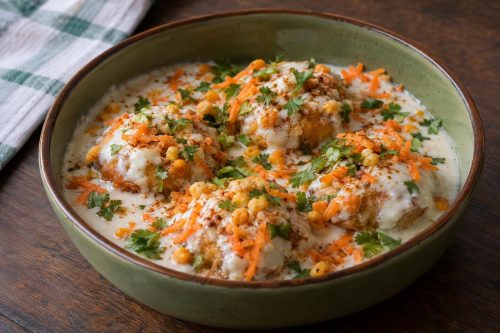
Vazhakkai Thayir Vadai turns a humble raw banana into something genuinely interesting. The mashed vazhakkai forms a soft dough that wraps around a spiced poha filling, and the whole vadai is fried until golden and either soaked in curd or served with curd poured over the top. It sits somewhere between a stuffed cutlet and a classic Thayir Vadai, with a crisp outer shell, a soft filling and cool curd bringing it all together. If you are looking for a snack that is a little different from the usual, this is worth trying.
About the Recipe
The recipe has two components that come together at the end. The banana dough is straightforward: boil, mash and mix with maida and grated coconut until it holds its shape like a chapati dough.
The poha filling is seasoned separately with garam masala, lemon juice, sugar and green chilli paste before being enclosed in the banana dough. The vadais are then deep fried over a medium flame until golden brown.
Pouring curd over the hot vadais just before serving ties everything together. Both components can be prepared ahead, which makes this easier to manage than it first appears.
Why You Will Love This Recipe
The fried banana shell has a mild, slightly starchy flavour that sits well against the spiced poha inside, and the cool curd on top pulls it all together without overwhelming either component.
It is also a practical recipe for anyone who regularly cooks with raw banana. If you already make dishes like Vazhakkai Adai or Vazhakkai Usili, this adds another option that uses the same ingredient in a completely different way.
Cooking Tips
The most common beginner mistake is adding too much maida, which makes the dough stiff and the vadai dense after frying. Add maida gradually and stop as soon as the mashed banana holds its shape.
Make sure the poha is well drained before mixing in the spices. Wet poha makes the filling loose and the vadai may break apart in the oil.
Fry over a medium flame so the inside cooks through before the outside browns too quickly.
Top Tips
- Drain the soaked poha thoroughly before mixing in the spices. Excess moisture in the filling will cause the vadai to crack or fall apart while frying.
- The banana dough should feel similar to a soft chapati dough. If it is sticky, add a little more maida. If it is too stiff, it will be difficult to shape into cups.
- Shape the vadais firmly so the filling is fully enclosed. Any gaps will let oil seep in during frying.
- Fry over a medium flame. High heat browns the outside too fast and leaves the inside undercooked.
- Pour the curd just before serving. Vadais that sit in curd for too long lose their outer texture.
- Kara boondi adds a pleasant crunch on top but softens quickly in the curd, so add it at the very last moment.
Serving and Storing Suggestions
Serve the vadais immediately after pouring the curd over them. They are best eaten fresh while the outer shell still has some texture.
If you are making these for guests, fry the vadais ahead of time and keep them at room temperature, then pour the curd and add the garnish just before serving. The curd itself can be prepared and chilled in advance.
Leftover vadais without curd can be kept for a few hours, but once soaked in curd they do not store well.
Similar Recipes
- Thayir Vadai
- Vazhakkai Adai (Raw Banana Adai)
- Vazhakkai Usili
- Vazhaipoo Vadai
- Vazhakkai (Plantain) Chips
Nutrient Benefits
Raw banana is a good source of potassium and provides steady energy from its starch content. Poha contributes iron and is easy on the stomach. Plain curd adds protein and calcium. The spices used, cumin, ajwain and garam masala, are everyday additions that keep the dish flavourful without adding much else.

Vazhakkai Thayir Vadai (Raw Banana Curd Vadai)
Ingredients
- 1/2 cup (or more if desire) Plain Curd
- 1 Vazhakkai (Raw Banana)
- 1/4 cup Plain Flour (Maida)
- 1/2 cup, soaked for 20 to 30 minutes and drained Poha (Aval)
- 2 tblsp, grated Coconut
- 1/2 tsp Green Chilli Paste
- 1 1/2 tsp Lemon Juice
- 1/2 tblsp Garam Masala Powder
- 1/2 tsp Cumin Powder
- Ajwain (Omam) Powder - a small pinch
- Coriander Leaves - handful, chopped
- 1/2 tsp Sugar
- Kara Boondi - to garnish (optional)
- Grated Carrot - little, to garnish (optional)
- Oil as required
- Salt as per taste
Instructions
- Peel the banana and boil until tender.
- Mash well and transfer to a bowl.
- Add coconut, salt, maida and mix well to a chapati dough consistency.
- Add the green chilli paste to the poha.
- Add salt, garam masala powder, lemon juice and sugar.
- Mix well.
- Make small cups of the banana dough and add some of the poha mixture.
- Fold well and shape it into a vadai.
- Heat oil in a deep frying pan over medium flame.
- Fry the prepared vadais until golden brown.
- Remove, drain excess oil and transfer to a serving plate.
- Pour curd on top or soak the vadais in the curd.
- Sprinke cumin powder, ajwain powder on top and garnish with coriander leaves and kara boondhi.
- Serve at once.
- image via
Sign up for our newsletter
Add Awesome Cuisine as a Preferred Source

Frequently Asked Questions
Can I use ripe banana instead of raw banana for this recipe?
No. Ripe banana is too soft and sweet to form a dough that holds its shape. Raw banana, or vazhakkai, has a firm, starchy texture when boiled that makes it suitable for shaping into vadais. A ripe banana will give you a sticky mixture that cannot be stuffed or fried properly.
How long should I soak the poha before using it?
The recipe calls for 20 to 30 minutes of soaking. After soaking, drain the poha well and press out any excess water before mixing in the spices. Wet poha makes the filling loose and increases the chance of the vadai breaking apart in the oil.
What consistency should the banana dough be?
The mashed banana mixed with maida and coconut should reach a consistency similar to chapati dough. It should be soft enough to shape into small cups but firm enough to hold the filling without tearing. Add maida gradually and stop as soon as the dough holds its shape. Too much maida makes the finished vadai dense.
Can I bake or air fry the vadais instead of deep frying?
The recipe is written for deep frying, which gives the vadai its golden exterior. Baking or air frying may be attempted but the result will differ in colour and texture. If you try air frying, brush the vadais with oil and cook at a high temperature, checking frequently to avoid drying out the banana dough.
How much curd should I use and should it be thick or thin?
The recipe lists half a cup of plain curd with a note that more can be used if desired. Thick curd works well if you want to pour it over the vadais so it coats them. If you prefer to soak the vadais in curd, thin it slightly with a little water or milk. Lightly salted or plain curd both work. Avoid heavily soured curd as it can overpower the flavour of the vadai.