
My grandmother kept a wooden bowl of apples on the dining table, refilled every few days, not because anyone told her to but because that is just what you did in a house with children. She never once mentioned polyphenols or pectin. She just said, “eat one, it is good for you,” in the tone of someone stating the time of day. It took me years of reading nutrition research to realise she was mostly right, though not for every reason the old adages claim, and not by the exact percentages that get repeated on food blogs.
“She never once mentioned polyphenols or pectin. She just said, eat one, it is good for you.”
That gap between folk wisdom and what studies actually show is where this piece lives. Some of the apple claims floating around the internet, including some that used to live on this very page, do not survive a close look at the original research. Others hold up better than you would expect from something that sounds like a grandmother’s saying.
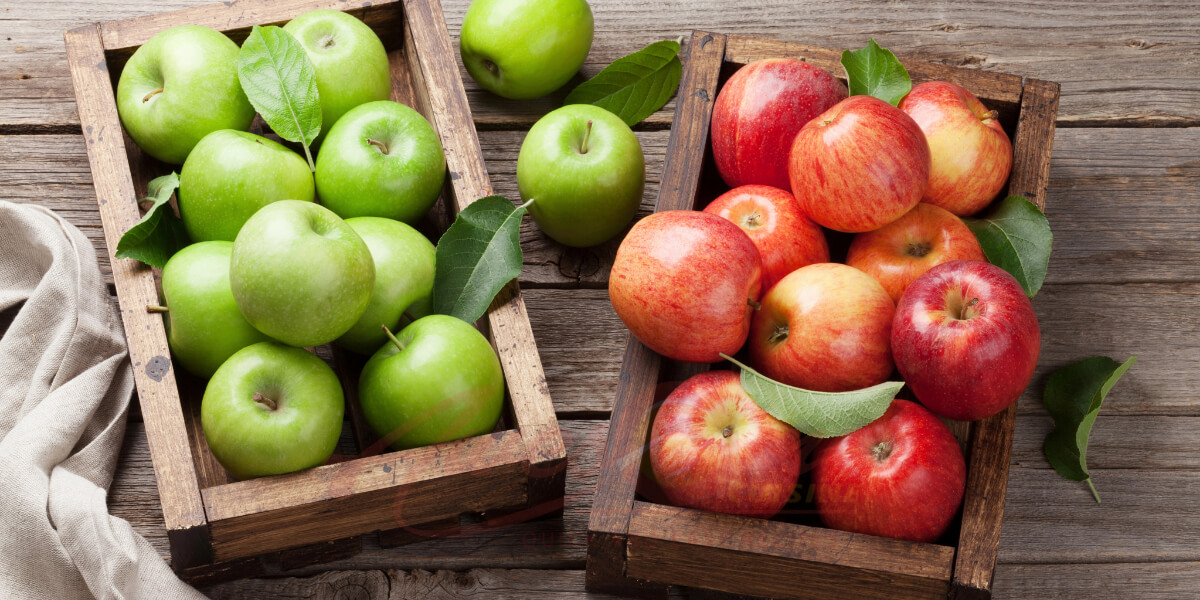
Table of Contents
Key Takeaways
- A medium apple gives you about 95 calories, 3 grams of fibre, and a useful dose of vitamin C and potassium, mostly concentrated in and just under the skin.
- A 2019 randomised trial found two apples a day lowered total cholesterol by around 4 percent in adults with mildly high cholesterol, a real but modest effect, not the dramatic drop some older articles claim.
- A large 24-year study linked eating more apples and pears to smaller weight gain over time, though the effect was gradual, not a rapid transformation.
- Green and red apples overlap far more nutritionally than their marketing suggests. The bigger differences are in tartness, texture, and how they behave in Indian cooking.
- India grows most of its own apples, with Jammu and Kashmir and Himachal Pradesh together responsible for roughly 90 percent of domestic production.
Why This Is Worth Knowing Right Now
Apples show up in Indian kitchens as a fruit bowl staple, a lunchbox filler, and increasingly as an ingredient in everything from raita to rasam. Because they are so familiar, most of us stopped asking whether the health claims attached to them are actually true. That matters because a few of the numbers that have circulated for years, including on this site, turn out to be difficult to trace back to any real study. Knowing which claims hold up helps you decide how much weight to put on “an apple a day” advice, and which specific habits, like eating the skin or choosing whole fruit over juice, are worth the effort.
An apple is a pome fruit that delivers a combination of soluble fibre (mainly pectin), polyphenols such as quercetin concentrated in the skin, natural sugars, and water, all in a low-calorie package of roughly 95 calories per medium fruit. Its health reputation rests less on any single nutrient and more on this specific combination of fibre and skin-bound polyphenols working together.
What Nutrients Does an Apple Actually Give You?
A medium apple, skin on, contains about 95 calories, 25 grams of carbohydrate, 19 grams of naturally occurring sugar, 3 grams of fibre, and virtually no fat or protein, according to the Harvard T.H. Chan School of Public Health’s nutrition data on apples. That fibre number matters more than it looks. Three grams from one piece of fruit, eaten whole rather than juiced, is a meaningful contribution toward the day’s total, and most of it is pectin, the same soluble fibre that thickens jam and, as it turns out, does useful things inside your gut.
Here is where the Indian context adds something the American and European sources do not: the ICMR-National Institute of Nutrition in Hyderabad recommends 100 grams of fresh fruit daily as part of its 2024-updated dietary guidance, alongside 400 grams of vegetables. A single medium apple, at roughly 150 to 180 grams, already exceeds that fruit target on its own. If your day is otherwise short on fruit, one apple genuinely closes most of that gap, which is a more useful way to think about “an apple a day” than treating it as a magic number.
Most of the fibre and a large share of the polyphenols sit in and just beneath the skin, which is the practical reason nutrition guidance consistently favours unpeeled apples, washed well, over peeled ones. If you have been peeling apples for your kids out of habit, that is the one change worth actually making.
Do the Cholesterol and Heart Claims Actually Hold Up?
Yes, though more modestly than the older claims suggested. A 2019 randomised, controlled crossover trial published in the American Journal of Clinical Nutrition by Koutsos and colleagues had 40 adults with mildly high cholesterol eat two apples a day for eight weeks. Total cholesterol dropped from an average of 6.11 to 5.89 mmol/L, and LDL, the “bad” cholesterol, fell from 3.86 to 3.72 mmol/L, a reduction of roughly 4 percent. That is a real, measurable effect from a well-designed trial, but it is nowhere near the 16 percent figure that used to circulate on lists like this one, and independent researchers who reviewed the study noted it was small and short, which means the result deserves confirmation from larger trials before anyone treats it as settled.
Two apples a day for eight weeks lowered total cholesterol from 6.11 to 5.89 mmol/L and LDL from 3.86 to 3.72 mmol/L in a randomised trial of 40 adults, a reduction of roughly 4 percent. Source: Koutsos, A. et al., American Journal of Clinical Nutrition, 2019
“The reduction is relatively modest at around 4 percent.” That is how one nutrition researcher summed up the 2019 apple-and-cholesterol trial when it was published, a useful reminder that a real effect and a dramatic one are not the same thing.
Apple Health Claims: Then and Now
This site used to repeat several apple statistics without tracing them back to a source. Here is what changed when we checked.
| Claim | Previously published | What the research actually shows |
| Cholesterol reduction from two apples a day | 16 percent | About 4 percent (Koutsos et al., AJCN, 2019) |
| Weight loss from eating apples before meals | 33 percent of “excess flab” | About 1.24 lb less weight gain per added daily serving, per 4-year period (Bertoia et al., PLOS Medicine, 2015) |
| Colon cancer risk cut by apple skin extract | 40 percent | Studied only in cell and animal models; no confirmed human risk-reduction figure exists |
| Liver cancer risk cut by apple consumption | 55 percent | No traceable primary human study found; removed |
| Stroke risk from regular apple and pear intake | Not previously covered | About 11 percent lower, highest vs lowest intake (Larsson et al., Atherosclerosis, 2013) |
Can Eating Apples Actually Help With Weight Management?
The honest answer is: a little, over a long time, and mostly as part of a wider pattern rather than as a standalone trick. A 2015 analysis in PLOS Medicine tracked 133,468 American men and women across three long-running cohort studies for up to 24 years. Every additional daily serving of apples or pears was associated with about 1.24 pounds (roughly 0.56 kilograms) less weight gain over each four-year check-in period, even after accounting for exercise, smoking, and other dietary shifts.
Across 133,468 people followed for up to 24 years, each extra daily serving of apples or pears was linked to about 1.24 lb (0.56 kg) less weight gain every 4 years. Source: Bertoia, M. L. et al., PLOS Medicine, 2015
That is not the “33 percent of excess flab” claim that once appeared on this page, and it would be misleading to present it that way. What the data actually supports is something quieter: apples are high in water and fibre, both of which increase fullness for relatively few calories, so swapping a packaged snack for an apple tends to nudge your calorie intake down a little, consistently, over years. Small effects compounded over decades are how most real nutrition science works, and it is worth being upfront about that rather than promising results the research cannot back.
Does an Apple a Day Really Keep the Doctor Away?
Partly, and the picture gets more interesting the closer you look. A Swedish study published in Atherosclerosis in 2013, led by Susanna Larsson and following nearly 75,000 people for just over 10 years, found that people who ate the most apples and pears, alongside leafy greens, had about an 11 percent lower risk of stroke compared to those who ate the least.
Nearly 75,000 people, ten years of follow-up, and one consistent finding: apples, pears, and leafy greens together were linked to meaningfully lower stroke risk. That is a large, long study, which is exactly the kind of evidence a health claim needs before it is worth repeating.
The story is murkier for diabetes, and this is worth spelling out because a lot of apple content online blurs it. A large Australian cohort study covered by the American Medical Association, drawing on research in the Journal of Clinical Endocrinology & Metabolism and following 7,675 adults, found that people with moderate total fruit intake had 36 percent lower odds of developing diabetes over five years. That sounds like strong apple evidence until you read further: the protective link was for total fruit intake, and when researchers isolated individual fruits, including apples, the effect for any single fruit lost statistical significance once lifestyle and dietary confounders were accounted for. In plain terms, people who eat more fruit overall tend to have better health outcomes, but that does not prove apples specifically are doing the work, since those same people likely also eat more vegetables, exercise more, or smoke less. Treat the stroke and cholesterol findings as reasonably solid evidence, and the diabetes-specific claim as still unproven for apples alone.
Green Apple or Red Apple: Does the Colour Actually Matter?
This question used to have its own separate page on this site, promising green apples were the clearly superior choice. The honest version is less dramatic: green and red apples are nutritionally far more alike than different. The red pigment in apple skin comes from anthocyanins, plant compounds that form as the fruit ripens and gets sun exposure, while green apples like Granny Smith are typically picked less ripe and retain more of their tartness and firmness. Both colours carry meaningful fibre and skin-bound polyphenols such as quercetin; the specific mix of antioxidants shifts somewhat by variety and ripeness rather than sorting cleanly along colour lines.
Where the two genuinely differ is in the kitchen, not the bloodstream.
| Green apples (e.g. Granny Smith) | Red apples (e.g. Royal or Red Delicious) | |
| Typical taste | Tart, sharp | Sweet, mellow |
| Texture when raw | Firm, crisp | Softer, juicier |
| Skin pigment | Chlorophyll-dominant | Anthocyanin-rich |
| Best culinary use | Cooking, rasam, chutneys (holds shape) | Eating fresh, lunchboxes, salads |
| Pairs naturally with | Tangy, spiced Indian flavours (chaat, rasam) | Sweet preparations (kheer, cakes) |
If you are managing blood sugar closely, a tart, firmer green apple eaten with the skin, alongside some protein or nuts, is a reasonable choice because the tartness usually signals a slightly lower ripeness and sugar concentration than a fully ripe red variety, though the difference is smaller than marketing suggests and portion size matters more than colour. If you are cooking rather than snacking, reach for whichever holds its shape better for the dish, which is usually the green, firmer varieties for anything that goes into heat.
Where Do the Apples in Your Kitchen Actually Come From?
Here is a fact most Indian households never think about while slicing an apple into their child’s tiffin: the country grows the overwhelming majority of what it eats. According to the USDA Foreign Agricultural Service’s New Delhi office, India’s apple production for the 2024 to 2025 marketing year was forecast at 2.55 million metric tonnes, with Jammu and Kashmir alone accounting for roughly 70 percent of that and Himachal Pradesh contributing close to another 20 percent. Together, these two Himalayan regions grow nearly 9 out of every 10 apples eaten in the country, with Uttarakhand, Arunachal Pradesh, Nagaland, and Sikkim making up the small remainder.
India’s apple production was forecast at 2.55 million metric tonnes for 2024 to 2025, with Jammu and Kashmir producing roughly 70 percent and Himachal Pradesh another 20 percent. Source: USDA Foreign Agricultural Service, New Delhi, reported by FreshPlaza, November 2024
That regional concentration shows up on shop shelves as a rough, informal calendar. Kashmiri and Himachali apples dominate from roughly September through the winter months, which is also when they tend to be freshest and least expensive, while imported varieties from countries such as the United States, New Zealand, and China fill the gaps in the off-season, generally at a higher price and after a longer, colder journey. If you have ever wondered why apples taste noticeably better in December than in June, the answer is mostly logistics rather than variety.
| Variety | Typically grown in | Taste and texture | Best use |
| Kashmiri Ambri | Jammu & Kashmir | Mildly sweet, aromatic, medium-firm | Eating fresh, gifting |
| Royal or Red Delicious (Shimla apples) | Himachal Pradesh, Kashmir | Sweet, soft-textured | Lunchboxes, eating fresh |
| Granny Smith | Imported; small volumes now grown in Himachal orchards | Tart, very firm | Cooking, baking, salads |
| Fuji | Imported; increasingly grown in Himachal’s newer orchards | Very sweet, crisp, dense | Eating fresh, kids’ snacks |
| Gala | Imported; limited Himachal cultivation | Mildly sweet, thin skin | Eating fresh, quick snacking |
A Quick Way to Use Apples Beyond the Fruit Bowl
If apples in your house only ever get eaten raw or vanish into a lunchbox, you are missing how naturally they fold into Indian cooking. A tart apple grated into a chaat brings a crunch and sweetness that plain fruit does not, and it takes less effort than most snacks you would otherwise reach for.
Key Ingredients
- 1 firm, tart apple (green or a less-ripe red), washed and unpeeled
- Half a lemon, juiced
- A pinch of chaat masala
- A pinch of black salt
- A few mint leaves, torn
Method
- Core the apple and cut it into thin matchsticks or small cubes, leaving the skin on.
- Toss immediately with lemon juice so the flesh does not brown while you prepare the rest.
- Sprinkle over the chaat masala and black salt, then toss again to coat evenly.
- Scatter the torn mint leaves over the top and serve within a few minutes, while the apple is still crisp.
If that gets you thinking beyond snacking, this site’s apple rasam and apple kheer recipes are two under-appreciated ways apples show up in South Indian kitchens, neither of which needs a special occasion to justify making.
Common Mistakes People Make With Apples
Peeling out of habit is the most common one, and it quietly throws away a meaningful share of the fibre and polyphenols discussed earlier. A close second is storing apples on the kitchen counter in a hot, humid climate, where they soften and lose crispness within days; apples keep far longer and stay crunchier in the refrigerator, ideally in the vegetable drawer away from stronger-smelling produce, since apples release ethylene gas that can speed up the ripening of whatever sits near them.
The third mistake is more of a myth than an error: worrying about apple seeds as though a handful of them is dangerous. Apple seeds do contain compounds that release small amounts of cyanide when chewed and digested in bulk, but you would need to chew and swallow a genuinely large quantity of seeds, far more than end up in normal fruit, for that to matter. Swallowing a seed or two whole while eating an apple, which is what actually happens in real life, is not a health risk worth losing sleep over.
If you are buying apples for cooking rather than snacking, one more practical note: the same varieties that hold their shape well through heat, like the firmer green types, are usually your best bet for the rasam and kheer preparations mentioned above, while softer, sweeter red apples are better eaten fresh before they lose their appeal.
Beyond apples themselves, a lot of the same fibre-and-polyphenol logic applies to other everyday produce in Indian kitchens. If you found the cholesterol and weight sections useful, this site’s guides to the health benefits of beetroot, whether brinjal is good for health, and the health benefits of amla go through the same kind of evidence-first look at other staples. Pomegranate gets a similar reputation for being a “superfruit,” and it is worth reading what actually backs that up rather than taking the label at face value. And if your household leans on packaged apple juice thinking it is a reasonable stand-in for the whole fruit, this comparison of fruit versus fruit juice is worth five minutes, because the fibre behind most of the benefits described above is exactly what juicing removes.
One Apple, Eaten Properly, Is Enough
You do not need ten reasons to eat an apple, and you certainly do not need invented percentages to justify it. Wash it well, eat the skin, choose whichever colour suits what you are making, and let a Kashmiri or Himachali apple in winter remind you that the “healthy” version of this fruit was never about a supplement-style claim. It was always just a piece of fruit, grown a few states away, doing a handful of small, well-documented things for you every time you eat it whole. Go cut one up, skin and all, and see what you have been missing.
Frequently Asked Questions
Is it better to eat an apple with the skin on or peeled?
Apples should generally be eaten with the skin on, washed thoroughly first, because most of the fibre and a large share of the polyphenols like quercetin sit in and just beneath the peel. Peeling an apple does not make it unhealthy, but it does remove a meaningful part of what makes an apple nutritionally useful in the first place, so it is worth doing only when texture or a specific recipe genuinely calls for it.
Do green apples really have less sugar than red apples?
Green apples are often tarter than red ones, which makes them taste less sweet, but the actual sugar content is closer between the two than that taste difference suggests, and it varies more by ripeness and specific variety than by colour alone. If blood sugar is a concern, portion size and pairing the apple with protein or fibre matters more than picking green over red.
How many apples a day are actually beneficial?
Most of the research showing measurable benefits, including the cholesterol trial discussed above, used one to two apples a day, and the ICMR-National Institute of Nutrition’s broader fruit guidance of 100 grams daily is comfortably covered by a single medium apple. Eating more than that is not harmful for most people, but the evidence does not show additional benefits scaling up dramatically beyond that range.
Can eating apples help with diabetes?
The evidence here is genuinely mixed rather than a clear yes. Large studies link higher total fruit intake with lower diabetes risk, but when researchers look at apples specifically, the individual effect often does not hold up once other lifestyle and dietary factors are accounted for, so it is more accurate to say apples fit well into a diabetes-conscious diet than to claim they actively lower diabetes risk on their own.
Is it safe to eat apple seeds?
Swallowing the occasional seed while eating an apple, which is what happens naturally, is not dangerous. Apple seeds do contain compounds that can release small amounts of cyanide if chewed and consumed in large quantities, but the amount involved in normal eating is far too small to cause harm, so there is no real need to core an apple obsessively to avoid a stray seed or two.
Sources and Further Reading
- Koutsos, A. et al., “Two apples a day lower serum cholesterol and improve cardiometabolic biomarkers in mildly hypercholesterolemic adults,” The American Journal of Clinical Nutrition, 2019. Supports the 4 percent total cholesterol reduction figure from the two-apples-a-day trial.
- Bertoia, M. L. et al., “Changes in Intake of Fruits and Vegetables and Weight Change in United States Men and Women Followed for Up to 24 Years,” PLOS Medicine, 2015. Supports the weight-change figure for apples and pears.
- Larsson, S. C. et al., “Total and specific fruit and vegetable consumption and risk of stroke,” Atherosclerosis, 2013. Supports the stroke risk reduction figure.
- American Medical Association, “Can an apple a day keep type 2 diabetes at bay?” summarising Australian cohort research from the Journal of Clinical Endocrinology & Metabolism. Supports the total-fruit-intake diabetes figure and its individual-fruit limitation.
- Harvard T.H. Chan School of Public Health, The Nutrition Source, “Apples.” Supports the per-apple calorie, fibre, and sugar figures.
- USDA Foreign Agricultural Service, New Delhi, “India: Fresh Deciduous Fruit Annual,” reported by FreshPlaza, November 2024. Supports India’s apple production volume and state-wise share.
- ICMR-National Institute of Nutrition, Hyderabad, 2024 dietary guidance on daily fruit and vegetable intake, reported by Telangana Today, December 2025. Supports the 100 grams of fresh fruit daily recommendation.