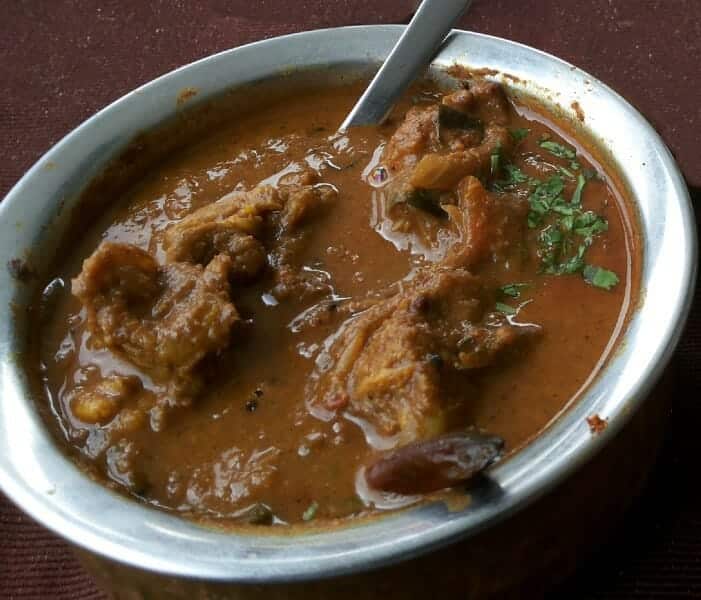
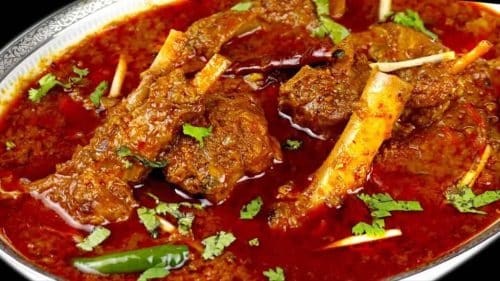
Bhopali Gosht Korma came into my regular rotation because my husband kept requesting it before every dinner gathering we hosted. He had eaten a version of it at a relative’s home in Bhopal years ago and described it just as “the one with the thin, clean gravy.” That description stuck with me. Most kormas I had made before were thick and cream-heavy.
This one is lighter, almost brothy in places, with the curd giving it a gentle sourness rather than richness. The detail I keep coming back to is the finish — the raw julienned ginger laid over the hot korma just before serving. It cuts through the slow-cooked meat in a way that makes each bite feel less heavy. I have made this probably a dozen times now, and that garnish still gets commented on every single time.
About the Recipe
Every ingredient in this recipe is a regular pantry item — mutton, curd, turmeric, red chilli powder, ginger. Nothing requires a special trip. The active cooking time is roughly 20 minutes, but you will need 30 to 45 minutes of covered simmering at the end, so plan for about an hour and 15 minutes total.
I reach for this recipe on Sundays when I want something that feels considered without requiring me to stand at the stove the whole time. The hands-off simmering phase gives you time to set the table, make rice, or just sit down for a bit.
Why you will love this recipe
The curd-based gravy is the real reason this recipe earns a regular spot. Unlike heavier kormas that rely on nuts or cream for body, this one uses whisked curd to create a gravy that coats the meat without weighing it down. The reserved cooking water from the first simmer adds depth without any extra effort — it is basically a light bone broth you have already made by the time you need it.
The lime juice and raw ginger at the end are not decorative. They add a brightness that balances the slow-cooked richness of the mutton and keeps the dish from feeling one-note. If you like bold but clean flavours, this combination will stay with you.
Cooking Tips
The most common mistake is adding cold curd directly to a hot pan at high heat — it will split and leave you with grainy, separated sauce. Always whisk the curd well before it goes in, and make sure you have lowered the flame before adding it. Another thing beginners get wrong is skipping the first simmer. That step does real work: it partially cooks the mutton and builds the reserved water you will use later. Do not rush it or skip ahead.
Top Tips
- Whisk the curd until completely smooth before adding it to the pan. Any lumps will not cook out and the gravy will look split.
- Keep the reserved mutton cooking water — you will need it when the gravy gets too thick during the final simmer. I usually keep about half a cup ready nearby.
- Dry roast the masala on a low flame and watch it closely. It goes from fragrant to burnt faster than you expect, and burnt masala will make the whole korma bitter.
- Add the julienned ginger, coriander leaves, and lime juice only after you have transferred the korma to the serving dish. They lose their freshness if they sit in a hot pan.
- If you are cooking this ahead, skip the lime juice until just before serving. It turns slightly flat if it sits for hours in the gravy.
Serving and Storing Suggestions
This recipe serves 3 to 4 people. Total time including the two simmering stages runs to about 1 hour and 20 minutes. Serve hot with naan, roomali roti, or plain steamed rice. Store leftovers in an airtight container in the refrigerator for up to 2 days.
Reheat gently on a low flame with a splash of water to loosen the gravy. Add a fresh squeeze of lime before serving again — it makes a real difference to the reheated version.
Similar Recipes
- Mutton Rogan Josh
- Hyderabadi Mutton Korma
- Mutton Do Pyaza
- Mughlai Mutton Curry
- Mutton Dhansak
Nutrient Benefits
Mutton at 500 grammes across 3 to 4 servings provides a solid amount of protein and iron per portion — useful in a meal that otherwise has little else in the way of protein. Curd adds a small amount of calcium and helps with digestion, particularly useful when eating heavier meat dishes. The ginger used both in cooking and as a raw garnish has long been used in Indian cooking to aid digestion after rich meals. These are not bold health claims, just practical reasons the ingredients make sense together.

Bhopali Gosht Korma
Ingredients
- 500 gms Mutton (cleaned, washed, chopped)
- 2 tsp Oil
- Salt as per taste
- 3/4 cup Curd (whisked)
- 1/2 tsp Turmeric Powder
- 1 tsp Red Chilli Powder
- 1 tsp Ginger (julienned)
- Coriander Leaves - handful, chopped
- 2 to 3 tsp Lime Juice
Instructions
- Add the mutton pieces to a deep pan with 1/2 to 1 cup of water and little salt.
- Bring to a boil and reduce flame to low.
- Simmer until it the meat is 70% cooked and switch off the flame.
- Keep aside. Reserve the water.
- Dry roast all the masala ingredients and grind to a fine paste.
- Heat oil in a heavy-bottomed pan over medium flame.
- Add the ground masala paste and stir-fry with a little water.
- Add the cooked mutton pieces and stir-fry until well coated.
- Add salt and mix well.
- Add the curd and the reserved water.
- Reduce flame and cover the pan with a lid.
- Simmer for 30 to 45 minutes or until the meat is tender.
- Remove and transfer to a serving dish.
- Garnish with ginger, coriander leaves and lime juice.
- Serve hot with naan or rice.
Sign up for our newsletter
Add Awesome Cuisine as a Preferred Source

Frequently Asked Questions
Q: My gravy looks split and curdled after I added the curd. What went wrong?
A: The heat was most likely too high when you added the curd. Curd splits if it hits a very hot pan. Lower the flame completely before adding it, and make sure it was well whisked beforehand. If it has already split, try adding a small splash of the reserved water and stirring gently on very low heat — it sometimes comes back together, though not always perfectly.
Q: Can I use chicken instead of mutton for this recipe?
A: Yes, chicken works here. Use bone-in pieces for better flavour in the gravy. The first simmer time will be shorter — about 10 to 15 minutes rather than the longer mutton simmer. Reduce the final covered cooking time as well, since chicken cooks faster and will go dry if you push it to 45 minutes.
Q: I do not have the masala ingredients listed. Can I use ready-made korma powder instead?
A: You can, though the flavour will be less sharp and more generic. If you go that route, use about 1.5 to 2 teaspoons of korma powder and still dry roast it briefly in the pan before adding water, just to wake it up a little.
Q: How much water should I use in the first simmer? The recipe says half to one cup and I am not sure.
A: Start with half a cup. The goal is to partially cook the mutton, not boil it fully. If the water evaporates before the meat reaches 70 percent done — meaning it still has a little resistance when you press a piece — add a little more. You want some liquid left over at the end to reserve.
Q: The korma tastes flat even after the full cooking time. What can I adjust?
A: Check the salt first — under-seasoning flattens everything. If the salt is right, add a little more lime juice just before serving. Raw lime at the end is often what the dish is missing when it tastes dull. A small pinch of red chilli powder stirred in at the end can also sharpen the flavour without changing the dish considerably.