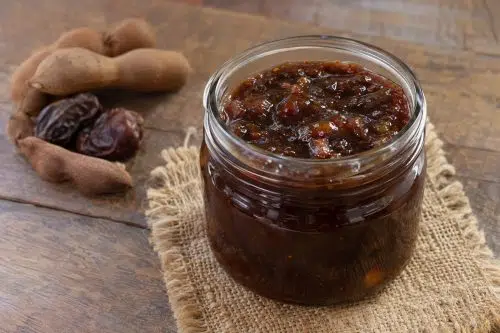
This sweet tamarind chutney sits somewhere between a preserve and a sauce. The first method cooks fresh tamarind pulp down with jaggery until it reaches a jam consistency, then finishes with chopped dates for body and a mild natural sweetness. The second method uses a longer-soaked tamarind extract tempered in oil with cumin seeds, ginger powder and asafoetida, giving a slightly thinner, more pourable result. Both keep well when bottled properly, and either version works wherever a sweet, tangy tamarind chutney is called for.
About the Recipe
Method 1 starts with 200 grams of fresh tamarind soaked for 15 minutes, then cooked to a pulp before jaggery is stirred in gradually. Continuous stirring matters here because jaggery can catch and scorch if left unattended. Dates go in off the heat so they hold their texture.
Method 2 uses a cup of seedless tamarind soaked for five full hours, producing a naturally thicker extract that needs less cooking time. The tempering of cumin seeds, ginger powder and asafoetida in oil before adding the extract gives this version a noticeably different character.
Why You Will Love This Recipe
The clearest reason to make this at home is control over sweetness and heat. Jaggery quantity in Method 2 is left to taste, so the chutney can be kept mildly sweet or made quite rich depending on what it will be served with. The dates in Method 1 add a soft, jammy depth that bottled versions rarely have.
Both methods use straightforward ingredients and produce a chutney that keeps in the refrigerator, so one batch covers several meals. If you already cook with tamarind regularly, the extract from Method 2 will feel familiar and the tempering step adds very little extra work.
Cooking Tips
The most common mistake in Method 1 is adding all the jaggery at once. Add it in pieces while stirring continuously so it blends evenly into the pulp without lumping or catching on the base of the pan.
Watch the consistency carefully near the end. The mixture thickens further as it cools, so remove it from the flame just before it looks fully set.
In Method 2, keep the flame low when frying the cumin seeds and spices. Ginger powder and asafoetida can turn bitter very quickly in hot oil.
Top Tips
- Soak tamarind in warm water for Method 1 to soften it fully in 15 minutes; cold water takes noticeably longer.
- Add jaggery in small pieces and stir without stopping to prevent it from sticking to the pan base.
- Remove Method 1 from the flame when it looks slightly looser than jam; it will firm up as it cools.
- For Method 2, soak the tamarind for the full five hours so the extract is thick enough without needing excess cooking.
- Add the dates in Method 1 only after removing from heat so they stay soft rather than breaking down completely.
- Store in a clean, dry glass bottle or airtight container; any moisture introduced during use will shorten the shelf life.
Serving and Storing Suggestions
Both versions work well alongside samosas, pakoras, chaat and grilled snacks. Method 1, with its jam-like consistency, also spreads well on flatbreads or works as a dipping sauce for Tamarind Idiyappam. Method 2 is thin enough to drizzle over chaat or use as a dipping sauce straight from the bottle.
Pour cooled chutney into a dry glass bottle and refrigerate. Method 1 keeps for several weeks when handled with a clean, dry spoon. Method 2 is best used within one to two weeks.
Similar Recipes
- Tamarind Idiyappam (Puli Idiyappam)
- Coriander and Peanut Chutney
- Homemade Sweet Chilli Sauce
- Pulippu (Tamarind) Kootu
- Sweet Mango Pickle
Nutrient Benefits
Tamarind provides iron and B vitamins. Jaggery retains some minerals, including iron, magnesium and potassium, that refined sugar does not carry. Dates contribute natural sugars alongside small amounts of fibre, potassium and iron. This chutney is used in small quantities as a condiment, so the amounts per serving are modest.
Sweet Tamarind Chutney
Ingredients
- 200 gms, without seeds and strings Fresh Tamarind
- 1/2 kg, roughly chopped Jaggery
- 2 tsp Red Chilli Powder
- 1 1/2 tsp Salt
- 4 , finely chopped Dates
Instructions
- Wash the tamarind and soak it in 2 cups of warm water for 15 minutes, till it softens.
- Cook the tamarind with the soaking water on moderate heat for 10-12 minutes till a thick pulp is formed.
- Remove from heat and extract the pulp.
- Cook the pulp on moderate heat.
- Add pieces of jaggery while stirring continously till they form a cohesive blend.
- Add the chilli powder and salt.
- Remove from flame when a jam consistency is reached.
- Add the dates and set aside till cool.
- Pour it into a glass bottle and refrigerate.
- Use as required.
- Method 2
- Ingredients
- Tamarind - 1 cup, seedless, soaked for 5 hours
- Water - 3 to 4 cups
- Ginger Powder - 1 tsp
- Red Chilli Powder - 1/2 tsp
- Jaggery - as per taste
- Salt as per taste
- Cumin Seeds - 1 tsp
- Asafoetida Powder - 1/4 tsp
- Oil - 1 to 2 tsp
- Method
- Squeeze the soaked tamarind to get a thick extract and strain into a bowl.
- Add some water if it is too thick.
- Heat oil in a pan over low flame.
- Fry the cumin seeds for 30 seconds.
- Add ginger powder, red chilli powder and asafoetida powder.
- After 30 seconds add the tamarind extract.
- Simmer for 1 to 2 minutes.
- Add the jaggery and salt.
- Simmer for 5 more minutes or until the mixture starts to thicken.
- Remove and cool.
- Store in an airtight container until required.
Sign up for our newsletter
Add Awesome Cuisine as a Preferred Source

Frequently Asked Questions
Can I use tamarind paste or concentrate instead of fresh tamarind?
Yes. Tamarind paste or concentrate can replace fresh tamarind, but the quantity needs adjusting because paste is far more concentrated. Start with one to two tablespoons dissolved in water and taste before adding more. The soaking step is not needed when using paste, so go directly to the cooking stage. The flavour will be slightly sharper than fresh tamarind, so you may need a little more jaggery to balance it.
How do I know when the chutney has reached the right consistency in Method 1?
Place a small amount on a cold plate and tilt it. If it moves slowly and holds its shape at the edges without spreading freely, it is close to ready. The chutney thickens further as it cools, so take it off the flame when it still looks slightly softer than your target consistency. If you wait until it looks exactly right in the pan, it will be too thick once cooled.
What does asafoetida do in Method 2?
Asafoetida is added in a small quantity during the tempering stage and gives the chutney a faint savoury undertone that balances the sourness of the tamarind and the sweetness of the jaggery. Only one quarter teaspoon is used, so the flavour is subtle. If you do not have it, the chutney will still taste good without it.
Can I reduce the jaggery if I want a less sweet chutney?
In Method 2, jaggery is listed as per taste, so you have full control. In Method 1, the recipe uses half a kilogram of jaggery relative to 200 grams of tamarind, which produces a noticeably sweet result. You can reduce the quantity, but go slowly and taste as you add it because tamarind is quite sour and the balance shifts quickly. A chutney made with too little jaggery will taste sharp and may not reach the jam consistency described.
How long does homemade tamarind chutney last, and what is the best way to store it?
Method 1 cooked to a jam consistency keeps in the refrigerator for several weeks when stored in a clean, dry glass bottle and handled with a dry spoon each time. Method 2, being thinner and containing oil, is best used within one to two weeks. In both cases, make sure the chutney is fully cooled before sealing and refrigerating, and avoid introducing water into the bottle during use as this shortens shelf life.