Bubble tea looks like a drink that should require a professional tea shop, a wall of flavored syrups and several pieces of specialized equipment. In reality, a good homemade version is much simpler. Once you understand how the drink is built, you can create dozens of combinations from a few basic ingredients: properly brewed tea, milk or fruit, a measured amount of sweetness, ice and one topping that complements rather than overwhelms the drink.
The biggest difference between an average homemade boba and a genuinely good one is rarely the number of ingredients. It is balance. Tea needs enough character to survive dilution, tapioca should be soft and pleasantly chewy, milk should support rather than erase the tea, and fruit should add brightness without making everything taste like syrup.
That is good news for home cooks because you do not need an enormous pantry. A strong black tea, a fragrant jasmine or oolong, a bag of tapioca pearls, milk, a simple sweetener and one or two fruit ingredients are enough to start experimenting.
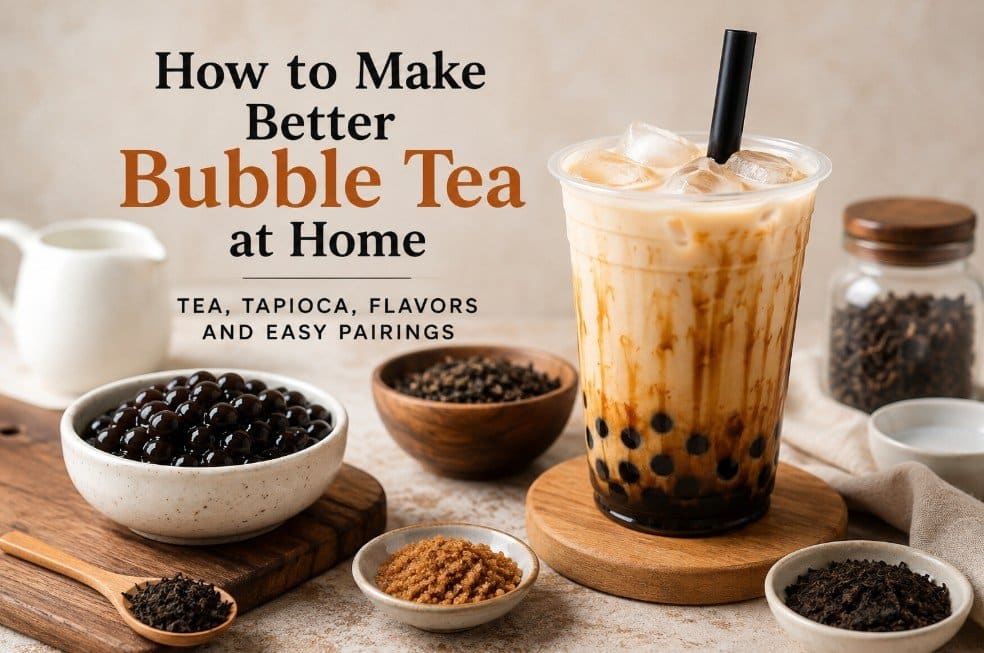
Table of Contents
Start by Understanding What You Are Actually Making
The word boba can refer to the chewy tapioca pearls, while the wider drink category includes milk teas, fruit teas, fresh-milk drinks and many other variations. Modern Bubble Tea can combine brewed tea with milk, fruit, tapioca pearls, jellies, foam and other toppings, which is why there is no single recipe that represents every cup.
For home preparation, it helps to think of the drink as four separate layers: the base, the flavor or milk component, sweetness and texture. Keeping those elements separate at first makes it much easier to adjust the recipe.
If the tea tastes weak, you can strengthen the tea without adding more sugar. If the drink is too heavy, you can reduce the milk rather than changing the topping. If tapioca makes the cup overly sweet, you can reduce syrup in the liquid. This is much easier than trying to fix everything at once.
Choose the Tea According to the Drink You Want
Tea is not just a background ingredient. It determines whether the finished drink feels malty, floral, fresh, roasted or earthy.
Black tea is the easiest place to begin if you want classic milk tea. Assam-style black tea is particularly useful because its full body and malty character can remain noticeable after milk and ice are added. Ceylon black tea often produces a brighter, brisker drink and can work well when you want a cleaner finish rather than maximum heaviness.
Oolong is an excellent choice when you want something more aromatic. Light oolongs can be floral and creamy, while roasted varieties may suggest toasted grain, honey or nuts. A roasted oolong milk tea can taste rich without needing a large amount of syrup.
Jasmine tea is especially useful for fruit drinks. Its floral aroma pairs naturally with peach, lychee, citrus and passion fruit. Green tea can serve a similar purpose when you want a fresher, cleaner base with less floral perfume.
Matcha is different because it is powdered tea rather than a filtered infusion. It creates a thicker drink with noticeable vegetal flavor and works particularly well with fresh milk, strawberry and red bean.
The important lesson is that tea should be chosen before the toppings. Decide what you want the liquid itself to taste like, then build around it.
Brew Tea for the Finished Drink, Not for a Plain Teacup
One of the most common homemade bubble tea problems is weak tea. The brewer makes a perfectly pleasant cup, adds milk, syrup and ice, and suddenly the tea disappears.
Milk softens tea. Ice melts and dilutes it. Sweetener competes with its aroma. The tea therefore needs enough concentration to remain noticeable after all of those additions.
That does not mean leaving the leaves in hot water indefinitely. Excessive steeping can produce bitterness and an unpleasant drying sensation without creating the kind of body you actually need.
A better method is to begin with the normal brewing instructions for your tea, then increase the amount of leaf if the finished drink is too weak. Using more tea with an appropriate steeping time often produces a cleaner concentrate than trying to extract the same leaves for much longer.
Cooling also matters. If you are preparing iced bubble tea, brew the tea before you need it and let it cool properly. Starting with chilled tea reduces the amount of ice required and helps the flavor remain consistent for longer.
Tapioca Pearls Are All About Timing
Tea can be brewed ahead. Tapioca pearls are much less forgiving.
Freshly cooked pearls should be soft on the outside, pleasantly elastic through the center and separated from one another. As cooked tapioca sits, the texture gradually changes. Pearls may become firmer, stick together or lose the soft chew that makes them appealing.
For that reason, cook tapioca reasonably close to serving time and follow the instructions for the specific product you bought. Quick-cooking pearls and traditional dried tapioca can require very different cooking times.
After draining, the pearls are commonly mixed with brown sugar syrup or another sweetener. This keeps them flavorful and helps prevent sticking, but remember that this syrup becomes part of the finished drink. If your pearls are very sweet, you may need less sweetener in the tea itself.
A useful starting portion is around a quarter cup of cooked pearls per serving. That provides plenty of texture without allowing tapioca to occupy half the cup.
Brown Sugar Should Taste Like an Ingredient, Not the Entire Recipe
Brown sugar and tapioca are a natural combination. The deeper caramel and molasses-like notes work particularly well with black tea, roasted oolong and fresh milk.
The problem begins when brown sugar appears everywhere at once: in the pearls, in the drink, around the walls of the cup and perhaps again in a foam or sauce. At that point, subtle differences between tea bases become difficult to notice.
For homemade bubble tea, sweetening in stages is much easier to control. Start by tasting the cooked pearls. Then taste the tea. Add milk or fruit, and only then decide how much additional syrup the complete drink needs.
Simple syrup is convenient because it dissolves immediately in cold beverages. Brown sugar syrup adds more flavor but can dominate delicate tea. Honey works beautifully with some oolongs and jasmine tea but has its own strong aroma.
The best sweetener is therefore not universal. It depends on the tea and the result you are trying to create.
Milk Tea Is Better When You Can Still Taste the Tea
Milk tea should not simply taste like sweet milk with a vague tea color.
Start with a concentrated tea base and add milk gradually. For a typical 16-ounce homemade drink, roughly 2 to 3 ounces of milk is a practical starting point when you want the tea to remain prominent. You can always add more.
Whole milk gives a smooth, classic texture. Oat milk works particularly well with roasted tea, while soy milk can pair nicely with black and green tea. The exact brand matters because plant milks vary substantially in sweetness and thickness.
If a drink becomes bland after adding milk, resist the instinct to solve the problem with more syrup. The real issue may be that the tea concentration is too low or the milk quantity is too high.
A good milk tea has contrast. You notice creaminess first, but the tea returns through the middle and finish of the sip.
Fruit Tea Needs Restraint Too
Fruit tea seems easier because there is no milk to balance, but fruit can overpower tea just as quickly.
Jasmine and green tea are good bases because their fresh, aromatic qualities work naturally with fruit. Peach and lychee pair particularly well with jasmine, while mango, passion fruit and citrus can work beautifully with green tea.
Oolong is worth trying when you want more depth. Peach oolong is a classic combination because the tea and fruit can share floral characteristics without tasting identical.
Begin with less fruit syrup, purée or concentrate than you think you need. Taste the drink and increase gradually. The final cup should still have a recognizable tea finish.
If the fruit component is already heavily sweetened, additional simple syrup may not be necessary at all.
Match the Topping to the Drink
Traditional black tapioca works best when the rest of the beverage has enough flavor to stand beside it. Black milk tea, roasted oolong and brown sugar fresh milk are obvious partners.
Lighter drinks can benefit from lighter toppings. Aloe works naturally with jasmine and fruit tea. Coconut jelly adds texture without creating the same brown sugar profile as tapioca. Crystal boba can provide chew while allowing delicate tea flavors to remain more prominent.
Matcha often works well with red bean, while fruit drinks can pair with fruit jelly or restrained amounts of popping boba.
You do not need three or four toppings in one cup. One well-chosen topping creates a clearer drink and makes it easier to appreciate the contrast between liquid and texture.
Three Easy Combinations to Try First
If you are making bubble tea at home for the first time, starting with a few established flavor structures is easier than inventing a complicated recipe.
Classic Black Milk Tea
Brew a strong black tea and chill it. Add a moderate amount of simple or brown sugar syrup, followed by milk. Place freshly cooked black tapioca pearls in the bottom of the glass, add the tea mixture and finish with ice.
The tea should remain clearly noticeable after the milk is added. If it disappears, strengthen the next batch rather than simply reducing every other ingredient.
Peach Jasmine Tea
Prepare jasmine tea and let it cool. Add peach purée, nectar or syrup gradually until the fruit is obvious but the floral tea can still be recognized. Add ice and finish with aloe, coconut jelly or crystal boba.
This is a useful drink for people who find milk tea too rich but still want more texture than ordinary iced tea.
Roasted Oolong Milk Tea
Brew roasted oolong slightly stronger than you would for plain drinking. Combine it with milk and a modest amount of brown sugar or honey. Add black or mini tapioca pearls and ice.
This drink should taste toasted and aromatic rather than simply sweet. If you have been making every milk tea with black tea, roasted oolong is one of the easiest ways to make the same basic format feel completely different.
Ice Is an Ingredient
Ice receives almost no attention in recipes, but it changes every cold bubble tea from the moment it enters the glass.
A drink may taste perfect immediately after mixing and noticeably weaker ten minutes later because melted ice has reduced the concentration. This is especially obvious with lightly brewed tea.
Using chilled ingredients helps. If the tea and milk are already cold, you need less ice to bring the drink to serving temperature. You can also make the tea slightly stronger when you know the cup will contain plenty of ice.
Do not compensate for dilution by making the drink excessively sweet. Sugar may remain noticeable even when the tea flavor has become watery, creating a cup that is simultaneously weak and overly sweet.
Use a Wide Straw for Traditional Pearls
Standard drinking straws are not large enough for tapioca pearls. Bubble tea requires a wider straw so the topping and liquid can be enjoyed together.
If you make boba frequently, reusable wide straws are convenient. For occasional gatherings, disposable bubble tea straws may be easier.
The topping should still be chewed rather than swallowed quickly. This is especially important when serving children. Large chewy pearls are not appropriate for very young children, and older children should be seated and supervised while consuming them.
For younger family members, a drink without traditional tapioca or with a more age-appropriate texture can still provide the fun of choosing flavors and building a custom beverage.
The Best Homemade Bubble Tea Is Usually the Simplest
The temptation when making bubble tea at home is to recreate the enormous menu of a commercial shop. You buy several syrups, three types of jelly, two bags of pearls, flavored powders and enough milk alternatives to fill a refrigerator.
You do not need any of that to make a good drink.
Start with one strong tea for milk tea and one aromatic tea for fruit drinks. Cook one topping well. Keep milk, fruit and sweetener separate so each person can adjust the cup.
Once you understand how black tea behaves with milk, how jasmine behaves with fruit and how tapioca changes sweetness, experimenting becomes much more intuitive. Roasted oolong, matcha, taro, crystal boba and more unusual flavors can come later.
A good bubble tea should still tell you what it is made from. You should be able to taste the tea, recognize the fruit or milk, enjoy the topping and finish the drink without one element drowning out everything else.
That balance – more than any special machine, syrup or secret ingredient – is what makes homemade bubble tea worth making.