
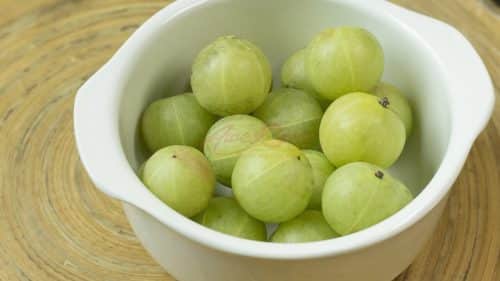
Somewhere between October and February, a small hard green fruit shows up on every roadside cart and in every subziwala’s basket across India, and something in the collective memory switches on. For a lot of us it goes straight back to school, to a paper packet of amla dipped in salt and red chilli powder, passed hand to hand at the gate. For others it is the murabba jar that lived on the top shelf of a grandmother’s kitchen, brought down only when winter cough season arrived. Amla has never needed a marketing campaign. It has just always been there, doing its quiet, sour, slightly bitter, eventually sweet thing.
This is the fruit Ayurveda calls a rasayana, a rejuvenator, and modern nutrition science keeps circling back to as well. But most of what gets written about amla treats it like a supplement in fruit form, all capsules and hair oil. This guide keeps it where it actually belongs: in the kitchen, on the tongue, and in the context of how Indian households have used it for generations.
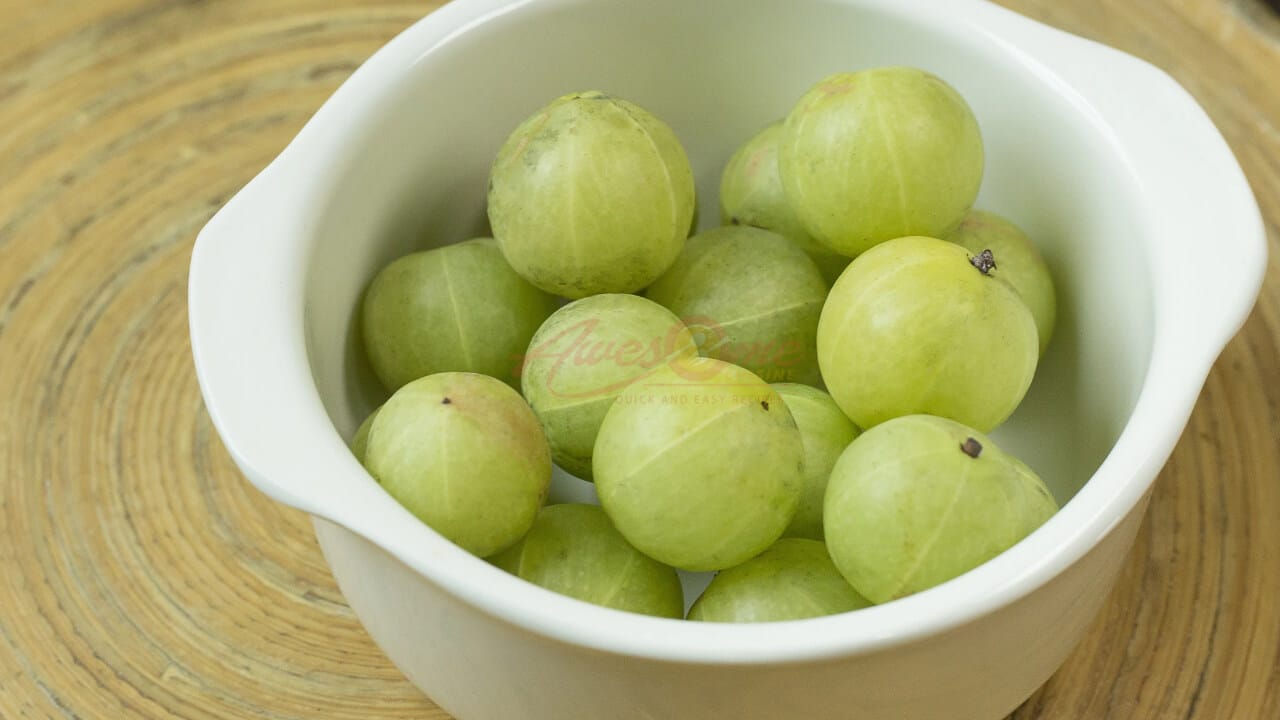
Table of Contents
Key Takeaways
- Amla, or Indian gooseberry, is officially recognised as India’s richest natural food source of vitamin C, according to government nutrition data.
- A single 100g serving of fresh amla covers well over the full day’s vitamin C requirement for an adult, several times over.
- Fresh amla season runs roughly October to February across most of India, which is why so many preserved forms (murabba, candy, pickle, powder) exist in the first place.
- Amla shows up in Indian kitchens far beyond juice and hair oil: sambar, chutney, achar, podi and rice dishes all use it.
- Cooking does reduce some vitamin C, which is why traditional prep leans on raw, pickled or sun-dried amla rather than long cooking.
- Early clinical research links regular amla intake to improvements in cholesterol and blood sugar markers, though it is not a substitute for medical treatment.
Here’s why this is worth five minutes of your time: winter in most of India means the amla season, the cold-and-flu season, and the season everyone’s grandmother starts talking about immunity all arrive together. That is not a coincidence. Amla is one of the few genuinely local, genuinely cheap ingredients that overlaps with all three. You do not need a supplement aisle for this. You need a sabziwala and about ten minutes.
What Is Amla, Exactly?
Amla is the fruit of Phyllanthus emblica (also classified as Emblica officinalis), a small deciduous tree native to the Indian subcontinent, known in English as Indian gooseberry despite not being a true gooseberry at all. It goes by different names across the country: nellikkai in Tamil, usirikaya in Telugu, aanla in Odia, and amalaki in Sanskrit, the root of the Ayurvedic term amalaki rasayana.
Amla (Phyllanthus emblica), commonly called Indian gooseberry, is a small sour-astringent fruit native to India and one of the most vitamin C-dense foods analysed in the country’s official food composition data.
The fruit itself is small, round and pale yellow-green, roughly the size of a marble to a small lime depending on the variety. Bite into one raw and the sequence is distinctive: sharp sourness first, a bitter, almost astringent middle, and then, a few seconds after you have swallowed, a lingering sweetness that is the fruit’s real signature. That aftertaste is the reason amla turns up in so many preserved forms; it is more forgiving cooked, salted, or sugared than eaten straight.
Where Does Amla Come From and When Is It in Season?
Amla trees grow across much of India, with major cultivation in Uttar Pradesh, Madhya Pradesh, Rajasthan and parts of South India. Pratapgarh district in Uttar Pradesh in particular has built a name around amla farming and processing, and much of the murabba and candy sold nationally traces back to that belt. Fresh amla is a cold-season crop: harvests run roughly from October through February, which is exactly why it lines up with winter markets and why so many shelf-stable preparations, from murabba to candy to dried powder, exist. Outside that window, fresh amla is harder to find and Indian kitchens fall back on the preserved forms instead.
What Makes Amla Nutritionally Unique?
The short answer is vitamin C, by a wide margin. The Indian Food Composition Tables (IFCT 2017), compiled by the National Institute of Nutrition under ICMR, name amla the richest source of vitamin C among the Indian foods it analysed.
Fresh amla contains about 600mg of vitamin C per 100g, making it the richest vitamin C source among the foods analysed in the Indian Food Composition Tables 2017 (National Institute of Nutrition, ICMR).
To put that in everyday terms: the ICMR-NIN’s 2020 dietary guidelines set the adult vitamin C requirement at 80mg a day for men and 65mg a day for women. A single 100g serving of fresh amla, roughly four or five small fruits, covers that several times over in one sitting.
A 100g serving of fresh amla supplies roughly 7 to 9 times the adult daily vitamin C requirement set by the ICMR-NIN 2020 Recommended Dietary Allowances, which lists 80mg/day for men and 65mg/day for women.
Here is how that stacks up against a more familiar vitamin C source:
| Food (per 100g) | Vitamin C | Source |
| Amla, fresh | ≈ 600 mg | IFCT 2017, NIN-ICMR |
| Orange, raw | 53.2 mg | USDA FoodData Central |
Beyond vitamin C, amla brings a reasonable amount of dietary fibre and a modest spread of minerals, but it is genuinely a one-nutrient headline act. That is unusual enough among fresh fruit to be worth building meals around, especially through the months when fresh produce choices otherwise narrow.
What Does the Research Actually Say About Amla and Health?
A lot of what circulates about amla online is Ayurvedic tradition restated as fact, which does not make it wrong, but it does mean the claims deserve a closer look. The clinical picture is more modest and more interesting than the superfood headlines suggest.
A 2023 systematic review and meta-analysis of randomised controlled trials found that regular amla (Emblica officinalis) supplementation improved lipid profile, blood glucose and CRP inflammation markers in adults, published in Diabetes & Metabolic Syndrome: Clinical Research & Reviews (Setayesh et al., 2023).
That is a meaningful finding, pulled from multiple controlled trials rather than a single study, but it is worth reading precisely: it describes supplementation, often with concentrated extract, over weeks, not a single amla eaten occasionally. If you have diabetes, high cholesterol or are on related medication, treat amla as a genuinely useful addition to your plate, and talk to your doctor before treating it as a treatment. Ayurveda’s rasayana framing, meanwhile, has always been about amla eaten daily and in small amounts, which happens to line up reasonably well with how the fruit is traditionally used.
In Ayurveda, amla is called a rasayana, a rejuvenator, not because it is exotic but because it is meant to be eaten daily, the way rice or dal is eaten daily.
How Do Indian Kitchens Actually Use Amla?
This is where amla earns its place on a food site rather than a supplement shelf. Fresh amla is genuinely difficult to eat plain for most people, which is exactly why Indian cooking developed so many ways around that sourness.
Murabba and Candy
Amla murabba is whole fruit slow-cooked in sugar syrup until it turns translucent and soft, a preserve that keeps for months in a sealed jar and is traditionally eaten a piece at a time, especially through winter. Amla candy is the drier, more portable cousin, sugared and semi-dehydrated, popular as a tuck-box snack precisely because it survives a school bag.
A jar of amla murabba on the shelf is really a jar of insurance against the winter cold season, opened a spoonful at a time, not all at once.
Chutney, Achar and Podi
Amla chutney, usually ground with green chillies, garlic and a tempering of mustard seeds and curry leaves, is a sharp, immediate way to use fresh amla without cooking it down. Amla achar (pickle), cured in oil, salt and spice, is one of the classics of the Indian pickle recipe collection on this site, where amla thokku shows up every year as the winter markets fill with fresh nellikai.
In Everyday Cooking: Sambar, Rice and More
Amla also works its way into main-meal cooking, not just condiments. A South Indian favourite swaps the usual vegetables in sambar for chopped amla, giving the dal a bright, tart edge that plain tamarind cannot quite replicate.
Nellikai (Amla) Sambar
A quick way to bring amla into a proper meal rather than a snack. The full version, along with tempering notes, lives in the site’s Nellikai (Amla/Gooseberry) Sambar recipe, but here is the shape of it:
Key Ingredients
- Toor dal – 1 cup
- Amla (nellikai), chopped, seeds removed – 1/4 cup
- Sambar onions, chopped – 10
- Tomato, chopped – 1
- Sambar powder – 2 tsp
- Mustard seeds, urad dal, curry leaves – for tempering
Method
- Dry roast fenugreek seeds, coriander seeds and toor dal, then cook the dal down with the roasted spices and enough water.
- Add the onions, tomatoes, green chillies and chopped amla, and simmer until the amla softens and the dal comes together.
- Finish with a mustard-seed and curry-leaf tempering in hot oil, and let it sit for a few minutes before serving with rice.
Fresh, Juice, Powder or Murabba: Which Form Should You Use?
Not every form of amla is interchangeable, and choosing the right one depends on what you actually want from it.
| Form | Best For | Typical Shelf Life | Worth Knowing |
| Fresh amla | Pickles, chutney, sambar, eating raw with salt | 1-2 weeks, refrigerated | Retains the most vitamin C of any form |
| Fresh-pressed juice | A daily morning drink | 1-2 days, refrigerated | Best made fresh; oxidises and loses potency quickly |
| Murabba / candy | Snacking, winter cough season, travel | Several months, sealed | High added sugar; treat as an occasional preserve, not a daily dose |
| Dried powder / churna | Year-round use, mixing into water or hair oil | Several months, airtight | Some vitamin C is lost in drying, but minerals and fibre remain |
| Achar (pickle) | Side dish, digestion | Several months, oil-cured | Salt and oil heavy; a spoonful goes further than a helping |
Does Cooking Destroy Amla’s Vitamin C?
Partly, yes. Vitamin C is heat-sensitive and water-soluble, so any amla that is boiled, simmered in sambar, or cooked down for a chutney will lose some of it. This is exactly why traditional Indian preparation leans so heavily on raw, salted, pickled or sun-dried forms rather than long-cooked ones: they keep more of the vitamin C intact than a slow-simmered dish ever could. If vitamin C is your main reason for eating amla, fresh raw fruit, or a quick fresh-pressed juice drunk soon after making it, will get you further than a jar of murabba or a bowl of amla sambar. If you are eating it for flavour and general nutrition, the cooked versions are still worthwhile, just less concentrated on that one front.
How Should You Buy, Store and Prep Fresh Amla?
Look for amla that feels hard and heavy for its size, with smooth, unblemished pale green to yellow-green skin. Avoid fruit with soft spots or a wrinkled surface, both signs it is past its best. Fresh amla keeps for one to two weeks in the refrigerator’s vegetable drawer, longer if kept dry and away from other fruit.
The most common mistake is trying to eat it plain, straight off the tree, and being put off by the bitterness before the sweetness arrives. Salt and a pinch of red chilli powder, the classic school-gate combination, genuinely does tame it. For pickling or sambar, chop the fruit finely; the seeds are easy to remove once you have quartered it around the central pit.
Bringing Amla Back Into Your Kitchen
Amla does not need to be reframed as a superfood to earn a place in your kitchen. It has already earned it, several times over, in murabba jars and sambar pots and school-gate packets going back generations. If you have not cooked with fresh amla before, this winter is a reasonable place to start: pick some up next time you see it at the market, and try the Nellikai Amla Sambar before you reach for a bottle of juice. If you are already an amla household, maybe this is the year the murabba jar gets refilled a little earlier than usual.
Frequently Asked Questions
What is amla called in English?
Amla’s English name is Indian gooseberry, though botanically it is not a true gooseberry at all. It belongs to the genus Phyllanthus, classified as Phyllanthus emblica or, in older texts, Emblica officinalis, and is known by regional names including nellikkai in Tamil, usirikaya in Telugu and amalaki in Sanskrit.
What is the best time to eat amla?
Fresh amla is at its best when it is in season, roughly October to February, when it is easiest to find good-quality fruit. Ayurvedic tradition favours eating it in the morning, but there is no single medically required time of day; what matters more is eating it regularly, in whatever form fits your routine, rather than occasionally in a large dose.
Can people with diabetes eat amla?
Amla is generally considered diabetes-friendly, and some clinical research has linked regular intake to improved blood glucose and lipid markers. That said, amla is not a medical treatment, and anyone managing diabetes should treat it as a useful addition to their diet rather than a substitute for medication, and check with their doctor before making significant dietary changes.
What are the different ways to eat amla besides raw?
Beyond eating it raw with salt, amla is commonly turned into murabba (a sugar preserve), candy, chutney, achar (pickle), fresh juice, dried powder, and cooked into dishes like sambar and rice. Each form suits a different use, from daily snacking to occasional cooking.
Does cooking amla destroy its vitamin C?
Cooking reduces amla’s vitamin C content to some extent, since the vitamin is heat-sensitive and water-soluble. Raw, pickled or sun-dried preparations retain more of it than long-simmered dishes, which is part of why traditional Indian kitchens favour those methods when vitamin C is the priority.
Related Reading
For more on getting vitamin C and iron-friendly foods into your everyday cooking, see the site’s guide to foods that help boost haemoglobin, and the health benefits of salad for another vitamin C-forward addition to your thali. If you are exploring other nutrient-dense Indian staples, the guide to ragi (finger millet) benefits is a natural next stop.





1 comment
Nice Informative post!!