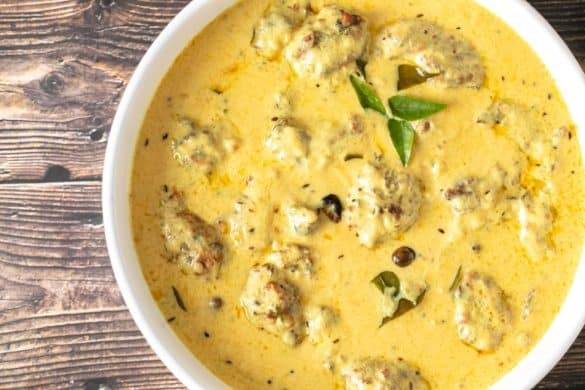
Punjabi Milk Curry showed up in my kitchen the first time I had extra milk sitting around and no paneer on hand. My neighbour mentioned her mother used to make something similar during winters in Amritsar, using whey instead of water to stretch the curry without losing flavour. I tried it that weekend and the mild, creamy gravy surprised me.
There is something satisfying about using every bit of the milk, nothing goes to waste. The paneer stays soft if you do not overfry it, and the potatoes turn tender in that tangy whey. I make this now whenever I have guests who prefer milder curries or when I want something comforting without too much heat.
About the Recipe
This recipe takes about an hour from start to finish, including the time you spend draining and pressing the paneer. Everything you need is already in most kitchens, so you do not have to hunt down specialty ingredients. The whey replaces stock or plain water, which gives the curry a subtle sourness that balances the oil and spices. I make this on weekends when I have a little extra time in the morning, or when I want to serve something filling alongside rotis without relying on store bought paneer.
Why you will love this recipe
The whey does all the flavour work here. It brings a gentle acidity that cuts through the richness of fried paneer and tempers the warmth of the whole spices. You get two components, paneer and gravy, from one litre of milk. The potatoes become creamy on the inside while holding their shape, and the curry stays light enough that you can eat it with rice or bread without feeling weighed down. It also reheats well the next day, which makes it useful for meal planning.
Cooking Tips
Do not let the milk boil too hard after adding the curds, or the paneer will turn rubbery. Stir gently and lower the heat as soon as you see the whey separating. When frying the paneer cubes, keep the oil at medium heat. If it is too hot, the outside will brown before the inside firms up.
Also, do not skip pressing the paneer under a weight. Without that step, the cubes crumble when you fry them. If your potatoes are not cooked through after the whey evaporates, add a splash of water and cover again. Undercooked potatoes ruin the texture of the curry.
Top Tips
- Press the paneer for at least 30 minutes under a heavy weight so it holds together when you cut and fry it.
- Fry the paneer cubes in medium hot oil, not smoking hot, so they turn golden without getting hard.
- Use just enough whey to cover the potatoes while cooking. Too much liquid will make the curry watery.
- Add the fried paneer towards the end so it stays soft and does not soak up too much oil.
- If you do not have whey left over, plain water works, but the curry will taste less tangy.
- Garnish with fresh coriander just before serving to keep the colour bright.
Serving and Storing Suggestions
This recipe serves four people comfortably. Prep time is around 15 minutes, and cooking takes about 45 minutes including the paneer pressing. Serve it hot with rotis, parathas, or steamed basmati rice. The curry thickens as it sits, so loosen it with a little water or milk when reheating.
Store leftovers in an airtight container in the fridge for up to two days. The paneer softens further overnight, which some people prefer. Do not freeze this curry because the potatoes turn grainy and the paneer loses texture.
Similar Recipes
- Palak Paneer
- Aloo Matar
- Paneer Butter Masala
- Dahi Wale Aloo
- Kadhai Paneer
Nutrient Benefits
Fresh paneer provides a good amount of protein and calcium, which supports bone health and muscle repair. The milk and curds used in this recipe also add probiotics if you use live culture yogurt, which helps with digestion. Potatoes bring potassium and fibre, both useful for maintaining steady energy levels.
The ginger and garlic paste has anti inflammatory properties, and the whole spices like cloves and cinnamon help with circulation. This curry is filling without being too heavy, and the whey itself is low in fat while still contributing minerals.

Punjabi Milk Curry
Ingredients
- 1/4 kg Potatoes
- 1 litre Milk
- 1 cup Fresh Thick Curds
- 1 1/2 tsp Ginger-Garlic Paste
- 2 Onions (big)
- 1/4 kg Tomatoes
- 1 tsp Red Chilli Powder
- Salt (as required)
- 1 Bay Leaf
- 1 inch Cinnamon
- 3 Cloves
- Oil for frying
- 2 Slit Green Chillies
- Coriander Leaves (for garnishing)
Instructions
- Heat milk in a vessel. When it starts boiling, add curds.
- Stir for 1 to 2 minutes till milk curdles completely and whey water separates.
- Strain through a fine mesh sieve and collect the whey water and keep aside.
- Put a flat plate that goes in exactly into the sieve. Keep a weight on top for 1/2 an hour to make paneer.
- When paneer is firm take out plate and cut paneer into small 1/2 inch cubes. Deep fry in medium hot oil and keep aside.
- Cut onions and tomatoes finely.
- Peel outer skin and cut potatoes also into small 1/2 inch cubes.
- Heat oil in a frying pan, add bay leaf, cinnamon, cloves, slit chillies and then onions.
- When it turns golden, add ginger garlic paste. Stir for a minute and mix chopped tomatoes.
- Fry for few minutes and put chopped potatoes.
- Stir in medium flame for 2 minutes. Pour just enough whey water (kept aside), close with lid and cook till potatoes becomes soft.
- Add salt, chilli powder and fried paneer cubes. Cook for few more minutes. Garnish with coriander leaves.
- Serve hot.
Sign up for our newsletter
Add Awesome Cuisine as a Preferred Source

Frequently Asked Questions
My paneer turned out too soft and crumbly when I fried it. What went wrong?
You probably did not press it long enough under a weight. The paneer needs at least 30 minutes with something heavy on top to squeeze out the excess whey and firm up. Without that step, it will not hold its shape in hot oil.
Can I skip frying the paneer and add it directly to the curry?
Yes, but the texture will be much softer and the paneer may break apart while stirring. Frying gives it a light crust that helps it hold together in the gravy. If you want to skip frying, cut the paneer into larger cubes and handle the curry gently.
The curry tastes too tangy. How do I fix it?
Add a tablespoon of cream or a pinch of sugar to balance the acidity. You can also dilute the curry with a little milk or plain water and adjust the salt. Next time, use less whey and more water while cooking the potatoes.
How do I store leftover whey if I do not use all of it?
Keep it in a covered container in the fridge for up to three days. You can use it in place of water when kneading dough for rotis or parathas, or add it to dal for extra tang.
My potatoes did not cook through even after adding whey and covering the pan. What should I do?
Add a few tablespoons of water, cover again, and cook on low heat for another five to seven minutes. Check with a fork to make sure they are soft before adding the paneer. Undercooked potatoes will stay hard even after the curry is done.